
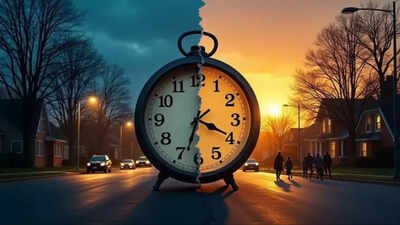

As spring approaches across North America, millions of people are preparing for a familiar ritual: setting their clocks forward by one hour. Daylight Saving Time (DST) 2026 is about to begin, bringing longer evenings, darker mornings and renewed debate over whether the decades-old practice still makes sense in today’s world.While many welcome the extra daylight after work, scientists and policymakers continue to question the health, economic and social impacts of changing the clocks twice a year.
When daylight saving time starts in 2026 in US and Canada
In 2026, Daylight Saving Time will begin on Sunday, March 8, when clocks in most of the United States and Canada jump forward one hour at 2:00 a.m., instantly becoming 3:00 a.m. The change means people effectively lose one hour of sleep that night, but it also creates longer daylight hours in the evening for the coming months.DST will remain in place until November 1, 2026, when clocks “fall back” by one hour and return to standard time. The seasonal time change applies to most US states and many parts of Canada. However, Hawaii and most of Arizona do not observe DST, and several U.S. territories also remain on standard time year-round.
Why daylight saving time exists
The idea behind DST is simple: shift the clock so that daylight occurs later in the evening during warmer months, allowing people to make better use of natural light. The concept dates back more than a century. Daylight saving time was widely adopted during World War I as a way to conserve fuel used for lighting and heating.In the United States, the practice was standardized under the Uniform Time Act of 1966, which established a consistent national schedule for when clocks should change. Since 2007, DST has started on the second Sunday in March and ended on the first Sunday in November, extending the daylight period by several weeks compared with earlier decades.By moving clocks forward in spring and back in autumn, societies aimed to make better use of daylight during longer summer days, reducing the need for artificial lighting and potentially saving electricity. Today, supporters argue that DST still offers several benefits, including:
- Longer evening daylight for recreation and shopping.
- Potential boosts to tourism and retail activity.
- Reduced evening crime rates in some areas.
However, critics say many of the original benefits, especially energy savings, are now minimal in modern economies.
The health debate around the daylight saving time change
Despite its long history, the twice-yearly clock shift remains controversial—especially among health experts. Medical researchers say that the abrupt loss of an hour of sleep disrupts the body’s circadian rhythm, the internal clock that regulates sleep, metabolism, and hormone cycles.Studies have linked the springtime shift to several short-term health risks, including:
- Increased heart attacks and strokes
- Higher rates of traffic accidents
- Sleep deprivation and fatigue
- Reduced concentration and mood changes
Research cited by health organisations also suggests the risk of heart attacks can rise in the days immediately after clocks move forward. Some scientists argue that the real issue is not DST itself but the biannual switching between time systems, which can create what experts call “social jet lag.”
The economic impact of daylight saving time
Beyond health concerns, economists say daylight saving time may also carry hidden financial costs. One analysis estimated that the time change could cost the US economy about $672 million annually, largely due to health impacts, accidents, and reduced productivity following sleep loss.However, supporters of DST argue that longer evenings can boost consumer activity, retail sales, and outdoor recreation, which can benefit businesses during the warmer months.
Road safety and daylight saving time productivity concerns
The sleep disruption associated with DST can also affect alertness, especially during morning commutes. Traffic safety groups warn that the transition may lead to an increase in drowsy driving, which can be as dangerous as driving under the influence of alcohol.Some economists estimate the broader cost of DST, due to health effects, reduced productivity and accidents, could reach hundreds of millions of dollars annually in the United States alone.
A growing movement to end clock changes
The ongoing debate has sparked political efforts to eliminate the twice-yearly time shift altogether. In the United States, lawmakers have repeatedly introduced the Sunshine Protection Act, a proposal to make daylight saving time permanent nationwide.Although the bill passed the Senate in 2022, it has yet to become law. If enacted, Americans would no longer change their clocks each spring and fall. Meanwhile, some regions have already started experimenting with permanent DST or permanent standard time policies, reflecting growing public frustration with the clock changes.
How to prepare for the daylight saving time change
Experts recommend a few simple steps to make the transition easier:
- Go to bed 10–15 minutes earlier in the days leading up to the change.
- Get morning sunlight exposure to help reset the body clock.
- Avoid caffeine late in the evening.
- Maintain a consistent sleep schedule
These strategies can help minimise fatigue and help the body adjust to the new schedule more smoothly. For now, the spring clock change remains a reality for hundreds of millions of people across North America but as scientific evidence and public debate grow louder, daylight saving time may be approaching a turning point.Whether governments eventually keep DST permanently, switch to year-round standard time or maintain the current system, one thing is clear: the centuries-old practice of changing the clocks twice a year is increasingly under scrutiny. With March 8, 2026, fast approaching, millions will once again “spring forward” and lose an hour of sleep in the process.