
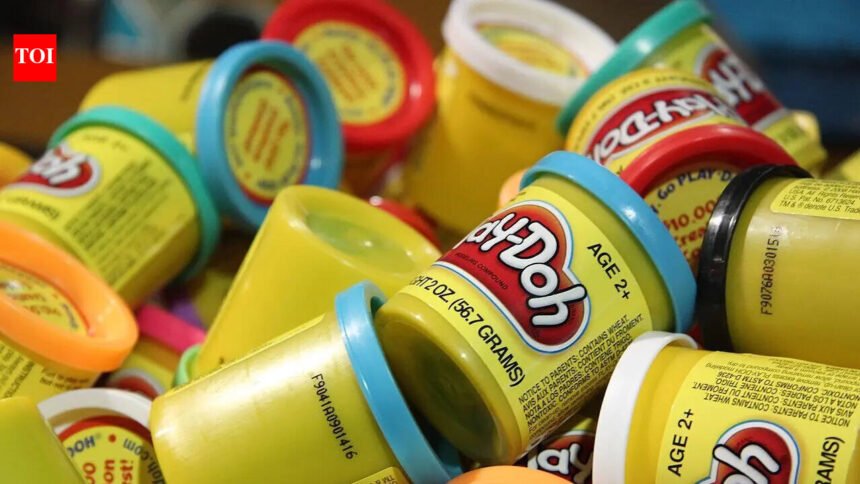

Before the smell of sweet, colourful dough came to represent childhood throughout the world, it was the aroma of a final bid to keep a failing company alive. During the early years of the 1950s, Cincinnati-based soap maker Kutol Products found itself on the verge of bankruptcy. Its top-selling product was a type of malleable putty used for just one purpose – removing coal smoke from wallpaper. Coal was used to heat most households back then, leaving walls black and greasy with carbon dust. Non-toxic and made of dough, the product could be rubbed into the walls to remove the grime without damaging the wallpaper underneath.However, the problem with all of this is that time moved fast, and changes began to happen. As World War II came to an end, people switched to using more fuel-efficient fuel sources such as natural gas and petroleum, rather than using the old-fashioned fuel sources like coal. Without the black soot, there was no need for Kutol’s wallpaper cleaner, and the company experienced financial problems due to this. Thankfully, one day, Joe McVicker, who owned the business, got a phone call from his sister-in-law, Kay Zufall. Being a preschool teacher, she had come across an article regarding the use of modelling clay as an art material for children, and when she tried it out with the children, they loved it.From black soot to bright primary coloursThe transition from a cleaning supply to a toy was a stroke of genius born from environmental necessity. The original putty existed because of a massive pollution problem inside American homes. According to a study published in the Environmental Science & Technology journal, soot was a pervasive byproduct of household combustion that defined urban living for decades. As heating technology improved, the “problem” the putty solved began to vanish, leaving a perfectly good material without a purpose.Joe McVicker heeded Kay’s advice and quickly recognised that the properties that made the substance ideal as a cleaning agent, nontoxic, unstaining, and endlessly recyclable, also made it a fantastic toy. He stripped out its detergent components and infused it with a nice scent of almonds as well as bits of red, blue, and yellow colours. Finally, he named it Play-Doh, based on a suggestion by the company’s sales manager. As Combustion wastes from thermal power stations and household stoves research reveals, the move away from coal was worldwide, which caused many firms to rethink their strategies. The ability to envision toys when others only saw buckets of obsolete cleaning products is what kept McVicker’s legacy alive.
Stripped of detergents and infused with colour and scent, this humble cleaner transformed into Play-Doh, a global sensation now valued at over $500 million, proving that failure can indeed be a launchpad for incredible success. Image Credits: Wikimedia Commons
Tactile magic in the $500 million mistakePlay-Doh’s popularity became evident almost immediately. In 1956, it already began appearing in large stores’ windows and children’s television shows such as Captain Kangaroo. While other clays had been messy, oily, and difficult to mould with tiny hands, Play-Doh was smooth, safe, and inspired imaginative play. Children could create sculptures and destroy them, build and squash them, endlessly transforming the substance.Ultimately, this product developed into an empire valued at more than $500 million, producing such things as the well-known “Fuzzy Pumper Barber Shop” and scent-based ranges of doughs with sparkles. What began as just a “dirty house fix” became a part and parcel of developmental play. In doing so, it demonstrates how some of the most successful inventions in the world did not come about in the laboratory where scientists were attempting to revolutionise the world, but through people looking at their failures in a totally new light.In retrospect, it is amazing to realise that the sole reason Play-Doh exists is that people stopped burning coal in their cellars. In essence, this is evidence that there is usually no dead product but rather one that is ripe for reinvention. The creation of Play-Doh is not simply a story about two inventors. Instead, it is also the story of how the creative vision of McVicker and Zufall breathed life into a plain old cleaning product.