
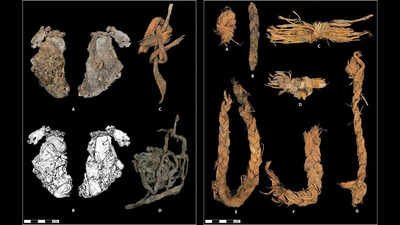

In the quiet high desert of Oregon, a small discovery is once again reshaping how we think about early human life in North America. It is not a dramatic artefact or a famous skeleton. It is something far more fragile. A tiny stitched fragment of elk hide, preserved inside a cave for roughly 12,400 years, reportedly. At first glance, it looks almost insignificant. But experts say it may represent some of the oldest known sewn clothing ever found anywhere in the world.What makes the find compelling is not just its age, but what it suggests about the people who made it. This was not random survival behaviour. It appears to show planning, skill, and an understanding of materials that goes beyond basic necessity. And it comes from a landscape already known for rewriting early American history.
Oregon cave artefacts older than Egypt’s pyramids reveal surprising human skill
Oregon’s desert caves do not look remarkable from the outside. They are shaped by wind, rock, and long stretches of silence. Nothing immediately suggests that they hold traces of Ice Age life. Yet inside, conditions can be surprisingly stable. Dry air and protected spaces have allowed organic materials to survive where they would normally decay completely.According to ScienceNews, Cougar Mountain Cave is one of those rare places and so is the nearby Paisley Caves system. These sites have produced plant fibres, woven materials, wooden fragments, and bone tools. Most archaeological sites lose this kind of evidence entirely, but here it has endured.The stitched elk hide came from Cougar Mountain Cave. It consists of two small fragments joined together with twisted plant fibre cordage. It is clearly sewn, not naturally joined or damaged. That detail alone makes it significant.
What the Oregon cave discovery is showing
The stitched material suggests deliberate crafting. The hide was likely processed, cleaned, and prepared before being worked on. That alone implies knowledge of material handling, not just opportunistic use.Bone needles found in nearby layers add another dimension to the story. Some are finely shaped, with clear signs of repeated use or careful production. These are not crude tools. They suggest a developed technique for working with soft, flexible materials like hide and fibre.Experts say this combination of evidence points to something more structured than previously assumed for this period. Sewing requires sequence and intention. It is not instinctive in the way basic tool use might be. It has to be learned, passed on, and refined. Even the smallest fragment begins to feel like part of a larger system of knowledge.
Ancient DNA and artefacts from Paisley caves reshaping early human timeline
Paisley Caves has long been central to debates about the earliest human presence in North America. Earlier research recovered ancient DNA from coprolites, with dates suggesting human activity around 14,000 years ago. That pushed back earlier assumptions that were dominated by the Clovis-first model.At the time, some researchers were cautious about the conclusions. The evidence was unusual and challenged long-held ideas. But further findings added weight to the argument. Plant fibres, basketry fragments, sinew threads, and wooden tools all appeared within the same broader cultural layers.These materials suggest a community that worked with a wide range of organic resources. Not just stone tools, but textiles, cordage, and constructed items that rarely survive in the archaeological record.
What fitted ice age clothing in Oregon suggests about early human adaptation
One of the most interesting implications of the Oregon findings is the idea of fitted clothing. The presence of bone needles and sewn hide suggests that early humans may have tailored garments rather than simply wrapping themselves in animal skins.This matters because fitted clothing offers better insulation, especially in colder Ice Age conditions. It also requires more precise skills. Cutting, shaping, piercing, and stitching all come into play.Experts suggest that clothing in this period may not have been purely functional. It might also have carried meaning. Differences in stitching or design could have signalled identity, group belonging, or even status within a community.That idea is still being explored, but it changes how we think about Ice Age people in this region. They were not just surviving. They were adapting in structured and possibly cultural ways.
Oregon archaeological record and the expanding story of early human life
Oregon’s archaeological record continues to surprise researchers. From sagebrush sandals found at Fort Rock Cave to the latest stitched hide fragments, the pattern keeps expanding. Each discovery adds another layer to a long and complex timeline of human presence in the region.What stands out is not just the age of the objects, but the skill they reveal. Fibre work, weaving, sewing, and tool-making all appear across multiple sites. Together, they suggest a level of technological understanding that is easy to underestimate when looking only at stone tools.The desert environment has played an unexpected role in preserving this history. Organic materials that would normally vanish have survived long enough to be studied. Without these conditions, much of this story would likely be lost forever.