
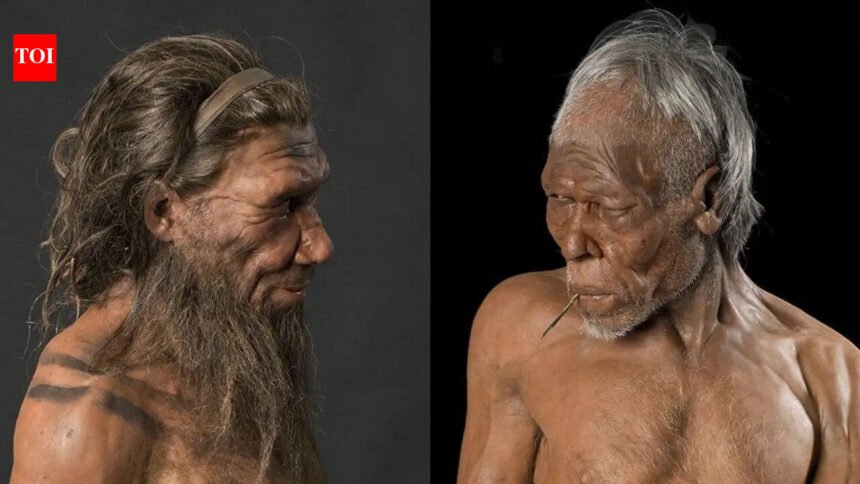

For a long time, Neanderthals have intrigued both scientists and historians. They were not mere primitive cavemen walking around frozen territories, as many movies and old literature would depict. In truth, Neanderthals were highly intelligent relatives of humans, living in Europe and certain areas of Asia for thousands of years. Not only were they hunters and creators of various tools, but they were also able to control fire, take care of the wounded in their community, and even live alongside modern humans for several millennia. That is the reason why many people carry a piece of Neanderthal DNA in them today.Recently, there have been many findings that make this history even more intriguing. Researchers studying ancient caves throughout Europe have found evidence indicating that Neanderthals may have engaged in making symbolic wall marks long before the arrival of modern humans in those territories. Other findings have indicated the presence of cooking practices utilising plants and the use of certain plant species for medical purposes, showing how highly developed their survival skills truly were. Research done using DNA has also influenced how Neanderthals are thought of regarding their intelligence and behaviour. But what exactly sets Neanderthals and Homo sapiens apart from each other.
Neanderthals and Homo sapiens : Physical features
Neanderthals who stood alongside the modern human might have looked broader-shouldered, stockier, and more rugged. Their bodies were adapted to thrive in extremely cold weather. Studies show that Neanderthals were shorter than Homo sapiens, but their bodies were very strong and muscular.Moreover, the facial structure of Neanderthals was quite different from that of modern humans. For instance, they had pronounced brow ridges and sloping foreheads compared to the vertical forehead in modern humans. The nose of Neanderthals was also larger than that of modern humans; it is believed that the wide nose was an adaptation that warmed cold air before entering the body. The shape of their skulls was different, too. Modern humans evolved into having round skulls and protruding chins, whereas Neanderthals’ skulls were long and flat. Fossils studied by scientists show that the front teeth of Neanderthals were larger and probably served them as a tool when they held hides or materials.
Why Neanderthals looked more powerful than Homo sapiens
Although Neanderthals were not particularly tall individuals, they were robust in terms of their physique. Most individuals stood about 150-170 centimeters in height. They had a sturdy and muscular build, with large bones and strong arms and legs. Comparing Neanderthals with Homo sapiens, one could easily see that Neanderthals appeared stronger and more muscular.According to scholars, Neanderthals’ short limbs and large bodies helped them retain body warmth in extremely cold conditions. This type of adaptation is present nowadays in some peoples that live in harsh climatic conditions. In addition, Neanderthals had broad chests and perhaps larger lungs compared to modern humans.The physical strength and endurance of Neanderthals were crucial for their survival since hunting large mammals entailed a lot of physical exertion. While later on Homo sapiens invented sophisticated weapons allowing them to hunt from a safe distance, Neanderthals often had to approach their prey closely to kill it with thrusting spears.
Surprising signs of intelligence among Neanderthals
Neanderthals had long been viewed in an unfavorable light due to their portrayal as primitive and unintelligent. Recent discoveries have shown the opposite to be true. It appears that Neanderthals practiced taking care of their sick or wounded members, burying their dead, and perhaps even creating symbolic artifacts.The ability to live together in well-structured societies and cooperate among themselves was vital for their survival. Moreover, archeological research has revealed proof of the capability of Neanderthals to control fire and create relatively complex stone tools. Moreover, in some places, they could even make use of natural colors and ornaments, indicating a certain level of symbolic behaviour. Furthermore, there is much speculation regarding whether Neanderthals had any form of language. There are good reasons to think that they had some form of linguistic capabilities. Their social organization and methods of hunting indicate this fact.While Homo sapiens later on went on to create better technology, trade connections, and artistic creations, the difference in behavior between the two species may not have been as great as people think.
Why Homo sapiens may have adapted better than Neanderthals
In other words, the most significant distinctions between Neanderthals and Homo sapiens could be non-physical. It is believed that Homo sapiens slowly got the upper hand because of innovation and organisational abilities. For example, Homo sapiens created lighter tools, long-distance weapons, and specialized clothes that helped them thrive in various environments.Homo sapiens also created more extensive social bonds and engaged in trade on a greater scale. In turn, these factors could have helped Homo sapiens to better cope with climate change and food shortage situations.On the contrary, Neanderthals existed in small and isolated communities. Being part of a smaller group can mean greater vulnerability to illnesses and adverse environmental changes. These factors could play a role in the disappearance of Neanderthals from the Earth. At the same time, there were no full replacements involved here. Humans and Neanderthals interbred multiple times. As a result, a small number of the genes of Neanderthals can still be found in the genes of modern humans, particularly those of European and Asian descent.