
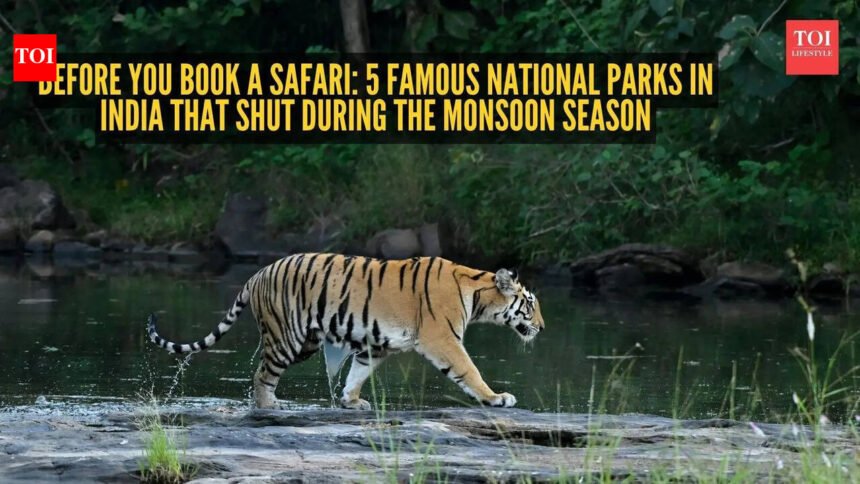

If a wildlife safari is on your travel list this year, here’s something you may want to know before making any bookings.Every year, as the monsoon season arrives in different parts of the country, several of India’s most popular national parks and tiger reserves temporarily close to visitors. While the exact dates vary from one park to another, many reserves begin shutting safari zones around June, July, or the start of the rainy season in their region.For many travellers, this comes as a surprise. The rains make forests look greener, rivers fuller, and landscapes more dramatic. It feels like the perfect time to head into the wild.But inside the forest, things are a little different.Heavy rainfall can turn safari tracks muddy, flood low-lying areas, and make some parts of the jungle difficult to access. In such conditions, running regular safaris isn’t always possible. That’s why several national parks take a seasonal break every year.The closure isn’t only about safety. The quieter months also give wildlife some space during an important period of the year, while forest authorities use the time to repair roads and carry out maintenance work.So, before you plan that tiger safari, it may be worth checking whether your chosen park is open. Here are some of the famous national parks in India that usually remain closed during the monsoon months.
Jim Corbett National Park , Uttarakhand
For many wildlife enthusiasts, Corbett is where their love for jungle safaris begins. Famous for its tigers, elephants, deer, and rich birdlife, it remains one of the country’s most visited wildlife destinations.During the monsoon season, several safari zones usually close because heavy rain can affect road conditions inside the forest. While certain areas may continue to operate depending on weather conditions and park rules, visitor access is generally more limited than during the peak season.
Ranthambore National Park , Rajasthan
Ranthambore hardly needs an introduction. The possibility of spotting a tiger near ancient ruins has made it one of India’s most popular wildlife destinations.As the rains arrive, many of the park’s core safari zones typically shut down. Thick vegetation, slippery tracks, and changing forest conditions make safari operations more challenging during this period.
Kanha National Park , Madhya Pradesh
Kanha is often considered one of India’s most beautiful national parks. Its vast meadows, dense forests, and thriving wildlife attract nature lovers from across the country.Like many reserves in central India, Kanha usually remains closed during the monsoon months. Heavy rainfall can make several routes difficult to access, leading to a temporary pause in tourism activities.
Bandhavgarh National Park , Madhya Pradesh
Known for its strong tiger population, Bandhavgarh is a favourite among wildlife photographers and safari enthusiasts.The park generally closes during the rainy season when weather conditions make tourism activities difficult. The break also allows authorities to carry out maintenance work across the reserve before visitors return later in the year.
Pench National Park, Madhya Pradesh and Maharashtra
Pench is often associated with the forests that inspired Rudyard Kipling’s The Jungle Book. Its mix of forests, grasslands, and wildlife continues to attract visitors year after year.During the monsoon, safari operations are usually suspended as rain affects accessibility inside the reserve. The quieter period also means less disturbance for animals living in the forest.
Tadoba-Andhari Tiger Reserve , Maharashtra
Tadoba has become one of India’s most sought-after tiger reserves in recent years, especially among visitors hoping to spot big cats in the wild.Several safari zones generally remain closed during the monsoon season. However, depending on local conditions and official guidelines, some buffer areas may continue to welcome tourists.Note to readers: Safari operations, closure periods, and visitor access can change based on rainfall, weather conditions, and administrative decisions. Travellers should verify the latest schedules with the concerned park authorities before making bookings. Thumb image: Canva (for representative purposes only)