
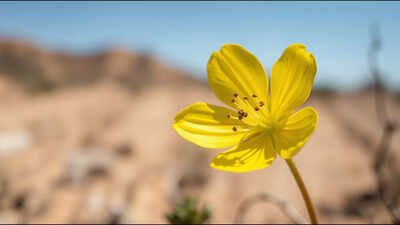

A small, yellow-flowered California native plant that had not been documented in nearly seven decades has been rediscovered in the hills of eastern Contra Costa County. The caper-fruited Tropidocarpum, last recorded in 1957, was found on March 3, 2025, by botanist Heath Bartosh of Nomad Ecology and his colleague Spencer Adams, working on behalf of the East Contra Costa County Habitat Conservancy. The discovery was made on protected land within Vasco Hills Regional Preserve, acquired jointly by the East Bay Regional Park District and the conservancy, and comes after a deliberate, sustained search for the plant rather than a chance sighting.
How botanists rediscovered a flower missing for nearly 70 years
According to East Bay Parks’ own account of the discovery, Bartosh was specifically searching local ridgetops for caper-fruited tropidocarpum when he and Adams located the population, work carried out on behalf of the East Contra Costa County Habitat Conservancy. The search was prompted by an earlier sighting of a few individual plants on nearby private land in 2023, which gave botanists reason to believe a larger population might still survive somewhere in the surrounding hills.Finding the plant required more than a single visit to the right location. According to conservancy executive director Abigail Fateman, documenting the new population required a thoughtful survey approach and persistence, since annual plants like this one do not necessarily germinate every year, meaning a site could appear empty in one season and still support the species in another.
Why the plant had gone undetected for so long
The caper-fruited tropidocarpum was first documented in 1888 by University of California, Berkeley botany professor Edward Lee Greene, who described it at the time as common in the low alkaline valley lands skirting the San Joaquin River. According to Bartosh, the plant’s decline traces back largely to competition from non native species that have become increasingly dominant across California grasslands since the late 1880s, gradually crowding out native plants like this one from the habitat they once occupied freely.The species is currently listed as 1B.1 by the California Native Plant Society, a designation indicating it is considered rare, threatened or endangered both within California and elsewhere. Even with this newly confirmed population, there remain only two known populations of the plant across the entire East Bay region, each consisting of fewer than 20 individual plants.
What role grazing plays on this land more broadly
While this specific rediscovery is attributed to a targeted botanical survey rather than land management practices, grazing does play a documented role in shaping native plant communities on East Bay Regional Park District land more generally. A peer-reviewed study published in the journal PLOS ONE titled Livestock grazing supports native plants and songbirds in a California annual grassland, funded in part by the East Bay Regional Park District, found that livestock grazing on California annual grasslands was associated with higher native plant cover and shorter, less dense vegetation compared to ungrazed areas, since removing built-up grass litter and reducing the height of invasive annual grasses can give native species more room to establish and compete.This kind of research helps explain why land managers across the East Bay increasingly treat grazing as one tool among several for maintaining grassland habitat, alongside targeted surveys, invasive species removal and permanent land protection, even though this particular plant’s rediscovery is credited specifically to focused fieldwork rather than any single land management intervention.
Why this rediscovery matters for conservation in the region
The Vasco Hills Regional Preserve sits within a roughly 14,000-acre area of eastern Contra Costa County managed through a partnership between the East Bay Regional Park District and the East Contra Costa County Habitat Conservancy. According to Park District General Manager Sabrina Landreth, the discovery illustrates the value of that partnership, reflecting a shared effort between the two agencies to protect sensitive species while also maintaining public access and recreation opportunities across the land they jointly manage.With the newly confirmed population now identified, conservancy staff have said it will become a high priority for ongoing monitoring and management, given how few populations of the species are known to survive and how easily an annual plant like this one could go undetected again if survey efforts were not maintained consistently in the years ahead.