
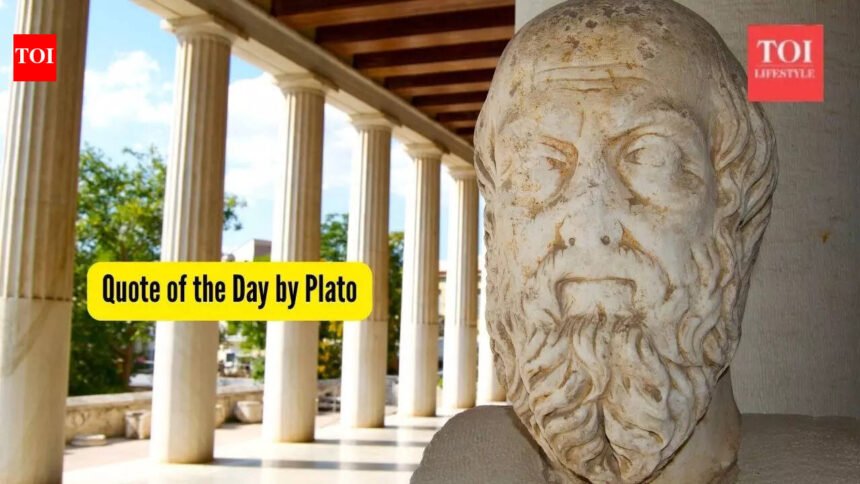
Plato is frequently regarded as a preeminent figure in the annals of Western philosophical thought. Residing in Athens during the 4th century BCE, Plato significantly shaped the evolution of philosophy, political theory, and educational practices. Over two millennia subsequent to his passing, his concepts concerning truth, justice, knowledge, and the ideal society continue to exert influence on political theorists, students, and academics alike. To fully grasp the persistent relevance of Plato’s philosophical contributions, an investigation into his life, the intellectual currents that shaped him, and his core philosophical tenets is essential.Plato was born in Athens around 428 or 427 BCE to a wealthy family with ties to politics. Athens was one of the most powerful city-states in ancient Greece at the time. It was known for its cultural achievements, democratic government, and intellectual debates.Plato probably got a great education when he was young. He learned about poetry, music, math, and physical fitness. These were all things that educated people in Athens were expected to know. Plato may have even thought about going into politics when he was young, like his family did. Socrates, Plato’s teacher, had the biggest impact on his life. People knew Socrates for asking them about their beliefs and pushing them to think more deeply about what they thought they knew about things like virtue, justice, and truth. Socrates didn’t give lectures; instead, he talked to people and asked them questions that made them think more deeply about what they thought they knew.Plato was one of Socrates’ most loyal students. He became very interested in philosophy through these talks and started to see it as a way to learn more about the world and make it better for people.In 399 BCE, when Socrates was put on trial in Athens, it was a big turning point in Plato’s life. People said he was corrupting the youth and not respecting the city’s traditional gods. Socrates was sentenced to death and forced to drink poison, even though he tried to defend himself. Plato was deeply affected by this event, and it changed his views. He thought the Athenian government had wrongly sentenced Socrates to death.Plato used dialogues to share his thoughts instead of writing direct essays or arguments like many other philosophers. In these stories, different characters talk and argue about philosophical questions. Socrates is often the main speaker, and he helps others understand more by asking questions. The Republic is one of Plato’s most well-known books. In this conversation, Plato talks about what justice is, what an ideal society should be like, and what education and leadership should be like. The book also has the well-known Allegory of the Cave, which is a story that shows how things look and how they really are.People are chained inside a cave in the allegory and can only see shadows on a wall. They think these shadows are real because they have never seen anything else. When one person gets away and sees the outside world, he knows that the shadows were just tricks of the light. This story shows the philosophical path from not knowing to knowing.One of the most iconic line of Plato is, ” The measure of a man is what he does with his power.” Many people think that Plato said, “The measure of a man is what he does with his power.” This is a very important philosophical idea about morality and responsibility. Even though the exact words may not be in his surviving dialogues, the idea behind them is very similar to the ideas in The Republic and other works. The statement basically says that a person’s true character is shown not by what they say or claim, but by how they use the power, authority, or influence they have. There are many kinds of power: political power, money, social influence, knowledge, or even physical strength. Power, in any form, enables individuals to influence others and mold their environment.Plato believed that morality and wisdom were closely linked. Someone who really knows what justice is will do what is right. So, when someone gets power, what they do shows if they are really wise or just ambitious. History shows that power often shows how weak people are. People who get power can become selfish, arrogant, or corrupt. They might put their own interests ahead of those of others. In these situations, power is harmful instead of helpful. Plato thought that only people who know what is right and wrong should be in charge. This idea made him suggest the idea of the philosopher-king in The Republic. The best leaders are wise and dutiful, not power-hungry.This idea is shown in the saying that you can tell a lot about a man by how he uses power. People can seem virtuous when they don’t have much power over other people. But when people can affect decisions, give out resources, or change laws, their true values come out. Power is a good thing if it is used to promote fairness, protect the weak, and seek the truth. That person shows moral strength and wisdom. Power is not virtuous if it is used to control, take advantage of, or trick other people.This idea is still important today because power is present in all societies and in many different ways. People in politics, business, education, and even regular people can have an effect on other people. The moral dilemma lies not merely in obtaining power, but in wielding it judiciously. Plato’s philosophy says that people should see power as a way to test their character. People should not see authority as a gift or a reward but as a duty. The more power someone has, the more they have to do the right thing and be smart. In the end, the quote teaches that real greatness comes from using power in a moral way, not just having it. People may be impressed by someone’s reputation, accomplishments, or wealth, but their true worth is shown by the choices they make when they can change the lives of others. Power acts like a mirror in this way. It shows what a person really cares about and what they think is important. This philosophical idea says that the best way to judge a person is to look at how they use their power.