
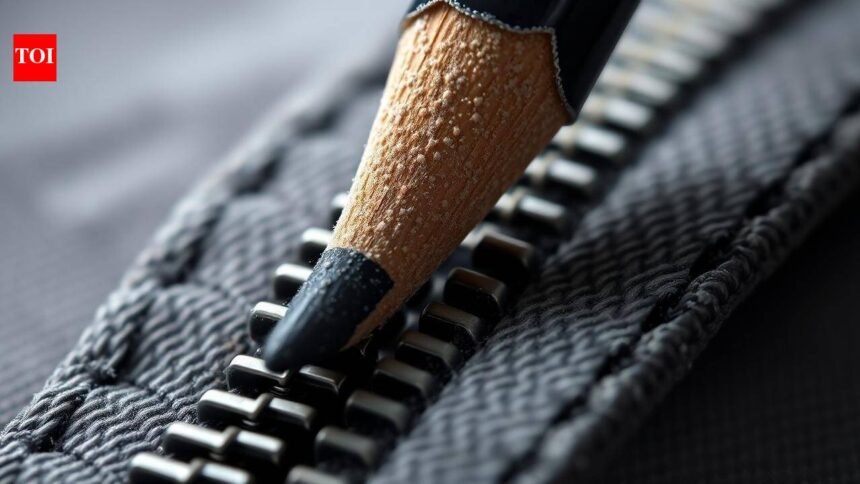
We have all been there. You are running out the door, already five minutes late, when your favourite winter jacket suddenly decides to stage a protest. The zipper slider reaches a halfway point and simply refuses to budge, leaving you trapped or exposed to the cold. While the common reaction is to pull with all your might, this often leads to a broken pull tab or a permanently derailed track. However, a growing number of savvy commuters and outdoor enthusiasts are reaching for a humble school supply instead of a repair kit. Using a simple graphite pencil to lubricate a sticky zipper has become the ultimate DIY life hack for anyone looking to restore a smooth glide in seconds.The beauty of this trick is its incredible simplicity and the fact that it uses a dry material that most of us already have in a desk drawer. Unlike liquid soaps or greasy oils that can ruin delicate fabrics and attract pocket lint, a pencil offers a clean, non-staining solution. By rubbing the tip of a pencil along the teeth of a zipper, you are essentially applying a high-tech lubricant that has been trusted by engineers for centuries.The molecular secret of the graphite slideThe reason this trick works so effectively is rooted in the unique structural chemistry of the material inside your pencil. While we call it lead, it is actually graphite, a form of carbon that is prized in the world of physics for its incredible slipperiness. This mechanical advantage is explained in the studySuperlubricity of Graphite Sliding against Graphene Nanoflake under Ultrahigh Contact Pressure. The researchers highlight how graphite surfaces can slide over one another with minimal resistance, creating a natural “slip” that allows two surfaces to move past each other without catching.When you apply a pencil to your zipper, you are depositing millions of these microscopic carbon plates into the grooves of the zipper teeth. This is further supported by the research paper Self-dispersed crumpled graphene balls in oil for friction and wear reduction, which discusses how graphite-related structures significantly reduce the coefficient of friction. By filling in the microscopic imperfections on the zipper surface, the graphite creates a protective film that prevents metal or plastic parts from snagging. It effectively transforms a rough, high-friction contact into a smooth, effortless path for the slider.This is especially helpful for zippers on heavy-duty bags or outdoor gear that have been exposed to dirt or humidity. Because graphite is a solid lubricant, it does not gum up like a liquid might. It stays exactly where you put it, providing a long-lasting barrier that keeps the mechanism moving freely through multiple uses.
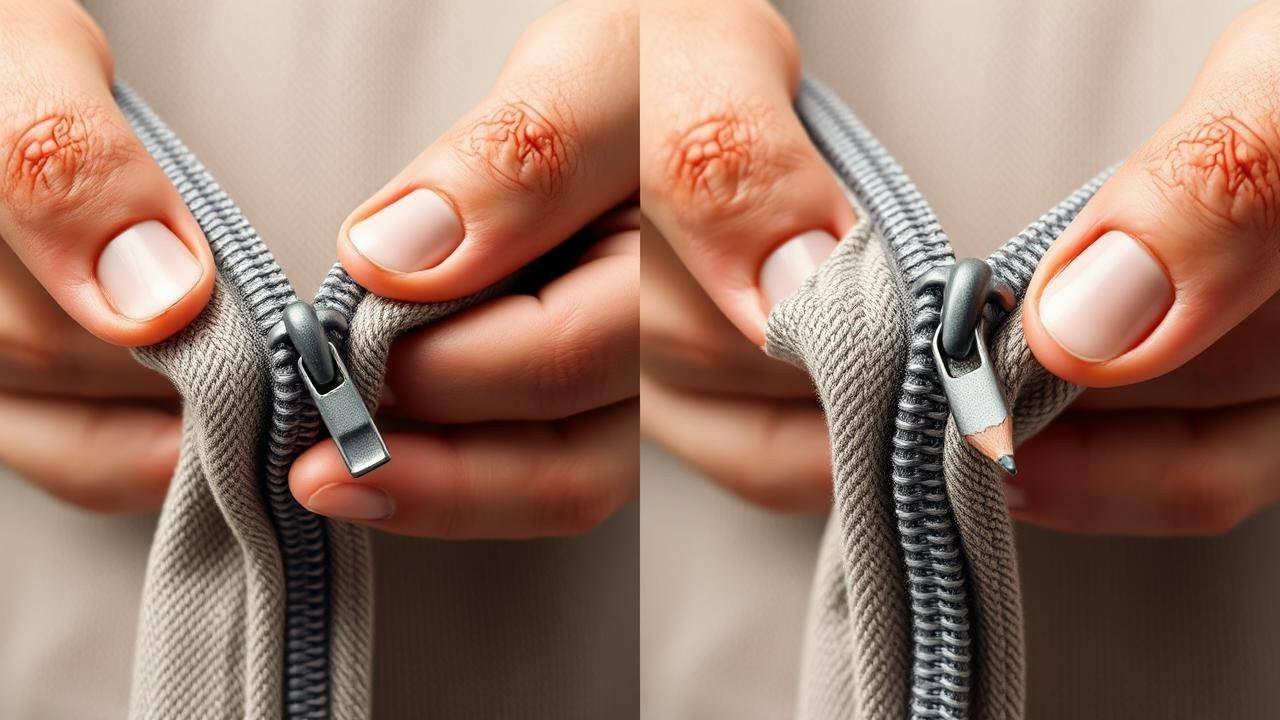
The method is clean and avoids stains from other remedies. It extends the life of clothing and gear. This hack uses basic physics for everyday repairs.
Protecting your gear with industrial-grade physicsBeyond the immediate relief of a working jacket, the pencil trick is a major win for the lifespan of your belongings. Every time you force a stuck zipper, you are causing microscopic wear and tear that weakens the integrity of the teeth. This issue is addressed in the studyImprovement of frictional properties and abrasive wear resistance of nylon/graphite composite by oil impregnation. The research demonstrates that integrating graphite into materials can drastically reduce abrasive wear. By applying this principle to your everyday gear, you are essentially giving your zippers an industrial-grade shield against the friction that leads to breakage.Adopting this method also keeps your clothes safe from the accidental stains that come with other DIY remedies. People often try using candles or lip balms, but these can leave waxy residues that are difficult to wash out. Graphite, being a dry mineral, offers a much cleaner alternative. As noted in the paper Handwriting flexible electronics: Tools, materials and emerging applications, graphite bonds easily to different surfaces without the need for messy liquid carriers. This means you can fix a zipper on a silk dress or a white canvas bag without worrying about a greasy aftermath.To get the perfect result, simply sharpen your pencil and rub it back and forth over the teeth where the slider is sticking. Once you see a light grey sheen, gently wiggle the slider up and down to distribute the powder into the mechanism. If the zipper is particularly stubborn, applying a bit of graphite to the inside of the slider itself can provide that extra bit of slip needed to overcome the snag.Ultimately, the pencil hack is a testament to the idea that some of the most effective mechanical solutions are hiding in plain sight. It proves that you do not need specialised sprays or expensive repairs to maintain your wardrobe. By understanding the simple physics of how carbon layers interact, you can turn a common pencil into a powerful maintenance tool. The next time you face a zipper that refuses to cooperate, skip the frustration and reach for your pencil case. Your clothes and your schedule will thank you.