
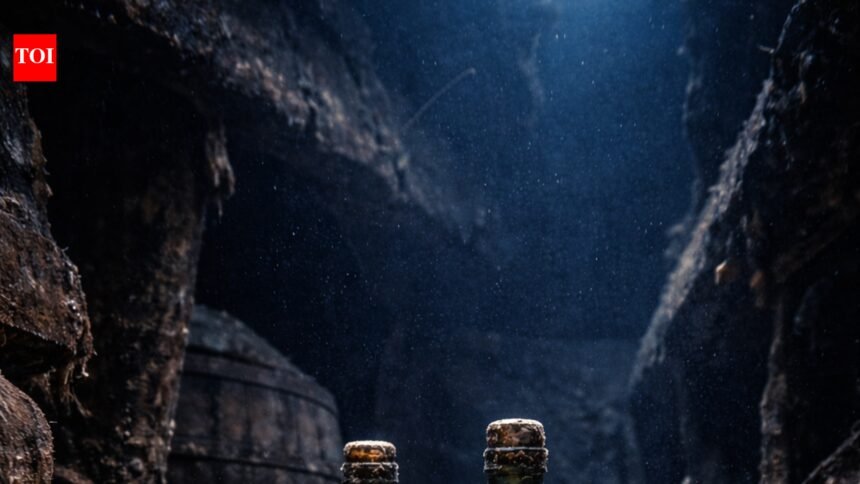
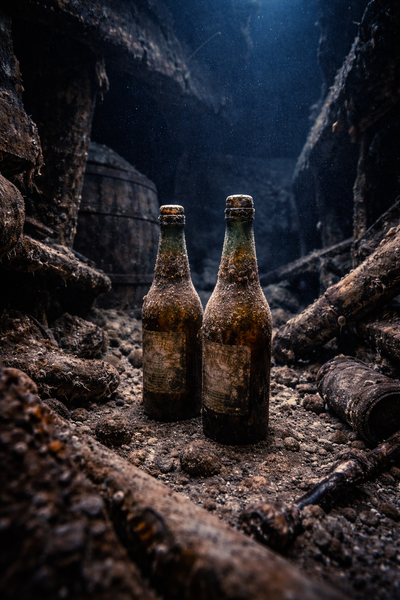
Under the cold waters of the Baltic Sea off the Åland Islands, researchers made a surprising archaeological find that provides a rare glimpse into 19th-century brewing. During a shipwreck excavation, divers recovered several bottles of beer from a schooner that sank in the 1840s. There were more than 150 bottles of champagne and five bottles of beer in the cargo. Some of these bottles were still sealed and kept underwater for about 170 years. Scientists have now analysed two of these bottles in detail, offering factual evidence about the composition, brewing techniques and chemical changes that occurred over nearly two centuries beneath the waves. This discovery is significant because it allows direct study of historic beverages, something very few scientific investigations have achieved, and it contributes to our understanding of brewing history and the stability of organic compounds over long periods.
Where the 170-year-old beer bottles were found
The schooner wreck was discovered in the summer of 2010, south of the Åland Islands in the Baltic Sea at a depth of about 50 metres. Archaeological evidence suggests the vessel sank during the 1840s, but details such as its name, destination and last port remain unknown. Alongside luxury goods such as champagne, five beer bottles were raised to the surface. One bottle even cracked during recovery and released a foamy liquid that divers reported looked and tasted like beer despite being diluted with seawater.
Scientific analysis of the preserved beer
Researchers from the VTT Technical Research Centre of Finland and the Technical University of Munich conducted detailed chemical studies of two beer bottles recovered from the wreck. According to the published research in the Journal of Agricultural and Food Chemistry, the bottles contained two distinct beers, each showing different hop and flavour compound profiles. The team included scientists such as John Londesborough, Brian Gibson, Riikka Juvonen, Ulla Holopainen, Hannele Virtanen, Arvi Wilpola and Thomas Hofmann, among others.The research revealed distinct disparities in the hop components and their degradation products between the two beers. In the 1840s, hops had more of some bittering acids than they do now. Organic acids, glucose and carbonyl compounds in the samples indicated significant bacterial and enzyme activity during their long ageing period. Despite chemical changes over time, some yeast-derived flavour compounds were still present at levels comparable to those in modern beers.
Chemical changes due to long-term submersion
The research noted that beer in the shipwreck bottles contained much higher concentrations of sodium than typical modern brews. Scientists suggest that sodium ions either diffused into the beer through the cork or seawater entered the bottles over time, leading to dilution of the original liquid by up to around 30 per cent. This may also explain why measured levels of ethanol were lower than expected when compared with modern beer standards.Researchers also documented that hop breakdown products such as hulupones and humulinic acids were present in the samples, which demonstrated the effects of oxidation and ageing over many decades. These chemical markers help scientists understand how the materials used to make beer and the beer itself were different in the mid-1800s than they are now.
What the research reveals about 19th-century brewing
The two beers analysed from the wreck appear to have used different hop batches, which is reflected in their chemical profiles. The heavier hopped beer would likely have had a greater bitterness if freshly brewed, while the other beer may have been milder. The presence of comparable concentrations of phenolic compounds in contemporary ales and lagers indicates that certain elements of beer flavour chemistry have persisted over time.Even though the beer changed because of being in saltwater, bacteria, and oxidation for a long time, there was still enough of the original composition left to give scientists useful information. These kinds of discoveries help scientists learn about how people used to brew beer and what they liked, as well as how long brewed drinks stay stable chemically.
Comparison with other ancient beverage analyses
Before this study, very few chemical analyses had been done on beer this old. While older alcohol samples such as century-old whiskies have been analysed under ideal storage conditions, beer from shipwrecks represents a unique case because of its exposure to seawater, pressure and environmental changes over many years. The beer from the Åland shipwreck, therefore, offered scientists an unusual opportunity to compare beer composition under extreme preservation conditions with modern counterparts.
Scientific and historical significance
The examination of these 170-year-old beers yields empirical information regarding the ingredients, brewing methodologies, and chemical alterations that transpire over time in historical beverages. The work published by the VTT and Technical University of Munich teams remains a reference for researchers studying the physicochemical properties and flavour stability of ancient fermented drinks.This research enhances the understanding of maritime archaeology by establishing a concrete link between historical trade artefacts and scientific examination. Scientists can connect old brewing methods with chemical evidence by looking at preserved organic materials like beer. This gives us a better idea of what life and business were like in the 19th century.