
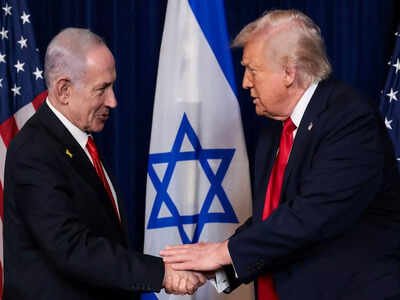
Rendezvous between world leaders are usually snooze-fests, particularly in this era where social media teams of all world leaders are hellbent on manufacturing content to make them look hip or cool. But if there’s one world leader who needs absolutely no push to generate content, it’s Donald Trump. Over the years, Trump has given moment after moment of pure unadulterated joy while interacting with world leaders.Like the time when he met North Korean dictator Kim Jong-un and demanded that the cameraman make them look “thin and beautiful”. Or when he met Syria’s new president Ahmed al-Sharaa and, in peak Trumpian fashion, reportedly gifted him cologne and a perfume for his wife before asking about his personal life. And his most recent performance didn’t disappoint either. When asked why the administration didn’t warn Iran before strikes, Trump turned to Japan’s Prime Minister Sanae Takaichi and quipped: “Why didn’t you warn us about Pearl Harbor?”But the real news point from that meeting was Trump’s anger at Benjamin Netanyahu and Israel. Speaking about Benjamin Netanyahu after Israel’s strike on South Pars, Trump said, “I told him, ‘Don’t do that’.” He went further, adding that if Netanyahu does something he does not like, “we’re not doing that anymore,” remarks he made to reporters in the Oval Office. That anger did not emerge in a vacuum. Even before South Pars, Trump’s language had begun to shift as Israeli actions pushed the conflict closer to Gulf energy infrastructure. In a Truth Social post analysed by the BBC, he described Israel as having “violently lashed out” at the gas field, an unusually sharp phrasing for an ally, and insisted the US “knew nothing about this particular attack.” He then declared that “NO MORE ATTACKS WILL BE MADE BY ISRAEL” on the South Pars field unless Iran targets Qatar again.That last clause is the key. Because if you want to decode Trump’s anger, you have to start not with Iran, but with Qatar.The Qatar Conundrum
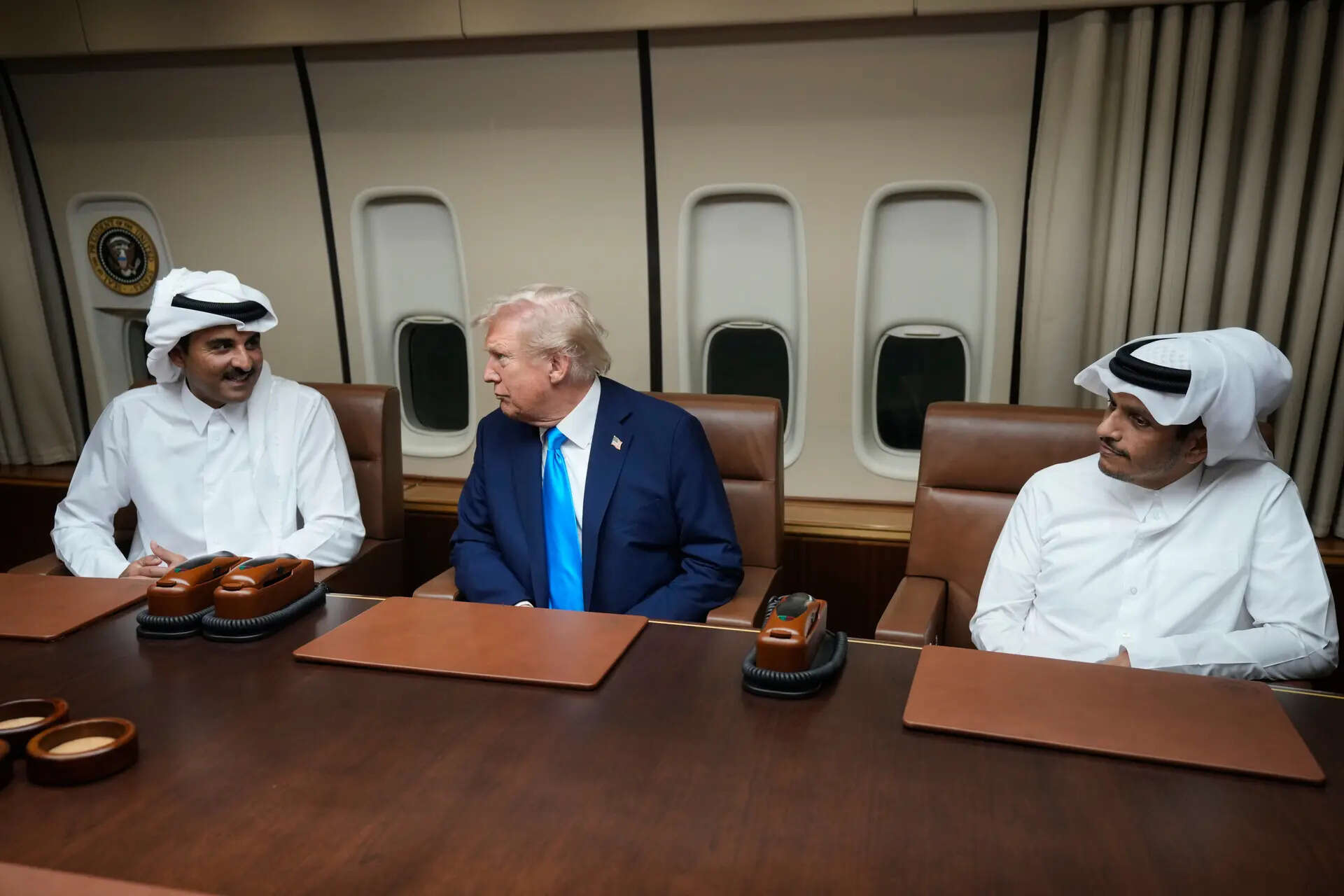
President Donald Trump, center, meets with Emir of Qatar Sheikh Tamim bin Hamad al-Thani, left, and Qatar Prime Minister and Foreign Minister Sheikh Mohammed bin Abdulrahman bin Jassim Al Thani aboard Air Force One at Al Udeid Air Base in Doha, Qatar, Saturday, Oct. 25, 2025. (AP Photo/Mark Schiefelbein)
South Pars is not simply an Iranian asset. It is part of the world’s largest natural gas field, shared with Qatar, whose LNG exports underpin energy supply chains across Europe and Asia. When Israel struck that field, it was not just hitting Iran’s revenues. It was destabilising a system tied to a Gulf partner that matters deeply to Washington.The consequences followed immediately. Iran retaliated by striking Qatar’s Ras Laffan industrial complex, one of the most critical energy hubs in the region. What had been a war against Iran’s military capabilities now began touching Gulf infrastructure and, by extension, global energy flows.For Trump, this is where the problem begins. A campaign against Iran can be managed. A conflict that drifts into Qatar cannot. Qatar hosts a major US military base, plays a central diplomatic role in the region, and sits at the heart of global gas markets. Once it is pulled into the conflict, the war stops being contained. It becomes systemic.There is also a more personal layer that is impossible to ignore in Trump’s world. Qatar has long invested in relationships across Washington, including figures in Trump’s orbit, and has engaged in the kind of high-visibility diplomacy that resonates with his transactional style. In that universe, gestures from Gulf monarchies, whether political, economic or symbolic, are rarely just formalities. They signal alignment and access.When Israeli action triggers retaliation that threatens Qatar, it is not just a strategic complication. It cuts into a network of relationships that Trump values, both politically and personally.Trump’s real concern is not Iran. It is escalationThe reporting makes clear that Trump’s discomfort is rooted in the kind of war this is becoming. His administration has focused on degrading Iran’s missile programme, nuclear infrastructure and naval capacity. Israel, by contrast, has expanded its targeting to include leadership figures and, with South Pars, economic infrastructure tied directly to Iran’s revenue.That difference is not cosmetic. It reflects two distinct approaches.Trump is trying to keep the war within a framework he can manage. His concern is that attacks on energy infrastructure will drive up oil and gas prices, destabilise shipping through the Strait of Hormuz, and create economic ripple effects that are far harder to control than military outcomes.This is why his reaction sounded less like surprise and more like frustration. The war is moving into a domain where consequences cannot be contained. Markets react. Allies grow nervous. Domestic costs follow.Trump can manage missiles. He cannot easily manage markets.Netanyahu’s endgame is broaderBenjamin Netanyahu’s approach operates on a longer horizon. Israeli actions have not been limited to degrading Iran’s military capabilities. They have extended to targets that affect the state’s internal stability and economic resilience.As reported by The New York Times, European officials see this as part of a broader strategy aimed at dismantling Iran’s sources of revenue and potentially triggering what Israeli planners describe as “state collapse.” The BBC similarly noted that Israeli officials view attacks on energy systems as a way to increase internal pressure, with one official saying such actions could “bring the uprising closer.”Netanyahu himself has framed the moment as an opportunity to reshape the region, speaking of ushering in “a new era in the Middle East,” as reported by The Independent.In that framework, South Pars is not an outlier. It is a deliberate escalation.When Netanyahu responded to Trump’s criticism, he acknowledged that Israel had “acted alone” and agreed to “hold off” further strikes of this kind, while insisting, that “no two leaders have been as coordinated” as him and Trump. It was a careful balancing act, one that preserved the alliance while signalling that Israel retains the freedom to act when it sees fit.Where they differ
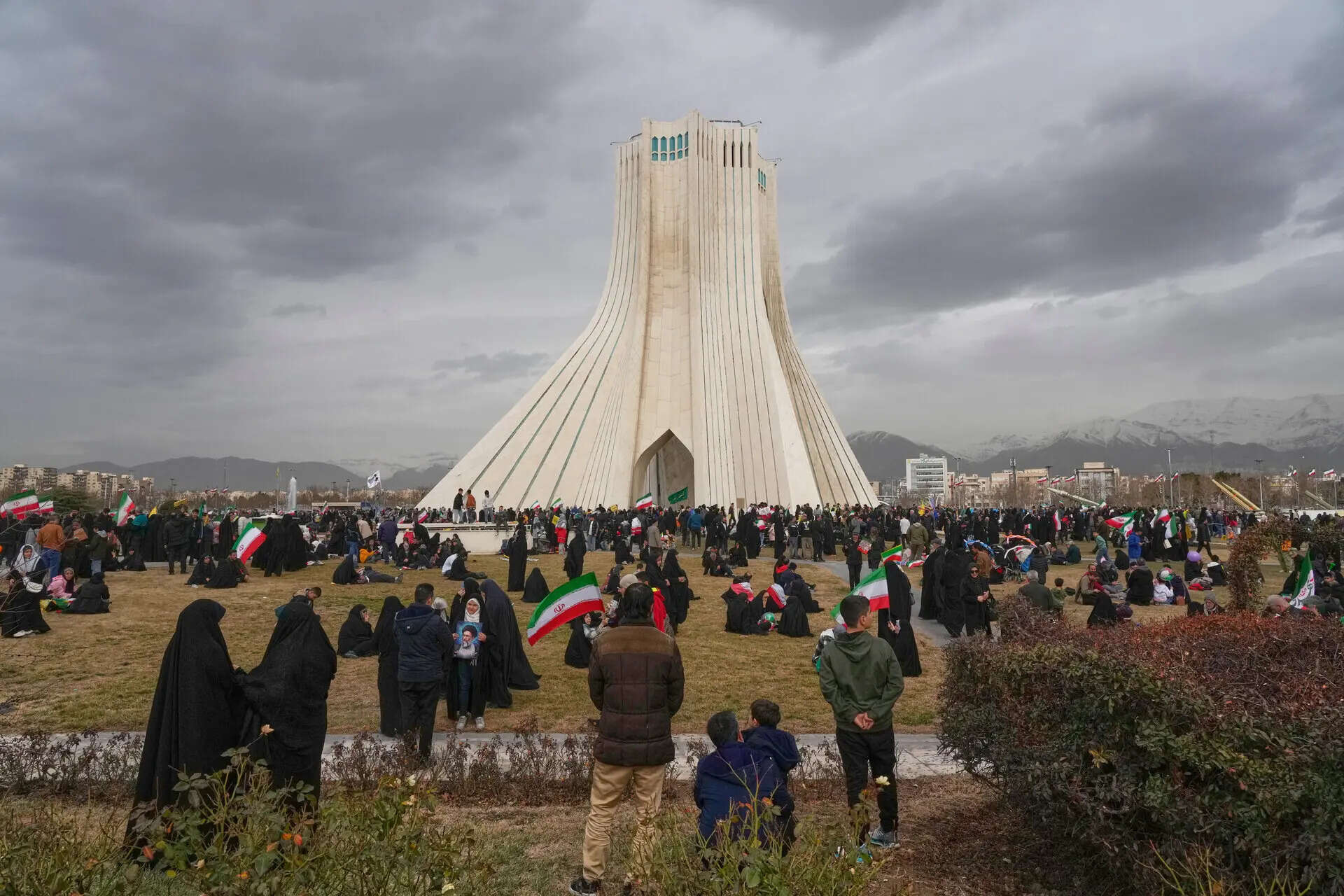
People attend an annual rally marking 1979 Islamic Revolution as they gather around the Azadi (Freedom) monument tower in Tehran, Iran, Wednesday, Feb. 11, 2026. (AP Photo/Vahid Salemi)
The divergence is now explicit. Trump’s stated objective has been to ensure that Iran “never has a nuclear weapon,” a goal he has repeated consistently. His own intelligence chief, Tulsi Gabbard, told lawmakers that “the objectives that have been laid out by the president are different from the objectives that have been laid out by the Israeli government.”Trump himself has grown more cautious about regime change, telling Fox News Radio, as reported by The Independent, that overthrowing Iran’s leadership would be “a very big hurdle” given the strength of its internal security forces.Experts see the gap clearly. Joel Rubin, a former State Department official, told The Independent that while differences are manageable for now, the real challenge will come when both sides must decide “when it’s time to end the military operation,” noting that Israel does not share the US focus on global oil market repercussions.David Satterfield, a former US envoy, told the BBC that Trump is looking for “a means to credibly declare a victory that does not ring empty” and is not pursuing a “quixotic regime change goal,” whereas for Netanyahu, Iran’s breakdown is “a desirable goal.”The real fault line This is the heart of the matter.Trump is not furious because Israel struck Iran. He is furious because Netanyahu struck a part of the war that touches Qatar, rattles energy markets, and pulls the conflict into a space where American control begins to weaken.Trump wants a war he can manage, calibrate and eventually conclude. Netanyahu is willing to push the war towards a deeper transformation of Iran, even if that means accepting wider instability along the way.For now, both leaders continue to speak the language of coordination. The alliance remains intact. But the South Pars episode has exposed a difference that cannot be easily smoothed over. Somewhere between a joke about Pearl Harbor and a gas field going up in flames, the war stopped being just about Iran. It became about limits. And for the first time in this conflict, those limits are not being set in Washington alone.