
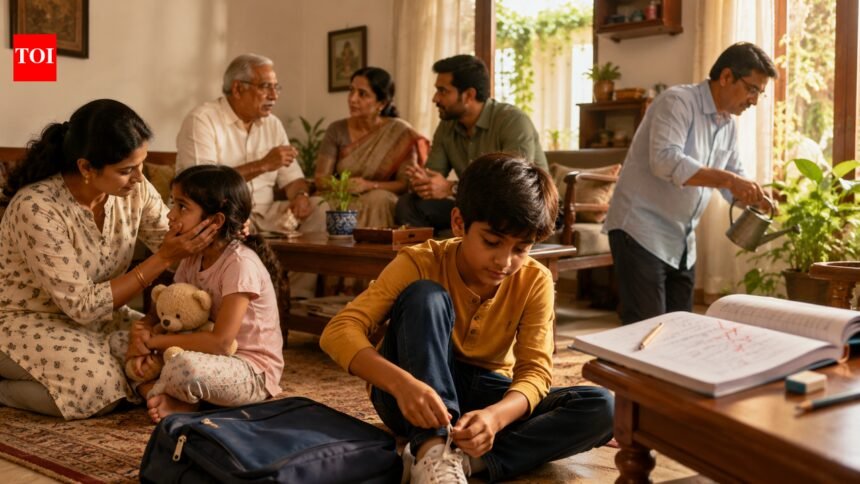

Resilience is often described as toughness, but that word misses something important. The children who grow into steady, capable adults are not usually the ones who never fall apart. They are the ones who learn, early and quietly, that hard things can be survived, feelings can be handled, and mistakes do not end the story. That kind of inner strength does not appear by accident. It is shaped, day after day, in ordinary homes, through ordinary moments: the way adults respond to disappointment, the tone used during conflict, the amount of freedom a child is given, and whether home feels like a place of fear or recovery. Resilience is built less through grand speeches and more through repeated emotional experience. Here are five things children who become resilient adults often experience at home.
They are comforted, but not rescued from every feeling
Resilient children usually grow up knowing that distress is not something to be ignored or shamed. When they are upset, someone notices. Someone stays near. Someone helps them name what they feel. That matters more than it sounds.
15 Jun 2026 | 12:57
Is spending lakhs on a child’s birthday party reasonable or insane?
A child who is soothed learns that emotion is manageable. A child who is mocked for crying, dismissed for fear, or pressured to “get over it” often learns the opposite: that feelings are dangerous, embarrassing, or best hidden.
But there is a balance. The most resilient children are not raised in homes where every discomfort is instantly erased. They are comforted, yes, but they are also allowed to experience frustration, boredom, disappointment and the slow work of recovery. They learn that being upset is not the same as being unsafe. That distinction becomes a lifelong asset.
They are trusted with age-appropriate responsibility
Children do not become resilient by being treated like glass. They become resilient by being trusted with manageable responsibility. A child who is asked to pack a school bag, help with a sibling, water plants, or fix a small mistake learns something valuable: I can contribute. I can handle more than I thought.Responsibility builds competence, and competence builds confidence. When children regularly experience themselves as useful, they develop a steadier sense of self. They stop seeing life as something that only happens to them and begin to feel capable of participating in it.
This does not mean loading children with adult burdens. It means giving them enough ownership to discover their own strength. A household that offers that kind of trust sends a powerful message: you are not powerless here.
Conflict is handled without turning love into a threat
Every family has conflict. What shapes a child is not whether arguments happen, but how they happen. In resilient homes, disagreements may be loud, awkward or imperfect, but they are not usually followed by silence that lasts for days, humiliation, name-calling, or emotional withdrawal used as punishment.Children who grow up in such homes learn that conflict is part of human life, not a sign that love is disappearing. They see adults disagree and still remain connected. They witness repair. They watch apologies happen. They learn that tension does not have to become destruction.That lesson matters far beyond childhood. Adults who have seen healthy conflict are often better at navigating stress in relationships, workplaces and friendships. They do not panic at the first sign of disagreement because they were not taught that conflict equals collapse.
Mistakes are treated as information, not as identity
One of the most important ingredients in resilience is the ability to fail without feeling permanently diminished. Children who later become resilient adults often come from homes where mistakes were corrected but not weaponised.
They were not made to feel stupid every time they got something wrong. They were not constantly compared to siblings, cousins or classmates. They were allowed to stumble, learn, try again and improve. In such homes, a bad grade is a signal, not a verdict. A poor choice is something to reflect on, not a label to carry forever.This kind of parenting teaches psychological flexibility. It gives children the courage to attempt difficult things because they are not terrified of humiliation. In adulthood, that translates into persistence, adaptability and a healthier relationship with ambition. They can take criticism without collapsing under it.
They see adults recover from stress in healthy ways
Children are always watching, even when they seem distracted. One of the clearest lessons they absorb is not what adults say about resilience, but what adults do when life gets difficult.In homes where resilience grows, children often see adults pause before reacting. They may see someone take a walk after an argument, call a friend, pray, journal, rest, or ask for help. They watch stress being handled, not denied. They watch emotions move through the house without taking them over completely.This matters because children do not just inherit words. They inherit patterns. A child who sees panic as the only response to difficulty may grow up expecting catastrophe. A child who sees adults steady themselves after setbacks learns that stress is real but not final. That may be the deepest lesson of all: resilience is not the absence of struggle. It is the presence of a framework that helps a person move through struggle without losing themselves.