
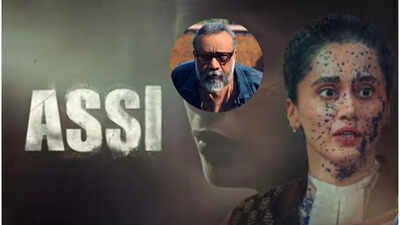

Anubhav Sinha’s latest film ‘Assi’, recently released in cinemas, is earning praise for its powerful storytelling and performances, starring Taapsee Pannu. The courtroom drama tackles sensitive issues with intensity. Interestingly, the filmmaker’s outlook on distribution has shifted since 2022. When ‘Anek’ released, he suggested smaller films should opt for brief theatrical runs followed by quick OTT premieres so they could survive alongside big spectacles. Now, with ‘Assi’ in theatres, he says his thinking has changed completely.
A complete change of heart
In an interview with Mid-day, Sinha now believes the future belongs to mid-scale cinema rather than tiny releases rushing to streaming. Reflecting on the current landscape, he said, “I’m saying the exact opposite today. The future is this size [of films]. Mid-size, medium budget, and high-concept films have the highest chance of a good ROI [return on investment].” According to him, such films balance creative freedom and financial safety.
Why content-driven cinema still matters
Over the past several years, Sinha has focused on socially relevant stories through films like ‘Mulk’, ‘Thappad’, and ‘Bheed’. He insists this is the only kind of filmmaking he truly understands. Even though large commercial entertainers dominate box offices, he believes thoughtful cinema will always find viewers if budgets remain realistic. “I love Rajkumar Hirani and Rohit Shetty films as a viewer. But as a filmmaker, this is all I want. So, I will fight for my and my peers’ right to make films we believe in.” He admits funding remains a major challenge for many directors, adding that newcomers often struggle to secure backing despite strong scripts.
About ‘Assi’: cast, crew and story
‘Assi’ is a courtroom drama directed by Anubhav Sinha and backed by Bhushan Kumar, Krishan Kumar, and the filmmaker himself. Taapsee Pannu leads the cast as a lawyer fighting a high-stakes sexual assault case against powerful forces. Supporting roles are played by Kani Kusruti, Revathy, Manoj Pahwa, Kumud Mishra, and Mohammed Zeeshan Ayyub.