
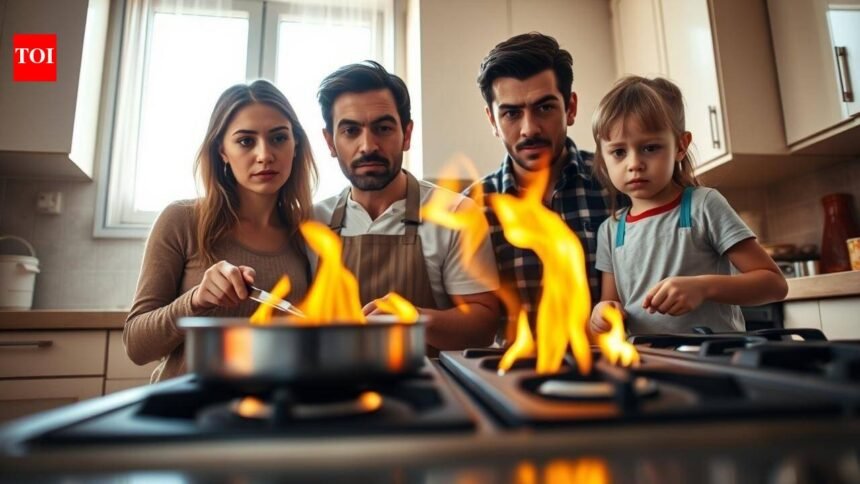

In the heart of the house lies the kitchen, which hums through a gas flame in its beating action. The blue light emanating from the flame, steady and dependable, can only be noticed when it wanders away from its blue colour and assumes a lethargic yellow flame. Although it may seem more appealing and cosy, it also means that your stove cannot suck up enough air, which can affect the air throughout the entire house.This is an indication that there is incomplete combustion. In order for the gas stove to work effectively, the fuel and the air have to be mixed in the correct proportions. Once there is a disruption in the balance, which is sometimes brought about by food remnants or greasy surfaces, then the fire will take on another form. It’s not only important that one learns how to recognise these changes in terms of appliance maintenance; it is also important from a health point of view.The science behind the blue flameIn order to understand why this type of flame is desirable, one needs to understand some of the science behind a fire. In other words, a blue flame is one in which the gases are completely burned. The Environmental Protection Agency (EPA), in its article Sources of Combustion Products, explains that when the fuel receives sufficient air, it produces a blue flame. In cases where the fuel is being supplied with less air than it requires, the fire becomes cooler, and the carbon particles in the fuel do not burn completely.This is not only a waste of energy resources but also poses some health risks. In particular, according to the EPA, incomplete combustion leads to the formation of many types of indoor contaminants, including carbon monoxide and nitrogen dioxide. Carbon monoxide is particularly hazardous since it is odourless and colourless, which means it can lead to the depletion of oxygen in the body. In small amounts, the contaminant may make people feel weak, dizzy, and have headaches; this experience is often confused with an ordinary cold or the “winter blues.”A threat to breathingOf course, the dangers associated with a non-optimised gas burner are not limited to carbon monoxide exposure. Another product of gas combustion is nitrogen dioxide, which can irritate respiratory passages. According to the EPA, high concentrations of nitrogen dioxide can cause inflammation of the lung mucosa and increase the likelihood of respiratory infection, especially in people suffering from asthma.In poorly ventilated kitchens, gases may linger for hours after preparing the meal. This explains why there may be an odour of chemicals emanating from a yellow flame, as well as reddish-brown colouring of the air when the accumulation becomes too much. In other cases, the presence of a yellow flame may indicate potential danger, especially among those individuals who are already at risk, like babies, elderly people, and those with cardiac problems. A blue flame means the safety of the device in question; therefore, maintaining the blue colour prevents it from becoming a dangerous object in the household.
A simple cleaning can restore the efficient blue flame, but persistent issues may require professional attention and proper ventilation.
Blue flame once again, with one easy weekend fixFortunately, for the most part, a yellow flame comes from accumulated food residue instead of a defect in the burner itself. The accumulation of oils, salts, and dust after several months of using the device clogs the small nozzles in its structure, reducing oxygen supply and leading to a yellow flame. Thus, cleaning the burner will eliminate the problem and restore the blue flame.A basic do-it-yourself cleaning process would suffice. Begin by ensuring that the gas supply is turned off and the stove is cool enough to work on; next, remove the burner caps and burner heads. The burner caps will be easier to clean after being soaked in soapy water to loosen up the grease that restricts airflow. Scrubbing the burner heads’ small openings with a toothbrush is advised. As per the Environmental Protection Agency, maintaining clear burner port openings is the most effective technique for home users to minimise indoor combustion contaminants. You should get your blue flame back once all components are dry and put back together.When to call in the professionalsShould a proper cleaning fail to restore the blue flame, it is time to call in the professionals. Persistent yellow flames might indicate gas pressure or an incorrectly set air shutter that requires professional servicing. Furthermore, you must have sufficient kitchen ventilation by using a venting exhaust fan or opening a window while cooking. All these factors, when combined with monitoring the burner flame colours, will help make your stove a pollution-free and efficient meal preparation appliance.