
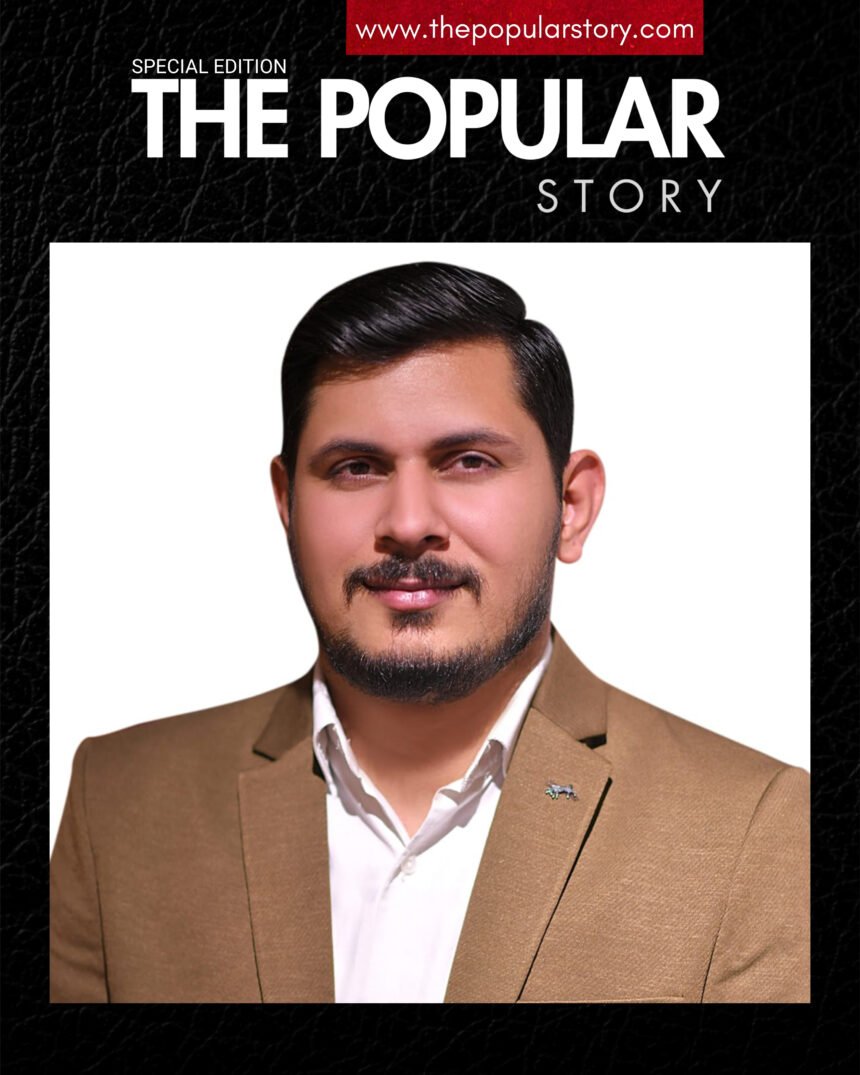
Dr. Sahil Singh’s journey from Rudrapur, Uttarakhand, to the global humanitarian arena reflects a powerful blend of dedication, knowledge, and purpose-driven leadership. At just 30 years old, he became the youngest Indian to be appointed as an Ambassador with the UN-affiliated Intergovernmental Institution for the Use of Micro-algae Spirulina Against Malnutrition (IIMSAM), where he contributes to international efforts aimed at addressing malnutrition through sustainable and science-backed nutritional solutions.
Raised in Rudrapur, Dr. Singh’s path has been marked by strong ambition supported by continuous learning and preparation. A respected academician and serial entrepreneur, he began his professional journey in 2013 with the National Institute of Electronics & Information Technology (NIELIT), an institution under India’s Ministry of Communications and Information Technology. Between 2016 and 2017, he also served as Personal Secretary to the Minister of Ores & Minerals in the Government of Uttarakhand, gaining valuable administrative and governmental experience that further broadened his understanding of governance and diplomacy.
With an impressive portfolio of 33 diplomas and certifications in computer science and information technology, Dr. Singh has developed a strong technological foundation. Over the years, he has established and led technology ventures operating across different countries and continues to hold leadership roles as Managing Director, Chairman, and Advisor for several multinational organizations.
His worldview has been deeply influenced by his upbringing and the principles instilled by his late mother. Motivated by these values, Dr. Singh pursued multidisciplinary education spanning technology, policy, and development studies. This diverse background helped him cultivate a practical, innovation-driven perspective toward solving complex global challenges.
In his current role with IIMSAM, he actively promotes the use of Spirulina — a nutrient-rich microalgae recognized for its high protein and micronutrient content — as a sustainable tool to help combat malnutrition, particularly in vulnerable and undernourished populations. His efforts focus on raising awareness, encouraging policy engagement, and supporting large-scale distribution initiatives to bring nutritional solutions to communities that need them most.
Working alongside governments, institutions, and international development partners, Dr. Singh advocates for solutions that combine local adaptability with global cooperation. His approach highlights how innovation, nutrition science, and diplomacy can converge to deliver meaningful and lasting humanitarian impact.