
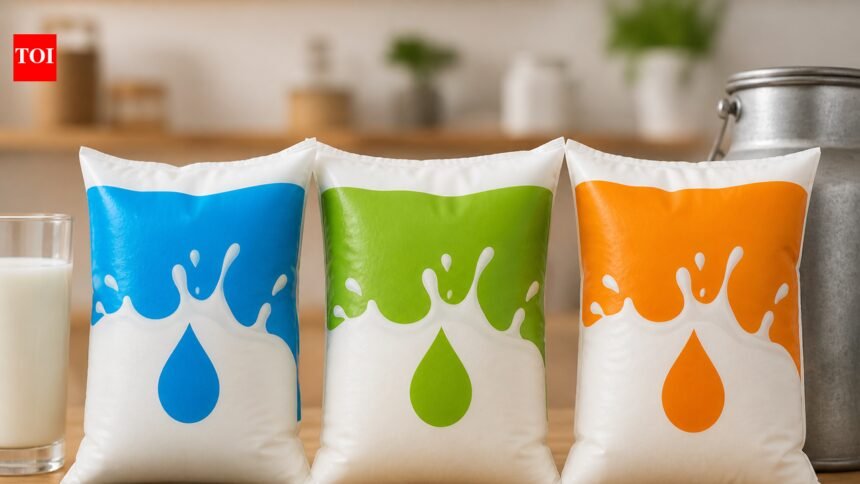

Walk into a dairy aisle in India and the milk packets do not just sit there as plain white pouches. They arrive in a neat little colour code: blue, green, orange and sometimes more. For many shoppers, that splash of colour is the quickest clue to what is inside the packet. It signals whether the milk is lighter, richer or somewhere in between, even before the label is read. Over time, this simple system has become an everyday shorthand, helping people pick the right milk in seconds without needing to decode technical details. Scroll down to know why…
A colour code that works like shorthand
While FSSAI does regulate food labelling, safety, and what must be printed on packets (ingredients, license number, etc., however, these colours are decided by individual dairy brands (like Amul, Mother Dairy, Aavin) to indicate fat content or type of milk The logic behind the system is simple: colour becomes a visual shortcut for fat content and milk style. In standard government guidelines followed by many dairies, blue typically corresponds to toned milk at around 3.0% fat, green to standardised milk at about 4.5% fat and orange to full cream milk at roughly 6.0% fat. Some variants also use magenta to indicate double-toned milk, which has a lower fat content of around 1.5%. That means the packet colour is not decorative. It is part of the product identity. A shopper who already knows the code can spot the right milk at a glance, whether they want something lighter for daily tea or a richer version for curd, sweets or cooking. These are not vague marketing labels but clearly defined dairy categories with specific nutrition profiles.
Why dairies use colours at all
Milk is one of those everyday products people buy on autopilot. In that kind of purchase, speed matters. A colour system reduces confusion, especially when a brand sells several versions of the same product side by side. It turns a technical detail, fat percentage, into something instantly readable. That is useful in a country where milk is bought by everyone from busy office workers to home cooks, and where families often stick to one familiar packet for years. Across brands, the packaging clearly separates one milk type from another by colour, fat percentage and use, making the choice quick and intuitive. There is also a practical reason behind the design. Milk is a fast-moving household item, and branding has to do more than look neat. It has to help customers choose quickly, remember the variant they trust and avoid mixing up products with different fat levels. That is why the colour is often as memorable as the name.
The packet colour is not the same as the milk’s quality
One common misunderstanding is that a darker or brighter colour means “better” milk. That is not how the code works. The colour mainly signals the type of milk and its fat content, not whether one packet is universally superior to another. Each category serves a different need: double-toned milk is the lightest, toned milk sits in the middle, standardised milk is richer, and full cream milk is the richest of the common variants. That is why the “best” packet depends on what a household wants from it. Some families prefer lighter milk for routine use. Others choose fuller milk for taste, texture and cooking. The colour makes that choice easier without forcing customers to study nutrition facts every morning.
A system that has become part of daily life
The interesting thing about milk packets in India is how quickly these colours became part of the country’s domestic vocabulary. People do not always remember the exact fat percentage, but they remember blue, green and orange. Over time, the colour itself has become a kind of shorthand passed from one generation to the next. That is why someone in a family can ask for “the blue packet” and everyone at home knows exactly what that means. This is also why milk packets feel strangely personal. They are ordinary objects, but they carry a kind of household memory. The colour people grew up with often becomes the colour they keep buying, long after they have stopped thinking about the label. A simple design choice ends up shaping habit.
Small design, big convenience
At first glance, the colours on milk packets might seem like a branding quirk. In reality, they are a compact language of convenience. Blue, green and orange help shoppers make quick decisions, distinguish milk types and match the product to their needs. In official dairy listings, those colours are not random at all; they are tied to clearly defined fat percentages and milk categories. That is the real reason the system has lasted. It is simple, memorable and useful. And in the rush of daily life, that is often exactly what a good design does best.