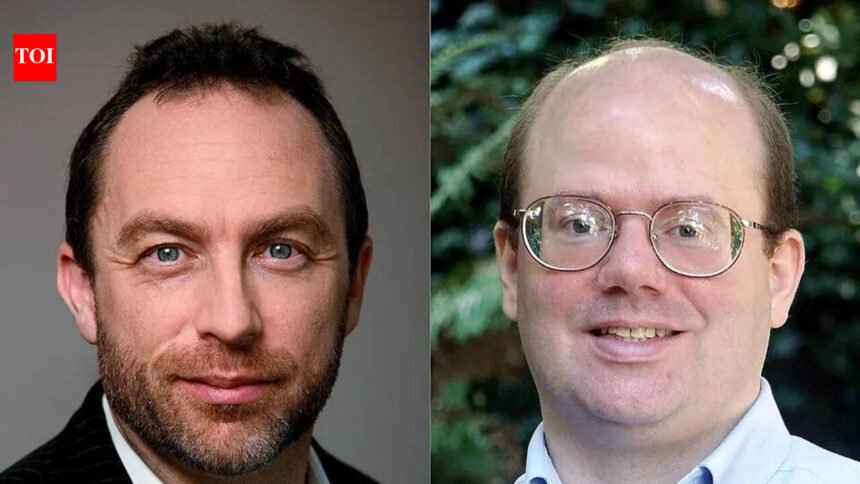

If you’ve ever fallen down a Wikipedia rabbit hole at 2 a.m, starting with with the Bermuda Triangle and somehow ending up on the page for the 1987 World Snooker Championship, then you’ve experienced one of the greatest accidents of the internet. Here’s the thing: Wikipedia was never meant to be Wikipedia. It was a Plan B. A workaround, and it worked so well that it made the original plan irrelevant.The project no one had heard of, and why it kept stallingBefore Wikipedia, there was Nupedia. Back in 2000, Jimmy Wales and Larry Sanger were trying to build a free, expert-reviewed online encyclopedia. Sounds good on paper, but in practice? It was moving at the rate of a DMV line. Nupedia had a rigorous peer-review process involving editors and scholarly gatekeepers across seven steps. Sounds thorough, but the process was too slow, and the result of many years of work was only a handful of full articles.So Sanger suggested something different: to open it for everybody to edit. Then send the best candidates through the formal review pipeline. It was a practical fix to a real bottleneck, not some grand vision of democratising knowledgeJanuary 2001 changed everything quietlyAccording to a study published in the Journal of Pathology Informatics, Wikipedia was originally created in 2001 as a source of draft content for Nupedia. Articles written on Wikipedia were meant to be eventually refined by experts.However, something surprising happened: a lot of people showed up and went on writing. The open model meant that anyone could contribute, and drafts were completed faster than any review committee could handle. Wikipedia wasn’t feeding Nupedia any more; it was lapping it.Why ‘anyone can edit’ was a superpowerWikipedia’s genius was not a fancy algorithm or Silicon Valley pitch deck. It was the realisation that a thousand imperfect contributions are better than ten perfect ones when you’re trying to cover all of human knowledge. Wikipedia doesn’t wait for a few experts to write the final word from scratch; it lets ordinary people add a paragraph here, correct a date there, fill out a stub about some obscure subject they happened to know a lot about. All those little edits together added up to a lot. The platform could grow in a constantly growing fashion and self-correct over time. Honestly, that’s actually how most knowledge works in the real world.
Jimmy Wales at Wikimania 2013, reflecting on the Wikipedia experiment that started as a workaround and became a movement. Image Credits: Wikimedia Commons
The workaround became the main thingHere’s where the story gets genuinely wild. The backup plan replaced the main plan. Wikipedia didn’t just surpass Nupedia; it made it irrelevant. The expert-led encyclopaedia, which was supposed to be the real product, quietly died out, and the supplement it was supposed to feed became one of the most visited websites on the entire internet.Nupedia’s model valued control and accuracy the most. Those were reasonable goals, but control without speed meant the project was not scalable. Wikipedia offered something different. It was good enough, fast and constantly improving.What this actually means for how we think about knowledgeThe story of how Wikipedia came to be really isn’t about tech or encyclopaedias. It’s about what happens when you lower the barrier to participation. Today, it’s easy to take Wikipedia for granted. It’s just there at the top of just about every Google search, a resource to be tapped into for free. From quantum mechanics to the trivia of reality television, we have the information about everything at our fingertips, but it exists because in 2001, when a slow process wasn’t working, two people decided flexibility was better than control.In 2001, Wales and Sanger were not out to create a cultural institution. They were trying to save a stalled project from dying, but the tool they created to address this problem turned out to have much broader applications.The study, Wikipedia: A Key Tool for Global Public Health Promotion, describes Wikipedia as a freely accessible, multilingual, collaboratively authored encyclopaedia, a description that still applies more than two decades later. This is more than a product description; it is a fundamental change in the way human knowledge is organised and shared.What started as a rescue plan became the world’s encyclopedia.