
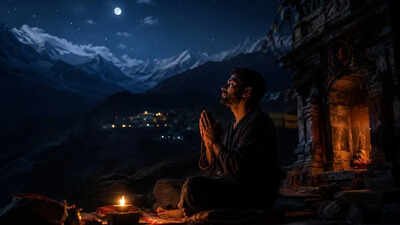

Most people think mantra chanting simply means repeating a sacred phrase again and again. But traditional spiritual systems never treated all chanting as the same practice. The method changes the experience. The energy changes. The impact on the mind changes too.Some forms make the atmosphere powerful. Some pull the mind inward. Some sharpen concentration. Some slowly become part of breathing itself.Which is why mantra traditions classified chanting into different forms instead of putting everything into one category.
Vaikhari Japa – Chanting Out Loud
Vaikhari Japa is the most externally visible form of mantra chanting. The mantra is spoken clearly enough for the ears to hear it properly. Most temple chanting, bhajans, kirtans, and beginner mantra practices begin from here.This form works strongly because the voice, breath, ears, and body stay involved together. The mind gets fewer opportunities to wander because multiple senses participate in the repetition at the same time.Vaikhari chanting also changes the atmosphere of a place very quickly. Certain mantras were traditionally chanted loudly specifically for space cleansing, devotional activation, and energetic upliftment.Sound carries vibration. And repeated vibration changes mental rhythm.
Upanshu Japa – Whispered Chanting
In Upanshu Japa, the lips move softly, but the sound barely leaves the mouth. The practitioner hears the mantra internally more than externally.This form immediately pulls awareness inward. External distractions start reducing because the focus shifts towards quieter repetition. Many practitioners naturally move towards this stage once loud chanting starts creating stability in the mind.The energy here feels more concentrated and personal.Less outward expression.More inward absorption.
Manasik Japa – Mental Chanting
Manasik Japa happens completely inside the mind. The lips do not move. No sound comes out. The mantra is repeated mentally with full awareness and deliberate focus.This is where mantra chanting stops becoming vocal repetition and starts becoming mental discipline.And this stage changes the experience completely.The mind no longer depends on external sound or physical rhythm. The concentration comes entirely from internal awareness. Which is why Manasik Japa is traditionally considered more powerful than ordinary verbal repetition.The mind starts listening to itself directly.
Likhit Japa – Writing the Mantra
Likhit Japa involves writing the mantra repeatedly instead of speaking it aloud. Many practitioners fill entire notebooks with sacred repetition as part of spiritual discipline.This form affects the mind differently because the hands, eyes, focus, and repetition begin working together continuously. People with restless thinking patterns often find written chanting surprisingly grounding because writing naturally slows mental speed.Thoughts become more organised.Attention becomes steadier.And the mantra starts becoming physically visible instead of remaining abstract.
Sankirtan – Collective Chanting
Sankirtan is group mantra chanting done collectively, often with music, rhythm, clapping, instruments, or devotional singing. Bhajans and kirtans fall into this category.This form works differently from silent chanting because it creates collective emotional energy. Breathing patterns synchronise. Emotional release becomes easier. Devotional atmosphere becomes stronger.Which explains why many people leave powerful kirtan sessions feeling emotionally lighter without fully understanding what changed internally.The experience becomes emotional before it becomes intellectual.
Ajapa Japa – The Mantra That Continues on Its Own
Ajapa Japa is not ordinary chanting. It is a spiritual state where the mantra starts continuing internally without deliberate effort.The practitioner no longer “tries” to repeat the mantra constantly. The repetition starts flowing naturally within awareness itself, almost like breathing.Which is why traditional yogic systems treat Ajapa Japa as an advanced spiritual condition rather than just another chanting method.Manasik Japa is conscious practice.Ajapa Japa is when the mantra stops feeling separate from the practitioner.The chanting continues even in silence.
Which Type of Mantra Chanting is Best?
No single form works best for everyone because different minds respond differently.Some people connect deeply through sound. Some through silence. Some through writing. Some through collective devotional energy. Most practitioners naturally move through stages over time.Loud chanting becomes whispering. Whispering becomes mental repetition. And eventually, the mantra starts staying even after the chanting stops.