
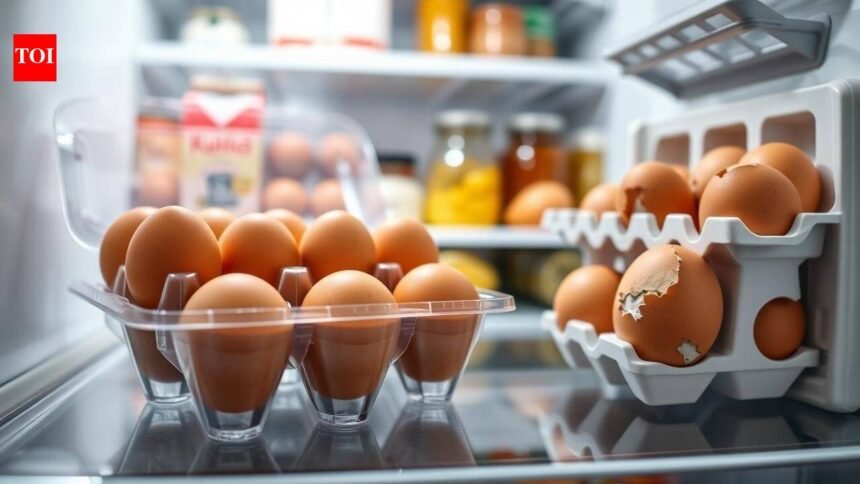

After visiting the grocery store, we tend to follow an automatic routine: walking into our kitchens, opening the doors of our refrigerators, and placing the newly purchased eggs into their assigned spots on the inside of the fridge doors. However, following such a routine may be the greatest mistake we make when it comes to storing our food items.Eggs can be hardy, but they are extremely sensitive to their environment. Storing eggs is not only about their longevity, but it also concerns the safety of your food, which you serve at your dinner table. If the egg whites appear thin and weak, and yolks are easily breakable, it may be because of the location that was designed for their convenience.Danger of constant changes in temperatureHowever, it is not necessarily the storage place itself that causes trouble, but the refrigerator as a whole. Every time you open your fridge to pour yourself a glass of milk or take something out, the outer shelves are exposed to the rush of warm air from the kitchen. Then, they gradually cool down after the door closes again. The constant fluctuation of temperature can negatively affect the storage of eggs.According to the Refrigeration and Food Safety guide by the USDA Food Safety and Inspection Service, perishable foods like eggs must be kept at a steady temperature of 40 degrees Fahrenheit or below to inhibit bacterial growth. The outermost shelving is the warmest part of the refrigerator and the area most susceptible to these dangerous fluctuations. When eggs go through repeated warming and cooling cycles, it can lead to condensation on the shell. This moisture can actually help bacteria like Salmonella penetrate the microscopic pores of the eggshell, compromising the safety of the interior.To prevent spoilage, according to the USDA, you should place your eggs out of reach of the refrigerator door. It is best if you put your eggs in the middle or lower parts of your refrigerator, close to the back wall, since this area tends to be cooler regardless of repeated opening and closing of the door. This will help keep your eggs consistently cool, thus slowing down spoilage and maintaining the thickness of the egg whites and yolk stability.
For optimal freshness and safety, keep eggs in their original carton in the cooler, more stable middle or lower sections of the fridge.
The original box is the safest optionAn often-made mistake is placing eggs in the built-in egg compartments while using the original boxes for other purposes. Although the built-in compartments may look nice and fancy, they do not provide the same level of protection as the original boxes. Egg cartons serve more than just a single purpose.First, the carton protects the eggs from absorbing “off” odours. Eggshells are porous, meaning they can easily pick up the scent of that leftover onion or pungent cheese sitting nearby. The What You Need to Know About Egg Safety guide by the FDA points out that keeping eggs in their original carton acts as a barrier against these flavours. Second, the carton prevents moisture loss, which keeps the egg from drying out and shrinking inside the shell. Finally, it keeps the eggs in the “large end up” position, which helps keep the yolk centred and the air cell stable.The FDA also warns against a common “deep clean” habit: washing your eggs before you put them away. It might seem like a good way to ensure hygiene, but commercial eggs in most regions are already washed and sanitised before they reach the store. Re-washing them at home can actually strip away a natural protective coating and push bacteria through the pores and into the egg.In the end, it is about making sure your eggs remain stable enough for you to enjoy them. It will be better if you leave that temptation to put your eggs inside the outer bins and keep them in their cartons in the inner part of the fridge. Following such a basic food safety measure ensures that your baked foods come out great.