The Decision Review System, better known as DRS, lets a team challenge an on-field umpire’s decision by asking the third (TV) umpire to check it with technology. It was introduced in international cricket in the late 2000s to reduce clear umpiring errors.
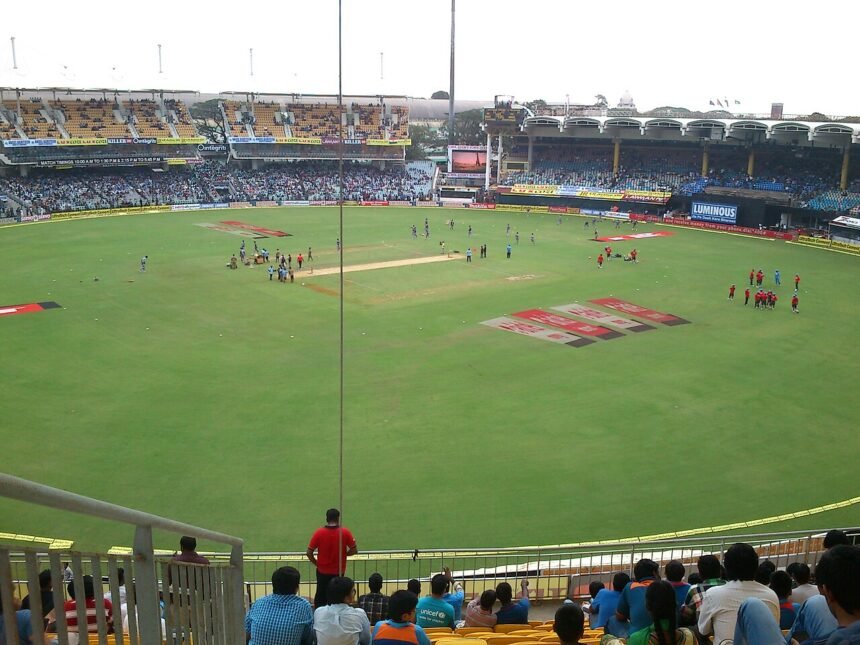
Photo credit: Kaila5hravi, CC BY-SA 4.0, via Wikimedia Commons.
How a review works
When a batter is given out or not out, the batter or the fielding captain can signal for a review within a few seconds. The on-field umpire then refers the decision to the third umpire, who studies replays and tracking data before telling the on-field umpire whether to keep or change the decision.
The technology involved
- Ball tracking: software such as Hawk-Eye predicts the path of the ball for LBW decisions.
- Edge detection: sound-based tools such as UltraEdge or Snicko check whether the ball touched the bat.
- Thermal imaging: HotSpot has also been used in some series to show contact between ball and bat or pad.
The exact tools used depend on the series and the host broadcaster.
Limited reviews
Each team gets a limited number of unsuccessful reviews in an innings, set by the playing conditions. A review that overturns the decision is not counted against the team.
What is “umpire’s call”?
On an LBW review, ball tracking may show the ball only just clipping the stumps. In such marginal cases the original decision of the on-field umpire stands, which is called “umpire’s call”, and the team does not lose its review if the ball was at least partly hitting the stumps.
Sources: ICC playing conditions and Laws of Cricket (MCC). Written by The Popular Story desk. Rules on the number of reviews can vary by format and change over time, so please check the ICC for the current rules.