Estonia will close its road border crossings with Russia from 1 December, the government said, after what officials describe as a Russian-ordered attempt to sabotage a local defence company.
Foreign Minister Margus Tsahkna announced the plan on 15 November. He said closing the crossings will reduce Russia’s ability to carry out hostile activities against Estonia and help limit attempts to get around sanctions.
What happened
In the early hours of 14 November, Estonian authorities detained eight Latvian citizens suspected of trying to set fire to a facility of Threod Systems in Viimsi, just outside Tallinn, and cause an explosion, Defense News reported.
The company’s security staff stopped the attack in its early stage. Threod said the site suffered no significant damage and production was not disrupted.
Threod Systems makes unmanned aircraft, launchers for one-way attack drones and surveillance systems. Its equipment has been used by Ukraine’s military.
Who Estonia blames
Margo Palloson, head of Estonia’s Internal Security Service (KAPO), said intelligence showed the attack was carried out on the orders of the GRU, Russia’s military intelligence agency. Prosecutor General Astrid Asi said the case is being investigated as activity against Estonia’s security on behalf of a foreign intelligence service.
The reports reviewed for this article did not include a response from Moscow to the allegation.
It is not the first such case. In August, a fire broke out at Milrem Robotics, another Estonian defence firm in Tallinn. Three suspects were arrested in Latvia, and Estonian intelligence later said that attack was commissioned by Russian security services.
What closing the border means
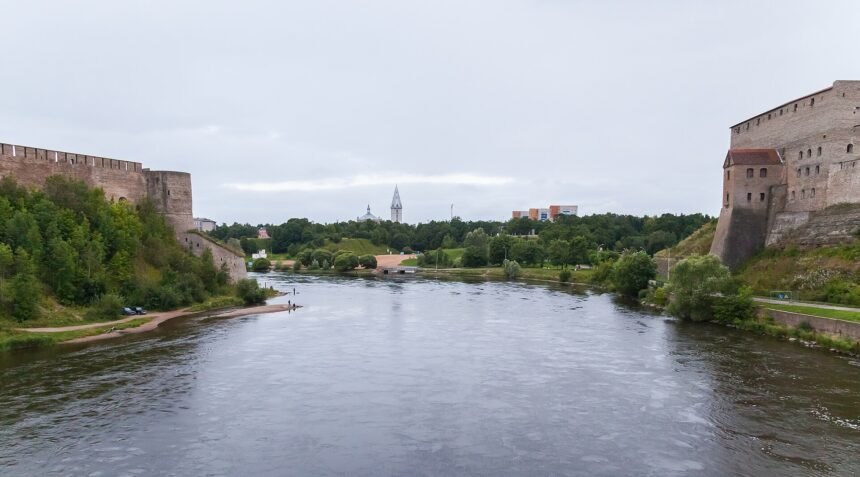
Estonia shares a land border of about 300 km with Russia, much of it along the Narva river and Lake Peipus. The main road crossings are at Narva, Koidula and Luhamaa. Narva, a mostly Russian-speaking city, sits directly opposite the Russian town of Ivangorod.
The government has not yet published full details of exceptions, such as for Estonian citizens or humanitarian cases. People who regularly cross for family or work are likely to be most affected.
Tsahkna said he had informed his counterparts in Finland, Latvia and Lithuania, and planned to push for more pressure on Russia at a meeting of EU foreign ministers in Brussels, including tougher sanctions and a stricter visa policy. “Any attempt to threaten Estonia’s security… will be met with a decisive response,” he said.
Finland closed its own land border with Russia in late 2023, citing a surge of migrants it said was organised by Moscow.
Reporting based on Estonia’s Ministry of Foreign Affairs and Defense News.
Featured image: Diego Delso, via Wikimedia Commons (CC BY-SA 3.0)