
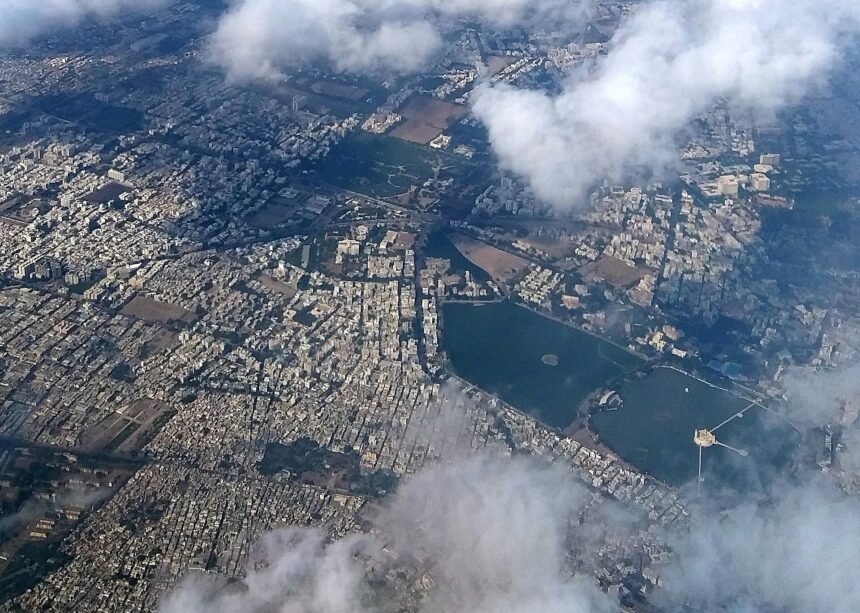
The Indian armed forces have opened Exercise Sahayata Setu, a multinational disaster relief drill at Air Force Station Jamnagar in Gujarat, with representatives from 24 countries taking part. The exercise runs from November 17 to 19 and is formally called the Annual Joint Humanitarian Assistance and Disaster Relief Exercise 2026, or AJHE-26.
The drill is being run under Headquarters Integrated Defence Staff and the Indian Air Force’s South Western Air Command. Along with the Army, Navy, Air Force and Coast Guard, national bodies such as the National Disaster Management Authority, the NDRF and DRDO are involved, as are officials from the Ministry of External Affairs.
Who is taking part
The foreign participants span the Indian Ocean region and beyond. According to reports citing ANI, they are Australia, Bangladesh, Comoros, Indonesia, Kenya, Madagascar, Malaysia, Maldives, Mauritius, Mozambique, Oman, Seychelles, Singapore, Somalia, South Africa, Sri Lanka, Tanzania, Thailand, the UAE, Yemen, Japan, the United States, Myanmar and Nepal.
Many of these countries are linked to the Indian Ocean Rim Association (IORA), the BIMSTEC grouping around the Bay of Bengal, or the Quad. On the first afternoon, a Quad working-level meeting was held on how the four partners can better coordinate their relief efforts. The list is a mix of large militaries and small island nations that often depend on outside help when a cyclone or flood hits.
What happened on day one
The exercise opened with a brainstorming seminar. Air Marshal PV Shivanand, Air Officer Commanding-in-Chief of South Western Air Command, gave the keynote address and stressed integrated planning, joint capability development and smooth coordination when disasters strike.
One session, titled “India’s Growing Global HADR Footprint”, looked at case studies from three Indian relief missions: Operation Amistad, Operation Brahma and Operation Sagar Bandhu. Operation Brahma was India’s relief effort in Myanmar after the powerful earthquake of March 2025. Other sessions covered the use of technology in disaster management, shared situational awareness and how different forces can work together without friction.
A cyclone scenario on the ground
The next phase is a scenario-based exercise built around a simulated severe cyclonic storm. Teams will practise reconnaissance, search and rescue, evacuation, casualty management and the distribution of relief material. They will also set up an incident command post, activate emergency operation centres and build relief camps.
The scenario is timely. As the drill began, a real cyclone, Akvan, was strengthening in the Bay of Bengal and heading for the Andhra Pradesh coast. India’s east coast has faced several storms this season, and the skills being practised in Jamnagar are the same ones state and central agencies use in real evacuations.
When the Air Force announced the drill earlier this month, it said the scenarios would cover cyclonic storms, earthquakes, floods and chemical emergencies. It said the aim was to strengthen “inter-agency synergy, operational interoperability, and international response coordination.”
Why this matters for India
India increasingly sees itself as a first responder in its neighbourhood. In recent years it has sent aid after Cyclone Ditwah in Sri Lanka in 2025 and after flash floods in Nepal in August 2026, apart from the Myanmar earthquake mission. Each of these needed aircraft, ships, medical teams and relief stocks to move fast across borders.
Drills like Sahayata Setu help with the less visible part of that work. Officers from different countries learn each other’s procedures, communication systems and chains of command before a crisis, not during one. The exercise is also meant to familiarise participants with India’s own national and state disaster management structures and to clearly define which agency does what.
For smaller partner countries, especially island states in the western Indian Ocean, the drill is a chance to see how a large relief operation is organised and where they would plug into it. For India, it supports its wider push to be seen as a reliable partner in the region at a time of growing competition for influence in the Indian Ocean.
What comes next
The exercise concludes on November 19 after the field scenarios. Lessons from the drill are expected to feed into joint planning between the armed forces, the NDMA and partner nations. With the cyclone season on the east coast still active, the timing gives the drill a practical edge that goes beyond a routine military exercise.
Reporting based on Asianet Newsable (ANI), IBG News, The Pioneer, News On AIR.
Featured image: VasuVR, via Wikimedia Commons (CC BY-SA 4.0)

