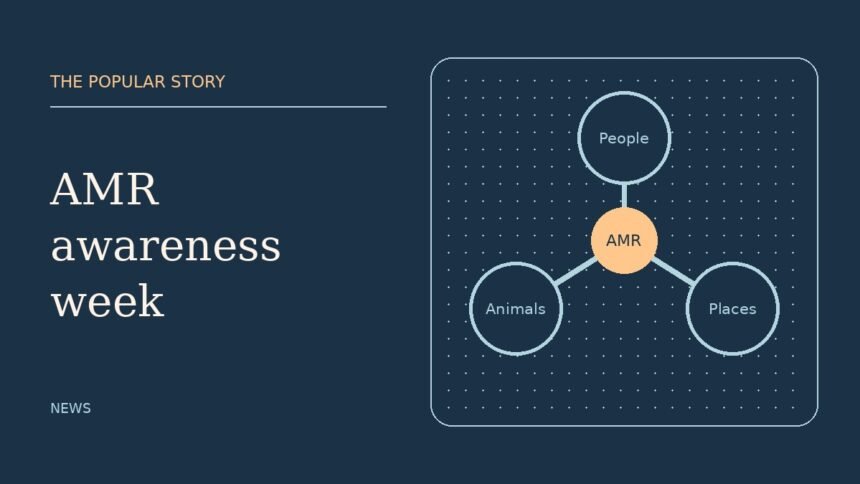
India’s Union Health Ministry marked World Antimicrobial Resistance Awareness Week on 18 November 2026 with a call for collective action. The observance runs from 18 to 24 November. The World Health Organization and the United Nations Environment Programme are among the organisations promoting the campaign, which asks governments, institutions and the public to consider how drug-resistant infections emerge and spread.
The ministry’s announcement gives the issue a public date, but the different jobs involved continue throughout the year. A hospital can record infection patterns and assess how medicines are used. Laboratories can identify which treatments are likely to work against a particular organism. People working in animal health, food production, sanitation and waste management have different tools for reducing spread or unnecessary exposure. The value of bringing them together is that each can see part of a picture the others might miss.
What resistance describes
Antimicrobial resistance refers to changes in microorganisms that make medicines intended to control them less effective. Antibiotic resistance is the part of the issue involving bacteria and antibiotics. The wider term also covers resistance to medicines used against some other organisms. A patient can have an infection caused by a resistant organism. Saying that the infection involves a resistant bacterium is more precise than saying the patient has become resistant.
When a public statement mentions a resistant infection, it helps to ask what organism was found and how that finding was made. A laboratory report answers a specific question about a specimen. It takes suitably collected information from multiple sites and time periods to discuss wider trends. Differences in testing practices can affect how many cases are recorded, so counts from two places often need context before they are compared.
Why environmental conditions matter
WHO and UNEP frame the campaign around the connection between humans, animals and the places they share. The approach is commonly called One Health. Consider a facility deciding how to manage its wastewater. Environmental staff may monitor the system, laboratory specialists can help interpret samples, and the institution has people responsible for maintenance and compliance. Their work answers questions a medicine-use campaign alone cannot address.
The same division of responsibility matters on a farm. Animal health professionals can deal with illness and preventive care. The people who look after food production may focus on cleanliness, records and movement between sites. Public agencies can support surveillance and provide guidance. A useful report names the institution involved and describes what it has changed. A statement that only says stakeholders will work together leaves readers with little information about responsibilities or results.
What the public can ask this week
A clinic, school or community group holding an awareness event can make its materials useful by identifying where the public should go for reliable information. A short session could explain the difference between individual treatment decisions and the ways hospitals or public agencies track infections. It could also explain whom to contact to check whether an infographic or a widely shared claim has a credible source.
When a health story describes an announcement, check the date, the agency and what it actually issued. The date of a campaign does not establish the incidence of resistant infection in a district. A launch statement can be a starting point for asking whether a programme will publish monitoring data or a follow-up report. Look for a named source that a reader can check directly.
The campaign remains in progress through 24 November. WHO’s campaign page and the ministry release provide more detail about the institutions involved and public materials for the week. For someone following the announcement from India, the clearest question to carry forward is which action belongs to which institution, and when the public will be able to see whether that action took place.
Sources
- https://www.pib.gov.in/PressReleasePage.aspx?PRID=2338081&lang=2®=48
- https://www.who.int/campaigns/world-amr-awareness-week/world-amr-awareness-week-2026
- https://www.unep.org/en/events/campaign/world-amr-awareness-week-2026
Original editorial illustration prepared for The Popular Story.