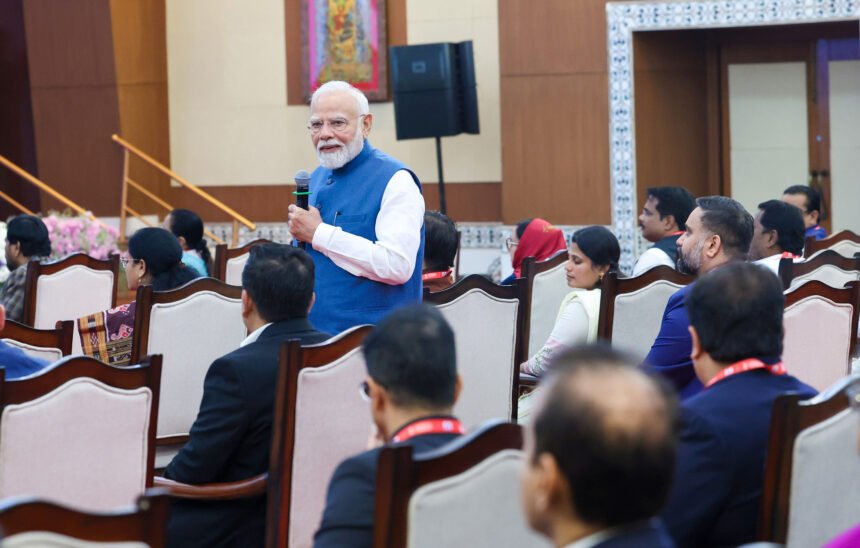
Officials from the Centre, states and union territories discussed early identification of disabilities, accessibility, scholarships and substance abuse at a departmental summit in New Delhi. Prime Minister Narendra Modi chaired the closing session at Sushma Swaraj Bhawan on 19 November 2026, according to the Prime Minister’s Office. The meeting was called Samaveshi Niti Sankalp. Its official account describes a set of discussions and action points across services that often involve several public offices.
The Ministry of Social Justice and Empowerment’s report said the Centre and states identified time-bound actions in several areas. That is a statement about work agreed at the summit. A family seeking a particular service will still need to know which office provides it, what information the office asks for and where to look for any new deadline. Those details are where plans agreed in New Delhi can become visible in a district.
Early identification has to lead somewhere
Modi called for more public participation in identifying disabilities early and overcoming stigma, according to his office. Consider a family that notices a child is having difficulty hearing instructions at school. Their first conversation may be with a teacher. A teacher can describe what happens in class and tell the family who can assess the concern. A specialist can explain the findings. The school may then have to change how it shares instructions or makes material available.
These are different responsibilities. The family has to be able to move between them without explaining the same issue from scratch at every desk. A public programme can help by making referral information easy to find and by explaining when a school, a clinic or a district office is expected to respond. A better measure of access is whether a family reaches the right service, along with how long the process took.
Accessibility gets tested on the way in
When an office says a building is accessible, a visitor may need more specific information. Can they get from the entrance to the right floor? Does the lift work during office hours? Can someone get an application online or ask for a format they can use? These details can determine whether a trip is possible at all.
The same applies to a digital service. A form may exist online and still be hard to complete if its instructions appear only in a scanned notice or if the site gives no clear response when a field is missing. People who have tried to apply can tell a department where they got stuck. Publishing a contact that accepts those reports gives an office a way to learn about problems it may miss when testing a service internally.
What would make the summit’s next steps visible
Scholarships offer a straightforward example. A student needs a clear opening date, the eligibility notice, the documents to submit and a way to check whether the application reached the right office. If a government announces steps to make scholarship administration easier, those details can show whether the change has taken effect. An official notice can also explain what happens to applications already in progress.
On substance abuse prevention, the Prime Minister’s Office described a call for participation beyond government departments. School staff, community organisations and families may all have a role, but their responsibilities can differ. The next useful public information would name where people can find local services and identify which authorities coordinate their work.
The summit account gives readers several subjects to track. The test will come through notices, service records and updates from the authorities that people deal with. For more domestic policy reporting, see The Popular Story’s News desk.
The government’s photo album documents the closing session. For the service changes discussed in the room, readers will need to follow the individual departments responsible for putting them into practice.