
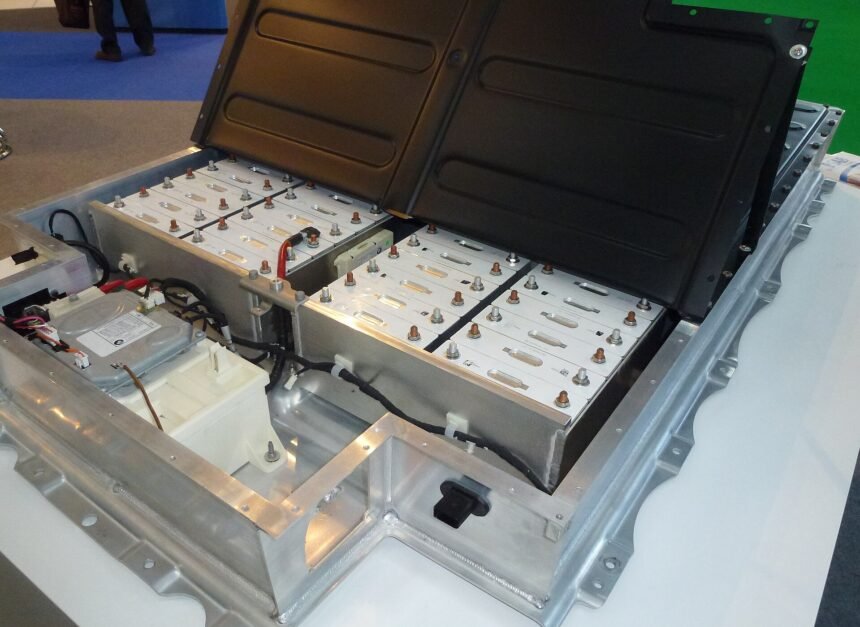
ACC battery manufacturing in India has reached about 40 GWh of capacity and should climb to roughly 47-48 GWh by the end of December, a senior Ministry of Heavy Industries official said on November 26. Dr Hanif Qureshi, Additional Secretary in the ministry, gave the figures at the CII Future of Mobility in India Conference 2026, where he also said the Centre may run a second round of its rare earth magnet manufacturing scheme.
Taken together, the two updates cover the two parts of an electric vehicle that India still buys mostly from abroad: the battery cells and the magnets inside the motor.
Where ACC battery manufacturing in India stands
The government’s production-linked incentive (PLI) scheme for advanced chemistry cells set a national goal of 50 GWh. According to Qureshi, most of that is already in place. “Out of 50 gigawatts, 40 gigawatts is already there,” he said, as reported by Autocar Professional. “I think about 7 or 8 gigawatts of capacity is likely to come up by the end of this year itself.”
Only three applicants were selected under the cell PLI. Qureshi said two or three other companies that did not get incentives have started manufacturing anyway, and he credited the scheme for pulling them in. The ministry is tracking the last 2-3 GWh needed to close the gap to 50 GWh, Akashvani’s news service reported.
Demand is expected to keep rising. Brokerage Nuvama has forecast that ACC demand in India will grow at about 39% a year through 2030, according to the same report. That is a forecast, not a guarantee, but it explains why companies outside the scheme are still investing.
Quick facts
- Current ACC capacity: about 40 GWh
- Expected by December 31, 2026: 47-48 GWh
- PLI target: 50 GWh
- Rare earth magnet imports: about 4,000 tonnes a year
- Magnet scheme outlay: Rs 7,280 crore
- Planned magnet capacity: 6,000 tonnes a year once all beneficiaries are chosen
The rare earth magnet scheme and a possible round two
Sintered rare earth permanent magnets go into EV traction motors, wind turbines and a long list of electronics. India imports around 4,000 tonnes of them each year. The Union Cabinet approved a Rs 7,280 crore scheme on November 26, 2025, to build a domestic supply chain covering oxide processing, alloys and finished magnets.
Last week, Heavy Industries Minister H.D. Kumaraswamy handed letters of intent to four companies: Coal India, ReNew, Prozeal Green Energy and Midwest Energy. Each is eligible for up to 1,200 tonnes a year, or 4,800 tonnes in total, according to Energetica India. A fifth beneficiary is still pending because of a technical issue in the bidding, and that would take planned capacity to 6,000 tonnes.
Some project details are public. Midwest Energy has a Rs 250 crore facility in Hyderabad whose first 500-tonne phase is being commissioned. Prozeal is building a 600-tonne plant near Surat in Gujarat, due by the end of 2028. The scheme runs seven years: two years to build plants, then five years of sales-linked incentives.
Qureshi said savings from the first round could pay for another one. He also suggested the selected firms could produce more than the planned capacity, with exports in mind. Guidelines for a second round may come before the end of the year if the savings are confirmed, Akashvani reported. He stressed that consistent policy matters because magnet plants take years to build and need costly, specialised equipment.
What it means for EV buyers
Cells are the single biggest cost in an electric car or scooter. Imported cells carry customs duty, freight costs and currency risk, and those costs end up in the showroom price. Locally made cells could be reaching car and two-wheeler assembly lines within the next two quarters, according to Akashvani’s report, which could give carmakers more room to price mass-market EVs lower in 2027.
Small electric cars are where this matters most. Models like the newly revealed Suzuki Ignis EV live or die on price, and battery cost decides most of that. Local magnets would also make motor supply less exposed to sudden changes in other countries’ export rules.
Nothing changes at dealerships overnight. Capacity on paper is not the same as cells actually going into vehicles at scale, and the magnet plants are still two to three years from full output. But the direction is clear, and the next milestone to watch is whether the 50 GWh target is met in early 2027.
Reporting based on Autocar Professional, Autocar Professional (magnet scheme), Akashvani News, Akashvani News (magnets) and Energetica India.
Featured image: RudolfSimon, via Wikimedia Commons (CC BY-SA 3.0).




