
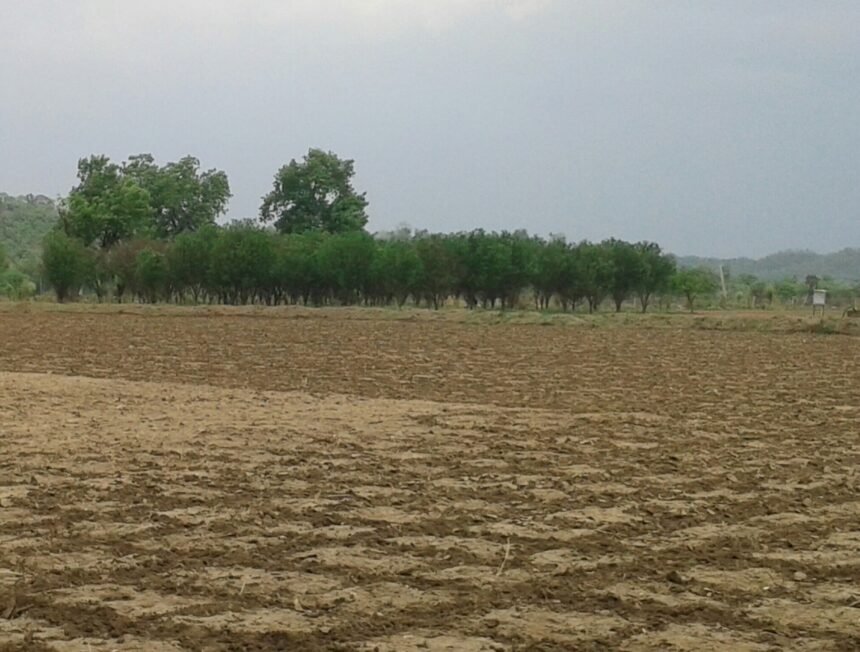
Farm families in most of Maharashtra who sit outside the regular ration system will get free rice and wheat for the next three months. The state cabinet, at a meeting chaired by Chief Minister Devendra Fadnavis on November 25, cleared the Maharashtra free foodgrain scheme for about 42.30 lakh farmers in 33 drought-affected districts.
The decision follows a weak monsoon. According to figures reported by Angel One News, 310 of the state’s 358 talukas, roughly 86.5%, have been declared drought-affected, with Marathwada and Vidarbha among the hardest-hit regions.
What the Maharashtra free foodgrain scheme gives
Each eligible person will receive 5 kg of foodgrain a month, free of cost. The split is fixed:
- 3 kg of rice per person per month
- 2 kg of wheat per person per month
- Initial duration of three months
- Coverage of 42,30,783 farmers across 33 districts
The government has said it will review the drought situation at the end of the three months and then decide whether to continue the distribution. It has also approved a proposal to seek additional foodgrain from the Union Ministry of Consumer Affairs, Food and Public Distribution to run the scheme.
The official statement after the meeting, as reported by PTI, did not give a cost figure for the scheme.
Who qualifies and who does not
This is a gap-filling measure. It is meant for drought-hit farmers who are not already getting subsidised or free grain through another channel. Two groups are excluded:
- Beneficiaries of the National Food Security Act (NFSA), under which about 5.79 crore people in Maharashtra already get free foodgrain
- Farmers covered by the state’s APL-DBT scheme, which pays Rs 170 a month to about 21.6 lakh farmers in 14 suicide-affected districts
Three districts are left out entirely. In the words of the official statement, “Mumbai City, Mumbai Suburban and Thane districts have been excluded.” All three are largely urban and fall outside the drought declaration’s main farm belt.
The state has not yet published a detailed list of documents or a separate application process. Farmers who think they qualify should check with their local tehsil office or fair price shop, which usually handle distribution under state relief orders, once the food and civil supplies department issues its government resolution.
Why this matters for farm households
A drought hits a farm family twice. The crop fails, so there is less income, and food at home also has to be bought from the market at a time when cash is short. Many small and marginal farmers who own a little land and earn just above the NFSA cut-off do not hold priority ration cards, so they get no help from the public distribution system.
For a family of five, the new allotment works out to 25 kg of grain a month: 15 kg of rice and 10 kg of wheat. That will not cover every meal, but it takes a regular expense off the table for three months while the rabi season gets under way. Farmers who are sowing a winter crop may also want to look at crop insurance; our guide to the PMFBY rabi enrolment process explains premiums and documents.
Other decisions from the same cabinet meeting
The November 25 meeting also cleared several measures with a money angle for residents:
- Narmada-Tapi river-linking project, Nandurbar: Rs 5,548 crore sanctioned for six diversion barrages, expected to irrigate about 26,526 hectares and generate 11.50 MW of power.
- Right to Public Services Act changes: officials responsible for unjustified delays in delivering services could face penalties of up to Rs 25,000, with an automatic appeal route for online applicants who opt for it.
- Depositor protection: amendments to the MPID Act, 1999, to speed up attachment and sale of assets of fraudulent financial entities, with divisional tribunals told to dispose of cases within 90 days.
- Hostel allowance: higher rates under the Dr Panjabrao Deshmukh Hostel Maintenance Allowance Scheme for EBC, SEBC and EWS students in health sciences courses.
What to watch next
The key detail still pending is the distribution mechanism: whether grain will move through existing ration shops, which list will be used to identify eligible farmers, and when the first month’s quota will reach villages. The government resolution, once issued, should answer these questions. The three-month review will also show whether the state extends relief into the summer, when drought pressure on water and fodder usually peaks.
This article is for information only and is not financial advice.
Reporting based on ThePrint (PTI), Angel One News and The News Mill.
Featured image: bk kartik21, via Wikimedia Commons (Public domain).




