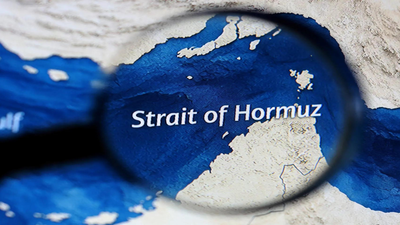

The second round of talks between Iran and the US have remained stillborn. The situation remains frozen, though the ceasefire remains in place but Iran has effectively closed the Strait of Hormuz while the US in retaliation has established a naval blockade in the Gulf. Principally, both are wrong as they interfere with control of so called ‘global commons.President Donald Trump remains averse to negotiating and the bulk of his communications are threats in ‘Capitals’ in the form of posts on X. However, publicly insulting the other party is not the best foundation for talks. The substance and secrecy of negotiations have been fundamentally altered by the speed of social media. There is now an oscillation between escalation and diplomacy which is changing by the hour and is influencing prices of commodities, values of currencies and graphs of stock indexes worldwide. India being no exception.The US demands focused on the three pillars of Iran’s security, its nuclear ambitions, missile programme which now also includes drones and regional proxies. Iran’s position remains more circumscribed. It has apparently signaled willingness to limit enrichment temporarily, reduce stockpiles, and accept international monitoring in exchange for sanctions relief and unfreezing of its accounts. Missile forces and regional relationships were not on the table. Further, a second war in the middle of talks also made it imperative for Iran to demand a guaranteed, comprehensive non-aggression pact.But another sticking point has now been added. The issue of the US naval blockade of Hormuz. While a ceasefire is essential to the extent that bombing has stop but the blockade and closing of the Strait of Hormuz under relevant International Law provisions is an act of war. The moot question is, how long can the blockade be sustained? Iran believes, and has stated this in so many words, that it can outlast pressure. There is a parallel in Afghanistan where the Taliban was able to absorb pain and then turned time into a strategic asset. Unfortunately, time is not a solution and it is a path towards deeper instability as the Straits of Hormuz, are not a highway within a country in a remote mountainous region but a critical artery for the flow of global energy and a geopolitical lever of influence. The world is being faced by three conflicts presently but all wars are not fought alike. The Ukraine War has been on for over four years, while the war in Gaza and Lebanon has been in place for over two years. Both are bloody but yet ineffective in their own ways. Israel has failed to eliminate the threat on its borders while both the Hamas and Hezbollah though weakened retain their grip. In comparison the present Iran War is barely completing two months. Though Ukraine has exposed the bare armouries of European nations but the impact of the closure of the Strait of Hormuz and the widening of the conflict by engaging targets in the Gulf have led to devastating ripples across the globe. When asked by a reporter on 20 March whether the US was at war, President Trump replied, “It depends what your definition of war is. Also, I never said war. I said kinetic peace. Great phrase. Someone give me credit.”
Iran
The fact is that Iran has now been attacked twice, both times in the middle of ongoing talks. Before the war began, Iran was negotiating but also preparing for a conflict. Its war preparations had four interconnected strategies: dispersal and delegation (mosaic defence); succession redundancies to offset the impact of decapitation strikes; horizontal escalation to raise the cost of war by attacking the Gulf States; and blocking the Strait of Hormuz thereby raising the cost of war. Iran took the pain of decapitation and degradation strikes. Dispersal allowed it to increase the survivability of its missiles and drones for counter attacks and delegation meant that their Commanders could operate without being in constant contact with the top leadership and had pre-delegated orders of how to respond.Survivability strategies, as is now known, also rely on deeply-buried production and firing sites. Another aspect, which has now come to light, is Iran’s enhanced satellite-based ISR and targeting capability. According to an April 2026 Financial Times investigation, a private Chinese firm, Earth Eye Co, allegedly sold a high-resolution TEE-01B satellite to Iran in late 2024, which was used to monitor US military installations across the Middle East, both before and after the US strikes in early 2026.The Chinese Foreign Ministry however denied the report, calling it untrue. What is clear is that Iran’s targeting in this war has been more accurate and effective than in June 2025.
What Next
The next round of talks everyone was speculating about is not happening for the moment. The fact is that both Iran and Israel and the US need to coexist and the worlds energy needs to flow. The truth is that if both sides believe the rising cost of conflict is unbearable, they will be ready for peace. If only one feels the cost is unbearable while the other retains the capacity to sustain losses, the stronger will press for surrender. The key question is whether the space Iran has created through its kinetic responses can be translated into diplomatic gains: sanctions relief and a guaranteed end to hostilities. That circles back to what Iran could concede, and to what extent.
Where Does India Fit Into This Matrix
India’s stakes in the West Asia are due to its geographical proximity to the Gulf nations and the fact that its western maritime boundary runs along the Arabian Sea and the wider Indian Ocean region through which run critical trade and energy Sea Lines of Communication. This proximity makes instability in the Gulf, particularly the Strait of Hormuz, a matter of immediate concern. India along with China is the most affected by the disruption in the Strait of Hormuz. It also enjoys strategic relations with all the principle actors such as the US, Israel and Iran. It has excellent relations with the Gulf States with whom it has trade relations. A prolonged conflict in West Asia also has direct consequences for remittances from India’s large diaspora in the region. India also enjoys a measure of trust across the board and more importantly its own interests are suffering due to the conflict. It possesses sufficient military capability and nuclear deterrence to command respect. While China remains reluctant to enter the fray directly it too has deep links with the region and the blockade of the Gulf is impacting both India and China as they are amongst the largest buyers of crude from this region. In fact, China is the biggest buyer of Iranian crude. In this era of complex and intertwined interdependence both India and China need to focus on their aligned interests regarding reopening of the Straits of Hormuz. India holding the reins of BRICS presently is in a unique position not only to tell the US that ‘this is not an era for war’ but also act in concert with China and pressurise both Iran and US regarding lifting the ‘dual blockade’ and allowing the free flow of energy and goods. What the ongoing conflicts have demonstrated is the notion of victory. Both Russia and Israel focused on total victory and the adversary paid the price by humanitarian losses but till date winning victory to guarantee total security has been unachievable. In all three ongoing conflicts overwhelming military power differential has not been the solution. The consequences of a resumption of hostilities is terrifying both for its humanitarian and economic costs. Logic dictates that both sides resolve the issues without inflicting more destruction in a face-saving compromise. But we are presently inhabiting a world which lacks both principles and logic and the UN is a bystander due to its ‘veto rule’ which acts as a firewall. India now needs to seize the moment and along with China pressurise both US and Iran to open the Strait. India fits this role perfectly as it is also the leading voice of the Global South and advocates peace, security, and prosperity. It ties with the US cannot be at the cost of an economic toll of its people. Apart from shaping global governance, in the end what matters is that national interests must override all other issues and presently, it is to obviate the economic fallout as a result of ‘dual blockade’ of the Strait of Hormuz. The only question is the method; ’quiet diplomacy’ or a ‘harder stance’.