The Popular Story
  • About Us
  • Articles
  • Success Stories
  • Contact Us
  • About UsArticlesSuccess StoriesContact Us
HomeTop NewsEntertainmentSportsLifestyleAstrologyWorld
Magazine
All IssuesIconic Personalities of the Year 2026July 2026 | The Business Visionaries EditionThe Popular Story 40 Under 40Top 50 Iconic Personalities of 2026
Lists
40 Under 40Top 50 Iconic PersonalitiesIconic Personalities of the Year
Connect+
InstagramFacebookXYouTubeLinkedIn
All Categories
HomeTop NewsEntertainmentSportsLifestyleAstrologyWorldMagazine40 Under 40Top 50 Iconic PersonalitiesIconic Personalities of the YearAbout Us
Font ResizerAa
The Popular StoryThe Popular Story
Search
Follow US
Copyright © 2024 MP Media. All Rights Reserved.
The Popular Story > Entertainment > Dadasaheb Phalke: The Father of Indian Cinema
Entertainment

Dadasaheb Phalke: The Father of Indian Cinema

By Megha Jain Last updated: November 6, 2026 2 Min Read
Share
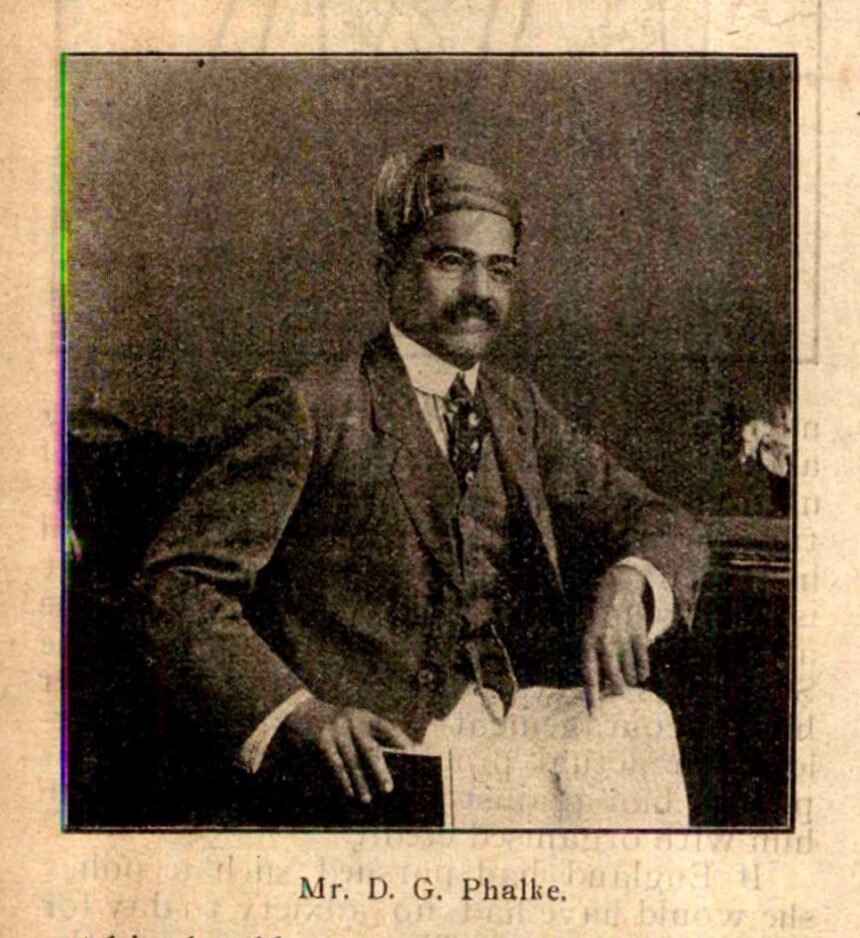
Portrait of Dadasaheb Phalke
Portrait of Dadasaheb Phalke (public domain), via Wikimedia Commons.

Dhundiraj Govind Phalke, better known as Dadasaheb Phalke, is called the father of Indian cinema. He made the first Indian feature film, Raja Harishchandra, in 1913.

Contents
Early life and careerWhy he turned to filmRaja HarishchandraBody of workLegacy

Photo credit: Portrait of Dadasaheb Phalke (public domain), via Wikimedia Commons.

Early life and career

Phalke was born on 30 April 1870 in Trimbak, then part of the Bombay Presidency. He worked in photography from 1893 and became a professional photographer in 1895. In 1906 he co-founded a printing press at Lonavala. He also performed magic shows from 1901 under the name “Professor Kelpha” and painted stage curtains for drama companies.

Why he turned to film

After watching a film about Jesus at Easter in 1911, he imagined Hindu deities such as Rama and Krishna on screen and decided to enter the business of moving pictures.

Raja Harishchandra

His first feature film, Raja Harishchandra, premiered at the Olympia Theatre in Bombay on 21 April 1913 and was released to the public on 3 May 1913 at the Coronation Cinema in Girgaon. It was a silent film with intertitles in English, Marathi and Hindi.

Body of work

Between 1913 and 1937 he made 94 feature-length films and 27 short films. His later films include Lanka Dahan (1917), Shri Krishna Janma (1918) and Kaliya Mardan (1919). Gangavataran (1937) was his only sound film as a director.

Legacy

Phalke died on 16 February 1944 in Nashik at the age of 73. India’s highest cinema honour, the Dadasaheb Phalke Award, instituted in 1969, is named after him.

Source: Wikipedia, “Dadasaheb Phalke”. Written by The Popular Story desk.

TAGGED: Dadasaheb Phalke, Indian cinema, Raja Harishchandra

Sign Up For Daily Newsletter

Be keep up! Get the latest breaking news delivered straight to your inbox.
[mc4wp_form]
By signing up, you agree to our Terms of Use and acknowledge the data practices in our Privacy Policy. You may unsubscribe at any time.
Share This Article
Facebook Twitter Email Copy Link Print
By Megha Jain
Megha Jain is an entertainment journalist covering the latest developments in the film industry, celebrity culture and the world of entertainment. With an interest in cinema, media and popular culture, she focuses on bringing readers closer to industry updates, emerging talent and stories shaping the entertainment landscape.
Leave a comment Leave a comment

Leave a Reply Cancel reply

Your email address will not be published. Required fields are marked *

SUBSCRIBE NOW

Subscribe to our newsletter to get our newest articles instantly!

[mc4wp_form]

HOT NEWS

Astrological birth chart wheel

What Is a Kundli (Birth Chart) and How Is It Made?

A kundli is a birth chart used in Vedic astrology. Here is what information it…

November 6, 2026
Heads of delegations at the 2024 BRICS Summit

What Is BRICS? Members, History and Why It Matters

BRICS began as an investment term for four big economies and has grown into a…

November 6, 2026
The United Nations Security Council chamber in New York

How the UN Security Council Works: Members, Veto and Presidency

The UN Security Council has 15 members, five of them permanent with veto power. Here…

November 6, 2026

YOU MAY ALSO LIKE

Dadasaheb Phalke Award: India’s Highest Cinema Honour Explained

The Dadasaheb Phalke Award is the highest honour in Indian cinema. Here is who gives it, what it includes and…

Entertainment
November 6, 2026

Indian Cinema Explained: Bollywood, Tollywood, Kollywood and the Regional Industries

India makes films in many languages. Here is what Bollywood, Tollywood, Kollywood and other film industry names mean and where…

Entertainment
November 6, 2026
Copyright © 2020 MP Media All rights reserved.

About Us

The Popular Story is a digital magazine and news publication bringing you stories from entertainment, sports, lifestyle, astrology and the world, with a focus on clear, original and reliable reporting.

Quick Links

  • About The Popular Story
  • Privacy Policy
  • Terms and Conditions
  • Disclaimer
  • Editorial Policy
  • Corrections Policy
  • Our Team

Follow us on Social Media

Explore

  • Contact Us
  • Entertainment
  • Sports
  • Lifestyle

Latest Magazine

View Magazine
© 2026 The Popular Story. All rights reserved.Privacy
Welcome Back!

Sign in to your account

Lost your password?