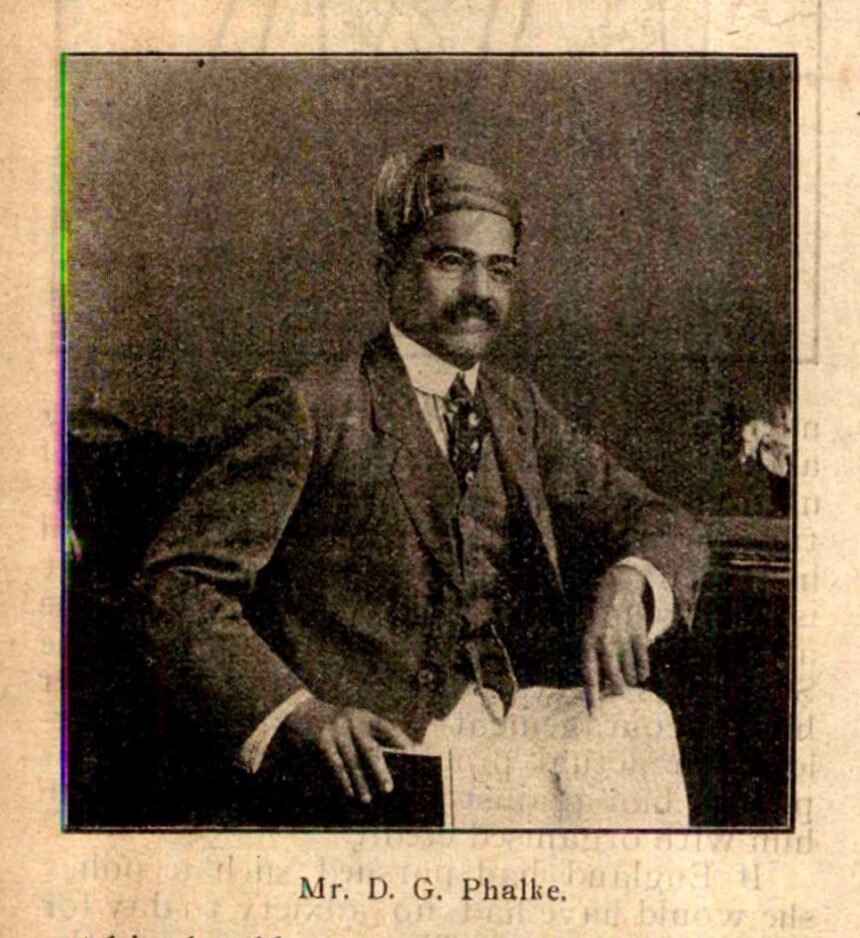
Dhundiraj Govind Phalke, better known as Dadasaheb Phalke, is called the father of Indian cinema. He made the first Indian feature film, Raja Harishchandra, in 1913.
Photo credit: Portrait of Dadasaheb Phalke (public domain), via Wikimedia Commons.
Early life and career
Phalke was born on 30 April 1870 in Trimbak, then part of the Bombay Presidency. He worked in photography from 1893 and became a professional photographer in 1895. In 1906 he co-founded a printing press at Lonavala. He also performed magic shows from 1901 under the name “Professor Kelpha” and painted stage curtains for drama companies.
Why he turned to film
After watching a film about Jesus at Easter in 1911, he imagined Hindu deities such as Rama and Krishna on screen and decided to enter the business of moving pictures.
Raja Harishchandra
His first feature film, Raja Harishchandra, premiered at the Olympia Theatre in Bombay on 21 April 1913 and was released to the public on 3 May 1913 at the Coronation Cinema in Girgaon. It was a silent film with intertitles in English, Marathi and Hindi.
Body of work
Between 1913 and 1937 he made 94 feature-length films and 27 short films. His later films include Lanka Dahan (1917), Shri Krishna Janma (1918) and Kaliya Mardan (1919). Gangavataran (1937) was his only sound film as a director.
Legacy
Phalke died on 16 February 1944 in Nashik at the age of 73. India’s highest cinema honour, the Dadasaheb Phalke Award, instituted in 1969, is named after him.
Source: Wikipedia, “Dadasaheb Phalke”. Written by The Popular Story desk.