The 57th International Film Festival of India (IFFI) will run in Goa from November 20 to 28, and its line-up is now public. Organisers unveiled the programme at a curtain-raiser in Dona Paula on Thursday, November 13. The big Indian talking points: Dhurandhar opens the Indian Panorama, and Ramayana opens a new focus on BRICS cinema.
This year’s theme is “Stories Without Borders”. Festival director Ashutosh Gowariker called it “not merely a slogan but a guiding principle” for the selections, according to ANI.
What opens and closes the festival
The festival opens with Fatherland, the new film from Polish director Paweł Pawlikowski, best known for Ida and Cold War. It follows the writer Thomas Mann and his daughter Erika through a divided Germany in 1949. Pawlikowski won Best Director for it at Cannes earlier this year.
According to Bollywood Hungama, the mid-festival slot goes to I Matter by Alina Șerban, a Romania-Germany-Belgium co-production. The closing film is We Are All Strangers by Singapore’s Anthony Chen, a 157-minute drama in Mandarin and English.
In all, 159 films from 86 countries will be screened, picked from about 1,400 submissions, ANI and Asianet Newsable reported. There are 14 gala premieres and 15 titles in the International Competition.
Dhurandhar, Ramayana and the Indian Panorama
The Indian Panorama, the festival’s showcase of the year’s Indian cinema, opens with Aditya Dhar’s spy thriller Dhurandhar in the feature section. The non-feature section opens with Becoming, a Ladakhi film. Asianet Newsable put the selection at 25 features and 20 non-features.
Other titles named in the selection include Kantara: A Legend Chapter 1, The Kerala Story 2: Goes Beyond, Krishnavataram Part 1: The Heart, Hanuman Ansh and Ohh My Dog. Filmmaker Madhur Bhandarkar chairs the feature film jury. He said, “Selecting the films was quite a challenging task.”
Ranbir Kapoor’s Ramayana Part I, still running in cinemas, will open the BRICS segment. That section brings together films from all 11 BRICS members and partner countries. Bollywood Hungama also reported that The Kerala Story 2 has a place in the International Competition, citing a video shared on IFFI’s social media.
Who is judging
Director Aanand L Rai heads the five-member International Competition jury. He is joined by Romanian filmmaker Bogdan Mureșanu, Venezuelan sound designer María Alejandra Rojas, Thai director Ratchapoom Boonbunchachoke and Argentine filmmaker Sol Berruezo Pichon-Rivière.
Separate juries will pick the Best Debut Feature and the ICFT-UNESCO Gandhi Medal winners. There is also a Best Web Series (OTT) award, which reflects how much Indian viewing has moved to streaming. Bollywood Hungama reported 46 eligible entries in that category.
New sections and country focus
Spain is this year’s Country of Honour, with four films including Pedro Almodóvar’s Bitter Christmas. Russia is the Partner Country, also with four titles. Two new sections debut this year: Animation and Films About Films, with five films each.
Away from the screens, the WAVES Film Bazaar returns as the market where producers, buyers and sales agents meet. Masterclasses and panel discussions round out the programme.
The festival will also mark the birth centenaries of several Indian film figures, Bollywood Hungama reported. The list includes directors Shakti Samanta and Raj Khosla, Bengali star Uttam Kumar, Malayalam actor Prem Nazir, Kannada icon Raj Kumar and composers O P Nayyar and Ravi.
Why Goa matters to IFFI
IFFI has been held in Goa since 2004, and the state now hosts it every November. “We have been hosting this International Film Festival for over 22 years,” Chief Minister Pramod Sawant said at the curtain-raiser.
For regular festival-goers, the useful dates are simple. Screenings begin on November 20 and end on November 28. With big Indian titles and fresh Cannes winners in the same week, delegate passes and popular screenings tend to fill up fast, so early booking is wise.
Reporting based on ANI, Bollywood Hungama and Asianet Newsable.
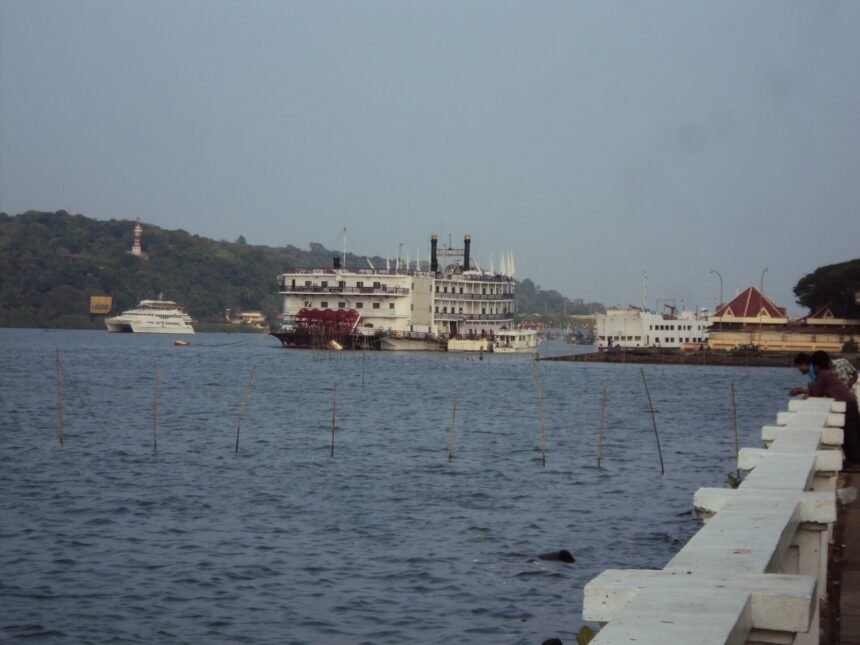
Featured image: Dpradeepkumar, via Wikimedia Commons (CC BY-SA 3.0)