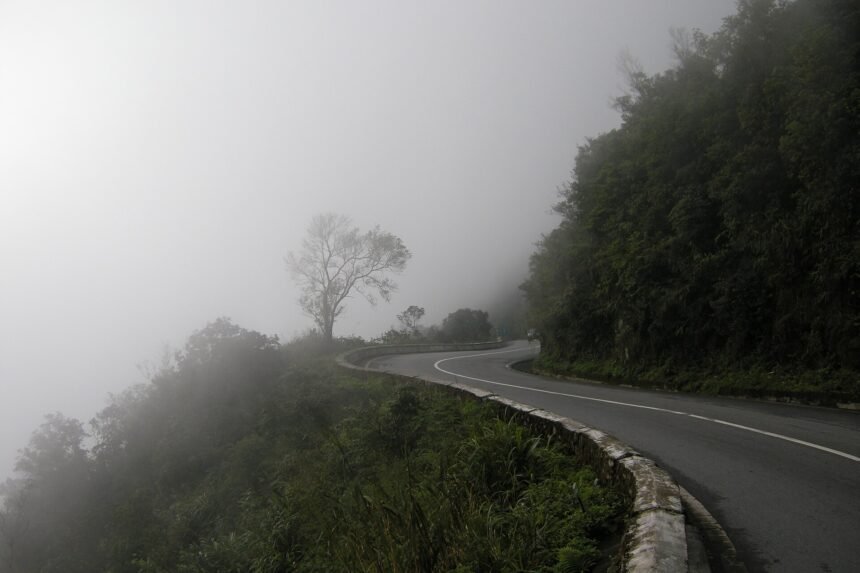
Mid-November is when north India starts waking up to grey, wet mornings. By December and January, dense fog can cut visibility on highways and city roads to a few metres, often before sunrise and late at night. If you drive to work, travel for a wedding or plan a road trip this season, fog is the hazard to prepare for.
The numbers explain why. According to the Ministry of Road Transport and Highways (MoRTH) report Road Accidents in India 2022, as reported by Deccan Herald, fog or mist was linked to 34,262 accidents and 14,583 deaths that year, up from 28,934 accidents and 13,372 deaths in 2021. Pile-ups on expressways such as the Yamuna Expressway make headlines almost every winter.
How bad is “dense fog”?
The India Meteorological Department (IMD) uses visibility to grade fog. In its winter bulletins, dense fog means visibility of 50 to 199 metres, and very dense fog means visibility under 50 metres. To put that in perspective, a car moving at 60 km/h covers about 17 metres every second. In very dense fog, you may have only two or three seconds to react to something ahead.
Before you leave, check the IMD forecast or the weather app on your phone. If an orange or red fog alert is out for your route in the early hours, the simplest fix is to start later, once the sun has thinned the fog.
Get the car ready first
- Clean all glass. Wipe the windscreen, windows and mirrors inside and out. Dirt and grease on the inner side make fogging worse.
- Check every light. Headlights, tail lights, brake lights, indicators and fog lamps should all work. A dead tail light is far more dangerous in fog than on a clear night.
- Fix the wipers and washer. Replace worn blades and fill the washer tank. Fog leaves a fine film of moisture on the glass that needs clearing every few minutes.
Lights: low beam, never high beam
This is the most common mistake. High beams bounce off the tiny water droplets in fog and throw glare back at you, so you actually see less. Use low beams, and switch on fog lamps if your car has them. Fog lamps sit low on the bumper and light the road surface under the fog layer with less glare.
Hazard lights are best used when you have stopped. If you keep them on while moving, drivers behind you cannot see when you signal a turn or a lane change, which defeats the purpose.
Speed, distance and staying in lane
Slow down, and then slow down a little more. Fog makes it hard to judge speed. Piyush Tewari of the SaveLIFE Foundation told Deccan Herald that fog can create “a misleading sense of slow motion, masking actual high speeds.” Glance at the speedometer often rather than trusting your feel.
- Leave a big gap. Fog hides brake lights until you are almost on top of them. A wide gap gives you time to stop if the car ahead brakes hard.
- Do not chase tail lights. Following the red lights in front feels safe, but if that driver crashes or stops suddenly, you will follow them into it.
- Use the left edge of the road as a guide. Lane markings and the left edge line are easier to follow than the centre of the road, and they keep you away from oncoming traffic.
- Do not speed up because someone is tailgating you. Let them pass when it is safe.
- Avoid overtaking unless you can clearly see a long, empty stretch ahead.
Inside the car, keep the windows clear with the defogger and AC, or open a window slightly. Put the phone away and turn the music down. In very thick fog, a short tap on the horn at blind turns and narrow roads helps, because sound carries better than light.
When to pull over
If you cannot see road signs or the edge of the road, stop driving. Do not stop in a lane or on the shoulder of a fast expressway, where vehicles behind you may not see you in time. Move to a dhaba, fuel station, toll plaza parking or service road, switch on your hazard lights and wait for the fog to lift.
Two-wheeler riders face the most risk. Wear a helmet with a clear visor, a reflective jacket or strip, and avoid riding on highways in the early hours when fog is thickest. If you must travel, the extra half hour you lose by leaving after 9 am is a small price.
Information based on Deccan Herald, India Meteorological Department, DriveSpark and ThePrint.
Featured image: Vyacheslav Argenberg, via Wikimedia Commons (CC BY 4.0)