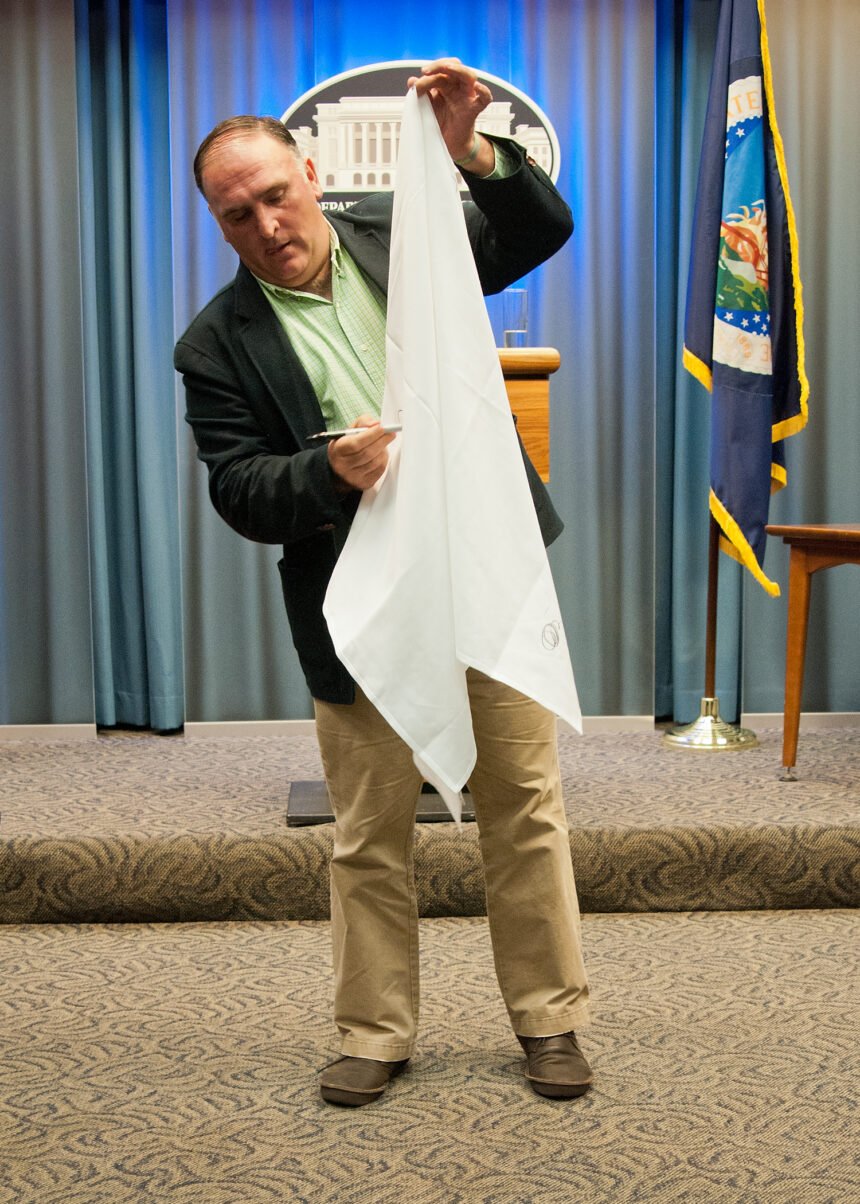
After the 2010 earthquake in Haiti, Spanish-born chef José Andrés went to see what cooks could contribute after a disaster. He had experience running restaurants, where a meal has to move from a kitchen to a customer while dishes are still ready to eat. A disaster changes nearly every part of that process. A cook may need to find a usable kitchen, learn what ingredients are available and work out where people can receive food. The trip to Haiti, according to World Central Kitchen’s own history, led him to found the organisation.
The focus on cooking gave World Central Kitchen a particular role. Emergency responses can involve shelter, water, medical care and longer-term recovery. A kitchen has its own immediate question: who needs a meal today and how will it reach them? A chef can make a menu under pressure, but unless someone knows which roads are open and where the people are, that menu may make very little difference. The work connects the skills of cooks with the local knowledge needed to put those skills to use.
What Puerto Rico changed
World Central Kitchen identifies Hurricane Maria in 2017 as the point at which Andrés developed a model for larger-scale emergency feeding. Its founder’s biography places the Puerto Rico operation seven years after the Haiti trip. That span matters. The first trip supplied a reason to build an organisation. By Puerto Rico, it had to coordinate a response to a disaster across many sites and make decisions that could be repeated beyond a single kitchen.
Think about the handovers between people. The cook needs an estimate of how many meals to make. Someone preparing deliveries needs to know when the meals will be ready. A community contact needs a place where people can safely collect the food. If one part changes, the other people need enough time to adapt. There is room for creativity in the kitchen, but a delivery window or a shortage of containers can decide what actually leaves it.
Local cooks can also tell a team how people in the area normally eat and what ingredients can reliably be sourced. That is useful when a response team has to decide what it can prepare quickly without unnecessarily complicating delivery. A familiar meal may be easier for a family to share, and a menu based around what a partner can obtain can be easier to keep making the next day.
What happens after the emergency
World Central Kitchen’s work in Haiti also includes a culinary training effort. In its account of Atelier des Chefs, the organisation describes a school preparing people for jobs in commercial kitchens. Training asks a separate question from emergency relief. A meal is needed on the day it is delivered. A school’s work is judged later, when graduates have to use the skills in another setting. The two projects grew from efforts to understand where the organisation’s knowledge of food could be useful.
The origins are worth revisiting because a founder’s public image can draw attention away from the people who make the work repeatable. A relief kitchen depends on people preparing ingredients, managing supplies and passing information to the next shift. A training kitchen depends on teachers who can break a task into steps the next group can learn. Neither kind of work is captured in a photograph of an individual chef.
Andrés’s story offers a useful way of looking at an institution: find the decision it must make reliably, then trace how the people doing the work get the information they need. World Central Kitchen chose a decision with a short horizon. Someone needs to know what can be cooked and delivered before the day is over. The work starts close to the place where it is needed, with people who can tell a team what is possible today. Read more profiles in The Popular Story’s Success Stories.
Featured image: Bob Nichols / U.S. Department of Agriculture. Image source. Reuse terms.