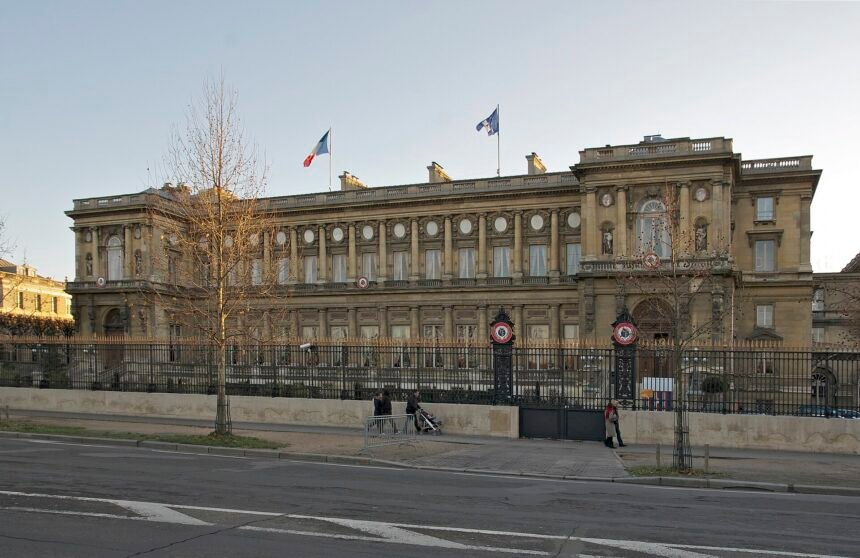
France has formally blamed Iran’s Revolutionary Guard for a cyberattack last month that took control of refrigeration systems in hundreds of French supermarkets and turned fridges and freezers into ovens overnight. Foreign Minister Jean-Noël Barrot said on Monday, 9 November, that the attack “will not go unanswered.”
The announcement came on the sidelines of G7 talks in Paris. It marks one of the sharpest public accusations a European government has made against Tehran over a cyber operation, and it turns an odd-sounding incident into a serious diplomatic dispute.
What happened in the supermarkets
The attack took place on the night of 11 to 12 October 2026. Hackers reached refrigeration controllers that were connected to the internet and remotely changed their settings. In some units, temperatures climbed to around 50°C (122°F) for about six hours before staff arrived in the morning.
The result was a large-scale food loss. Stores had to throw away fresh and frozen goods, and some equipment melted. France’s national cybersecurity agency, ANSSI, has counted fire starts in at least 15 cases.
The Associated Press reported that about 700 of France’s roughly 10,000 supermarkets were hit. Al Jazeera listed several of the country’s biggest chains among the victims:
- Intermarché: at least 300 stores, plus its Netto brand. The group reported losses of “tens of millions of euros” in a single day.
- Coopérative U: more than 100 supermarkets.
- Carrefour: about 80 supermarkets.
- Monoprix and E.Leclerc: also affected, with Monoprix losing around 5% of its stores to the attack.
Small butcher shops, a slaughterhouse and cooperative food plants were also on ANSSI’s list of victims, according to Tech Times.
Who France says is responsible
ANSSI attributed the attack to a group called Shahid Kaveh, which it describes as an offensive cyber unit within the Islamic Revolutionary Guard Corps. Barrot was blunt about it. “I can confirm that this attack was carried out by the Islamic Revolutionary Guard Corps,” he said.
Paris prosecutor Laure Beccuau opened a judicial investigation into suspected organised cybercrime committed to serve the interests of a foreign power. Investigators say they found traces of Farsi and IP addresses linked to devices in Iran. Prosecutors are seeking international arrest warrants for the unit’s leader and his two deputies.
It is important to be clear about what this is. It is a government attribution backed by technical evidence, not a court verdict. Iran’s mission to the United Nations did not respond to a Reuters request for comment, and Tehran usually denies any role in hostile cyber operations.
How France plans to respond
Barrot said Iran’s ambassador was being summoned to protest what he called an attack of “unprecedented scale and aggressiveness.” He also described it as the first large-scale cyberattack carried out for sabotage on French soil.
France will push for sanctions at the European level. The EU already has a cyber sanctions framework, set up in 2019, that allows asset freezes and travel bans on named people and groups. No specific EU measures have been announced yet. Barrot added that other “public or private” steps could follow.
The dispute lands at a tense moment. The United States and Iran remain at odds over Tehran’s nuclear programme and sanctions, even as US President Donald Trump has said the military conflict with Iran is effectively over.
A weak spot in everyday machines
Security experts say the bigger lesson may be how exposed ordinary equipment is. ANSSI identified four product lines that were targeted, including older Danfoss and Copeland controllers. Copeland said the affected models were discontinued and no longer supported.
ANSSI director Vincent Strubel told French senators in October that attackers did not need clever new tricks. They found machines reachable from the internet without special protection and with weak passwords. After the attack, many operators simply unplugged their controllers from the network rather than patching them.
Other incidents add to the worry. A separate attempt to overheat storage at several French blood banks was stopped before it caused damage. On 2 November, supermarkets in Belgium, Estonia, Ireland, Luxembourg and Sweden reported similar overnight temperature spikes. Pro-Russian hacking groups claimed that second wave, but their claims have not been verified, and France has not linked it to Iran.
What comes next
The next steps to watch are whether EU member states agree on sanctions against named Iranian officers, and whether Tehran responds formally. For supermarket owners and food suppliers across Europe, the practical advice from US and French agencies is simple: take cooling controllers off the open internet and change default passwords now.
Reporting based on Al Jazeera, Associated Press via OPB, Tech Times
Featured image: Jebulon, via Wikimedia Commons (CC0)