
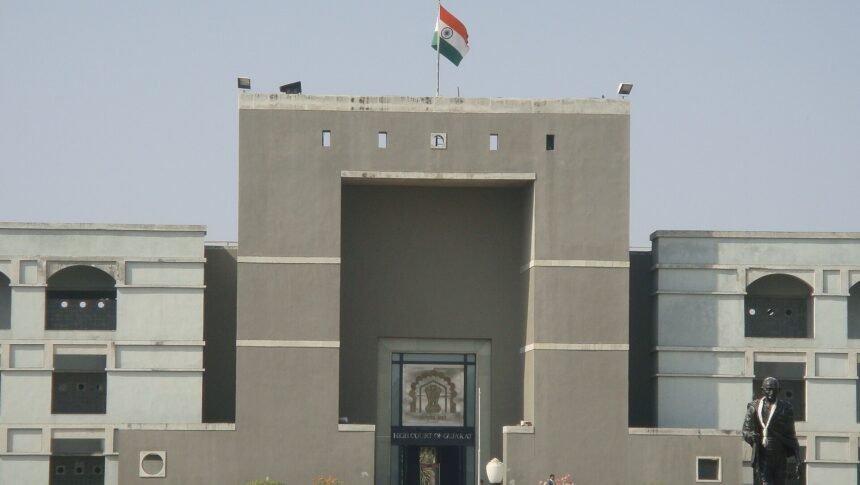
A family that lost a son on the tracks near Ahmedabad in 2023 has won compensation after the tribunal had turned them away. In a Gujarat High Court railway compensation ruling reported on November 26, the court said the Railways cannot refuse to pay simply by blaming the dead passenger for crossing the tracks.
What happened in this case?
According to Gujarat Samachar, the young man held a valid ticket and was travelling in the general coach of the Howrah-Gandhidham Garba Superfast Express from Kanpur Central to Ahmedabad on July 19, 2023. The coach was badly overcrowded. After a sudden jolt, he fell out, was injured and dragged along. While crossing to the other side of the tracks, he was hit by the Ahmedabad-Vadodara MEMU Special and died on the spot.
His family claimed Rs 8 lakh. On November 7, 2024, the Railway Claims Tribunal dismissed the claim, treating the death as the result of his own negligence.
Gujarat High Court railway compensation order
Justice Divyesh A. Joshi heard the family’s first appeal, Rajbahadur and others versus Union of India. The court held that “denying compensation solely by attributing negligence to the deceased was contrary to the law governing compensation for railway accidents.” It set aside the tribunal’s order as illegal and directed the Railways to pay the dependants Rs 8 lakh with 9% interest.
The court also said the Railways cannot escape liability just by labelling track crossing as negligence, a criminal act or a self-inflicted injury.
Why the law favours families here
Compensation for train accidents and “untoward incidents”, such as falling from a train, is governed by Section 124A of the Railways Act, 1989. It is a no-fault provision. The family does not need to prove the Railways did anything wrong, and the passenger’s own carelessness is generally not a defence.
There are narrow exceptions, including suicide, a self-inflicted injury, the victim’s own criminal act or intoxication. Gujarat High Court benches have read these strictly this year. In June, Justice J.C. Doshi upheld Rs 8 lakh for the family of a catering worker who fell while moving between coaches, saying a “self-inflicted injury” argument was really contributory negligence, which the no-fault rule does not allow.
What families should know
- Where to file: claims go to the Railway Claims Tribunal bench for the area, with an appeal to the High Court.
- Who counts: a “bona fide passenger” is usually someone with a valid ticket, though courts have held that a lost ticket alone should not defeat a genuine claim.
- Amount: Rs 8 lakh has been the figure for a death in these recent Gujarat cases, plus interest set by the court.
- Keep records: the ticket, FIR or GRP report, post-mortem and any witness details strengthen the claim.
The ruling also points to a practical problem. Foot overbridges at busy stations and yards are often far from platforms or crowded, which is why many people cross tracks at all. Until that changes, families hit by such accidents now have one more clear precedent on their side.
Reporting based on Gujarat Samachar, Verdictum and Bar and Bench.
Featured image: Maulik Kansara, via Wikimedia Commons (CC BY-SA 3.0).




