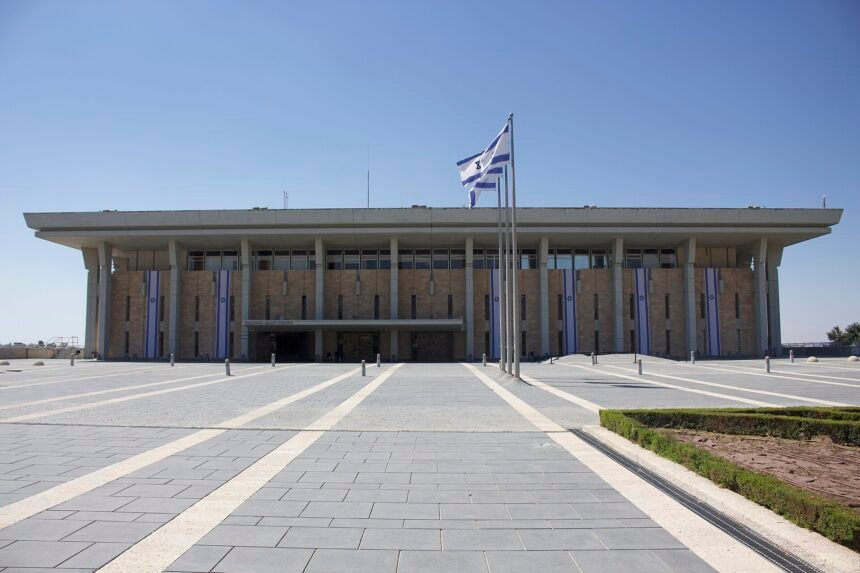
Israel’s long search for a new government has produced its first signed agreement. On Tuesday, 24 November, Gadi Eisenkot’s Yashar party said it had signed a coalition deal with Avigdor Lieberman’s Yisrael Beytenu. The Times of Israel described it as the first official coalition deal signed between two parties since the election.
It is a step forward in Israel coalition talks, but a small one. Eisenkot is still well short of a majority, and he lost a potential partner on the same day.
How Israel got here
Israelis voted on 27 October 2026. No bloc won the 61 seats needed for a majority in the 120-member Knesset, which was sworn in on 10 November. President Isaac Herzog then gave Eisenkot, a former army chief whose Yashar party won 21 seats, the first chance to form a government. His deadline is 6 December, with a possible 14-day extension.
The seat arithmetic
Lieberman’s Yisrael Beytenu brings seven seats. Even so, the numbers are tough:
- Eisenkot’s bloc: 48 seats
- Netanyahu’s Likud-led alliance: 53 seats
- Arab parties: 19 seats, opposed to Netanyahu
Neither side reaches 61 alone. That is why Eisenkot has been talking both to centre-left parties and to Likud itself about a possible unity government.
A setback on the same day
Minutes before the Yisrael Beytenu deal was announced, Yair Golan’s Democrats, which hold eight seats, halted their talks with Yashar, according to Al Jazeera and the Times of Israel. The reason was Eisenkot’s parallel unity talks with Likud. For a left-leaning party, the prospect of sitting in a government with Netanyahu’s party is a red line.
This is the core problem in the Israel coalition talks. Reaching out to Likud may cost Eisenkot partners on the left, while relying on Arab parties for support could cost him partners on the right, including Lieberman, who has historically been reluctant to depend on them.
What it means for Netanyahu
Benjamin Netanyahu remains caretaker prime minister while talks continue. If Eisenkot fails to form a government by his deadline, the mandate can pass to another member of the Knesset, and Netanyahu would be expected to get his turn. If no one succeeds, Israel would head to yet another election next year.
A unity government between Yashar and the Likud-led bloc is possible on paper, since together they would comfortably clear 61 seats. But it would raise hard questions, including who serves as prime minister and in what order.
Why it matters for India
India and Israel have close defence, technology and agriculture ties, and many Indian workers are employed in Israel. A stable government in Jerusalem matters for those links, whoever leads it. A prolonged caretaker period tends to slow down big decisions, including new agreements.
What to watch
- Whether other parties sign on with Eisenkot before 6 December.
- The outcome of unity talks between Yashar and Likud.
- Whether Herzog grants the 14-day extension.
For more on elections around the world this month, read our preview of Spain’s election.
Reporting based on Al Jazeera, The Times of Israel and Israel National News.
Featured image: Clema12, via Wikimedia Commons (CC BY-SA 4.0)