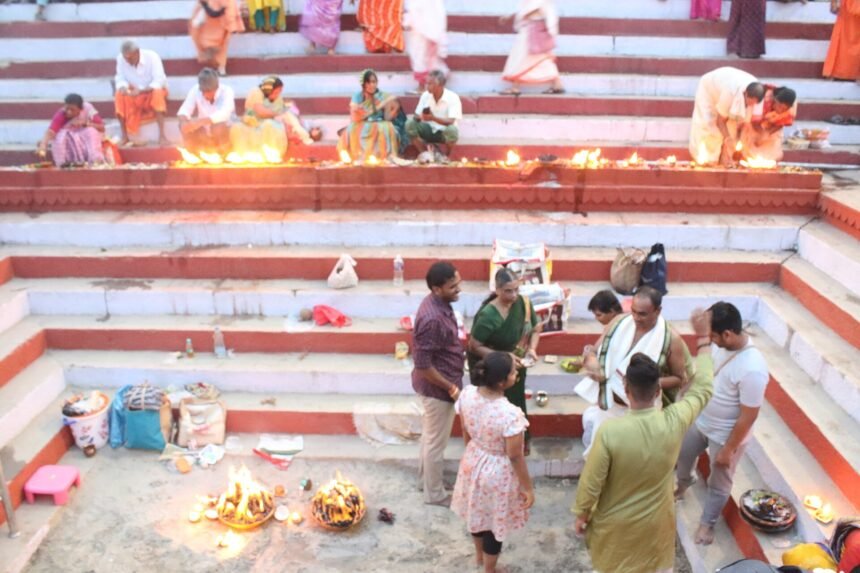
Kartik Purnima falls on Tuesday, 24 November 2026. It is the full moon that closes the month of Kartik, and many families see it as one of the most important days of the Hindu year. The same evening, the ghats of Varanasi light up for Dev Deepawali, and Sikhs mark Guru Nanak Jayanti, the birth anniversary of the first Sikh Guru.
Here is what the panchang says about the timings, and how people usually observe the day.
Kartik Purnima 2026: date and tithi timings
According to Drik Panchang, the Purnima tithi runs as follows:
- Purnima tithi begins: 11:42 PM on Monday, 23 November 2026
- Purnima tithi ends: 8:23 PM on Tuesday, 24 November 2026
- Brahma Muhurat (New Delhi): about 5:03 AM to 5:57 AM on 24 November
- Sunrise (New Delhi): about 6:51 AM
- Sunset (New Delhi): about 5:25 PM
Because the full moon tithi is present at sunrise on the 24th, the bath, fast and lamp rituals are kept on that day. Tithi start and end moments are the same across India, but sunrise, sunset and muhurat windows change from city to city. Sunset on 24 November ranges from roughly 4:52 PM in Kolkata to 6:00 PM in Mumbai. The timings above are for New Delhi, so check a panchang for your own city before you plan.
Dev Deepawali in Varanasi
Dev Deepawali, or “the Diwali of the gods”, is celebrated on Kartik Purnima, about two weeks after Diwali. In Varanasi, lakhs of earthen lamps are placed along the ghats of the Ganga at dusk. Traditional belief holds that the gods come down to bathe in the river on this night, and that Lord Shiva defeated the demon Tripurasura on this day. That is why the festival is also called Tripurari Purnima.
Lamps are usually lit during Pradosh Kaal, the window that begins at sunset. Panchang listings put the Varanasi Pradosh window at about 5:08 PM to 7:47 PM on 24 November. In New Delhi, the deep daan window is about 5:24 PM to 7:48 PM.
The ghats get very crowded, and boat rides on the river are booked early. As of now, the official programme for Varanasi has not been announced, so watch for notices from the district administration and Uttar Pradesh tourism before you travel.
How people observe Kartik Purnima
Practices differ by region and family, but these are the most common:
- Kartik snan: a bath before sunrise, ideally in a river such as the Ganga. People at home often add a little Ganga jal to their bath.
- Deep daan: lighting lamps at home, in temples, near a Tulsi plant or floating them on water in the evening.
- Satyanarayan katha: many households hold this puja on Purnima and share prasad with neighbours.
- Daan: giving food, warm clothes, blankets or grain to those who need them. Winter giving is a practical way to keep this custom.
- Vrat: some devotees fast until the evening and break the fast after moonrise or the evening puja.
Followers believe that a bath and charity on this day bring merit (punya). These are matters of faith. There is no single correct way to observe the day, and a simple lamp and prayer at home is a common choice.
A note on fasting: if you are pregnant, elderly, diabetic, on regular medication or have any health condition, speak to your doctor before keeping a fast. A partial fast with fruit, milk and water is a common option. Stop fasting if you feel dizzy or unwell.
Guru Nanak Jayanti and the fairs
Guru Nanak Jayanti, also called Prakash Purab, falls on the same full moon. Gurdwaras hold Akhand Path in the days before, Nagar Kirtan processions, and langar that is open to everyone.
Several large fairs are also linked to Kartik Purnima. These include the Pushkar fair in Rajasthan, the Sonepur fair in Bihar and the Garhmukteshwar fair on the Ganga in Uttar Pradesh. Each fair runs for several days, and the official dates come from the state or district authorities, so confirm them before booking tickets.
Kartik Purnima also marks the end of the Kartik month in the purnimanta calendar used in most of North India. Margashirsha begins the next day, 25 November.
Quick checklist for 24 November
- Wake early for a bath during or soon after Brahma Muhurat.
- Keep diyas, ghee or oil and wicks ready for the evening.
- Light lamps around sunset, before the tithi ends at 8:23 PM.
- Set aside food or warm clothing to donate.
- If travelling to Varanasi, Pushkar or a river ghat, book stays early and follow crowd advisories.
For most families, the day is about light, gratitude and sharing.
Based on information from Drik Panchang, HinduTone, AstroSight, PanchangBodh, Dekho Panchang.
Featured image: Goutam1962, via Wikimedia Commons (CC BY-SA 4.0)