
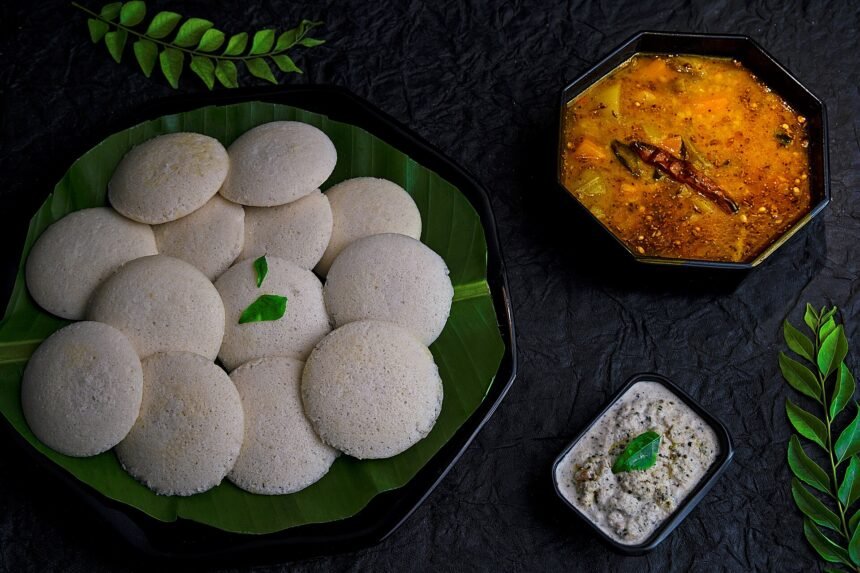
iD Fresh Food closed FY25 with revenue from operations of ₹681.37 crore, up 22% from the year before, and a pre-tax profit of ₹26.7 crore, according to its filings reported by Inc42. For a company that sold its first packets of idli-dosa batter from a tiny Bengaluru kitchen in 2005, it was a milestone it took nearly two decades to reach. The man behind it, PC Musthafa, once dropped out of school to work beside his father.
The early years
Musthafa grew up in Chennalode, a village near Kalpetta in Kerala’s Wayanad district. His father worked as a plantation labourer and had studied only up to Class 4. His mother never went to school. Business Today reported in 2026 that the family lived on about ₹10 a day.
He failed Class 6 and left school to earn alongside his father on coffee plantations. A teacher who went looking for dropouts found him and persuaded his parents to send him back, and helped with the cost of books. Musthafa then started topping his class. He went on to study engineering at NIT Calicut and later did an MBA at IIM Bangalore. After that, he worked as a software engineer with multinational companies in India and the Middle East.
The idea
The spark came from his cousin Shamsudeen, who had noticed idli and dosa batter being sold in plain plastic bags with no brand and poor hygiene at local stores. If working families were already buying batter, why not make a clean, reliable version?
In December 2005, Musthafa and four cousins, Shamsudeen TK, Jafar TK, Abdul Nazer and Noushad TA, started iD Fresh in a kitchen of about 50 sq ft in Tippasandra, Bengaluru, with ₹25,000, as YourStory reported in 2018. The plan was to supply 20 shops. It took nine months, not the six they had hoped for.
“People weren’t open to the idea of a batter in a pack then,” Musthafa told YourStory in 2018.
The hard part
Fresh batter is alive. In April 2006, a pack left without refrigeration at a kirana store over-fermented and burst. The founders reworked their packaging and process, and became choosy about which stores they would supply.
Machines bought from vendors in Coimbatore could not scale, so the team designed its own. In 2007, Musthafa sold land in Wayanad to fund a 2,500 sq ft factory in Hoskote. A push into Chennai in 2010 went badly: local brands sold batter for ₹10, the factory there was shut, and for a while the company struggled to pay salaries.
Profit stayed out of reach for years. Inc42 notes that the company was loss-making for most of its life as fixed costs rose with new plants and markets, and it turned profitable only in FY24.
How it grew
The first outside money came in October 2014, when iD raised ₹35 crore from Helion Venture Partners. In 2017 it raised $25 million in a round led by Premji Invest. In total, the company has raised about ₹338 crore from investors including Sequoia Capital, Helion, Premji Invest and NewQuest Capital Partners, according to Inc42.
The range expanded from batter to parotas, chapatis, paneer, curd, chutneys and filter coffee. Batter and parota, made in its own plants in Bengaluru, Hyderabad, Mumbai, Haryana and Dubai, still bring in about 76% of revenue. The company sells in more than 60 Indian cities and has subsidiaries in the UAE, Oman, Saudi Arabia and Bahrain, with smaller exports to the UK, Ireland, the US and Canada.
Where it stands now
In FY25, iD reported net profit of ₹50.75 crore, though that includes a one-time deferred tax credit of ₹24.89 crore, Business Today noted. Moneycontrol, citing Tracxn data, has put the company’s valuation at around ₹4,450 crore, a private-market estimate rather than a listed price.
The company is led in India by CEO Rajat Diwaker, who has said it aims to grow 20 to 25% a year while staying EBITDA positive. On an IPO, he told Inc42 the company is “not there yet” and may need another year or two.
Lessons for founders
- Start with a habit people already have. Families were buying loose batter. iD made it cleaner and more reliable.
- Freshness is an operations business. Packaging, cold chain and machinery mattered as much as the recipe.
- Know when to retreat. Shutting the Chennai plant was painful, but it saved the company.
- Profit can take time. iD spent years building capacity before operating leverage showed up in the numbers.
Reporting based on Inc42, Business Today (August 2026), Business Today (July 2026), YourStory (2018) and YourStory (2017).
Featured image: Sutapa Pal, via Wikimedia Commons (CC BY-SA 4.0)