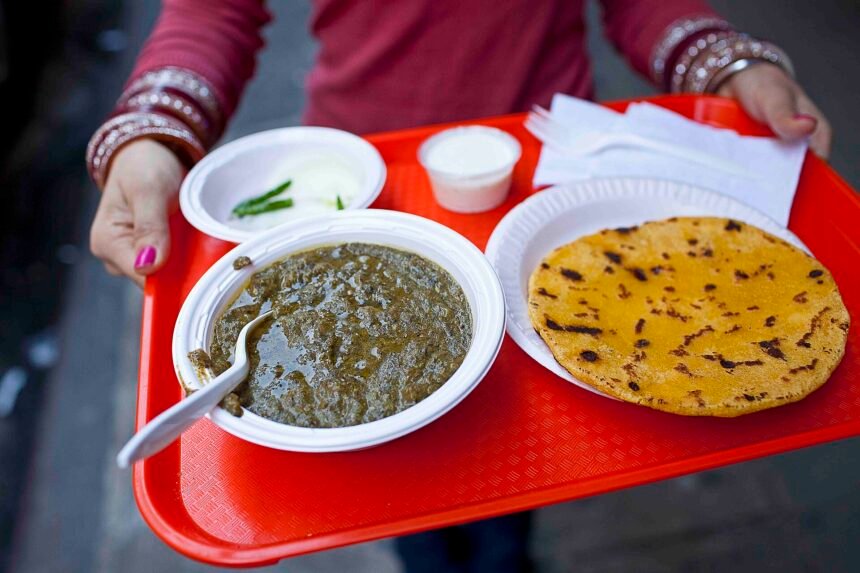
Few dishes say Punjabi winter like a bowl of sarson ka saag with a hot makki ki roti and a lump of white butter on top. The mustard greens are only at their best from late November to February, so this is the season to make it. This sarson ka saag recipe uses the traditional mix of greens, slow cooking and a simple tadka, and serves four.
Ingredients for sarson ka saag
- 500 g sarson (mustard greens), tender leaves and thin stems
- 250 g palak (spinach)
- 150 g bathua (white goosefoot), or more spinach if unavailable
- 1 small radish with its leaves, or 1 small turnip, chopped (optional)
- 2 to 3 green chillies
- 2-inch piece of ginger and 6 to 8 garlic cloves
- 2 tablespoons makki ka atta (maize flour)
- 1 teaspoon salt, or to taste
- 2 cups water
For the tadka
- 3 tablespoons ghee or white butter
- 1 medium onion, finely chopped
- 1 teaspoon each of chopped ginger and garlic
- 1 medium tomato, chopped (optional)
- 1/2 teaspoon red chilli powder
How to clean the greens
This is the slow part and worth doing well. Pull off the leaves and the thin upper stems. Peel the thick lower stems with a knife, removing the stringy outer layer, and chop them small. They add body. Wash everything in a big basin of water at least three times. Lift the greens out rather than pouring the water off, so grit stays at the bottom.
Sarson ka saag recipe: method
- Roughly chop the sarson, palak and bathua. Put them in a pressure cooker with the radish, chillies, ginger, garlic, salt and 2 cups water.
- Pressure cook for 5 to 6 whistles on medium heat, then let the pressure release on its own. If cooking in an open pot, simmer covered for about 45 minutes.
- Mash the greens with a wooden mathani (churner) or blend briefly. Keep some texture. Saag should be coarse, not a smooth paste.
- Return to the heat. Sprinkle in the makki ka atta while stirring to avoid lumps. Cook on low heat for 20 to 25 minutes, stirring now and then. The maize flour thickens the saag and takes away the raw taste of the greens.
- For the tadka, heat ghee in a pan, add onion and cook until golden. Add ginger, garlic and tomato and cook until soft. Add chilli powder and pour the tadka over the saag.
- Simmer for another 5 minutes. Serve with butter on top.
Saag tastes better the next day, once the flavours settle. Many Punjabi homes make a large batch and reheat it with a fresh spoon of ghee.
Makki ki roti
For 6 rotis you need 2 cups makki ka atta, a pinch of salt, and warm water. Some people add a little grated radish or methi for flavour.
- Mix the flour and salt, then add warm water a little at a time. Knead with the heel of your palm for 4 to 5 minutes. Maize flour has no gluten, so kneading is what makes it hold.
- Take a lemon-sized ball, knead it again briefly, and pat it between your palms into a thick round. Beginners can press it between two sheets of plastic or butter paper with a rolling pin.
- Cook on a hot tawa for a minute on each side, then press the edges with a cloth until it browns in spots. Apply ghee or butter.
Make rotis just before eating. They harden as they cool.
Tips from home cooks
- If the saag tastes bitter, add more spinach next time, or a pinch of jaggery now.
- Use a heavy iron kadhai for the final simmer if you have one. It deepens the colour.
- Serve with jaggery, raw onion, green chilli and a glass of lassi on the side.
Saag keeps for 3 days in the fridge and freezes well for a month. For storing extra greens, see our tips on keeping winter vegetables fresh.
Featured image: Officialksv, via Wikimedia Commons (CC BY-SA 4.0)