Tata AutoComp Systems has added three new factories to its Sanand base in Gujarat. The auto parts maker opened the plants on Tuesday, 24 November, and said it is working towards enough capacity to supply 1,500 vehicles a day across its Sanand operations, according to an interview its Vice Chairman Arvind Goel gave to news agency ANI.
“We are trying to achieve a capacity of 1500 vehicles per day, putting all the capacity together,” Goel told ANI.
What the Tata AutoComp Sanand plants make
The three new units cover two lines of business:
- Sheet metal: A unit called ASAL will make battery trays for electric vehicles, body-in-white parts for Tata Motors (the metal shell of a car before painting and assembly), and seat frames.
- Seating: Two plants will bring seating supply in-house for TM Seating, Tata AutoComp’s joint venture with Canadian parts maker Magna. One plant makes seat foam. Another company makes the fabric dress covers.
Until now, many of these parts were brought in from Pune and other locations. Making them next to the vehicle assembly lines in Sanand cuts transport costs and delivery times.
More plants on the way
The company also held a Bhumi Pujan, a foundation ceremony, for two more facilities that are due to be ready within a year. Goel said further plants will be announced within six months, with the aim of reducing the amount of imported content in Tata’s vehicles.
Other expansions already under way cover vehicle interiors, air-conditioning systems, engine cooling, mirrors and battery assembly. According to the ANI report, Tata AutoComp now makes every battery part except the cells, which come from Agratas, the Tata group’s battery cell company.
Asked how the company decides where to grow, Goel said, “We do the expansion based on what our customers tell us.”
Jobs at Sanand
About 2,800 people now work at Tata AutoComp’s Sanand facilities. The company expects that number to double within three years, Goel told ANI. That would take it to roughly 5,600 jobs at a single cluster, not counting work created at smaller suppliers around it.
This is the second expansion this year. Tata AutoComp also opened two Sanand plants in February 2026.
Why Sanand matters
Sanand, near Ahmedabad, has grown into one of India’s main car-making hubs since Tata Motors moved its Nano plant there in 2008. Tata Motors’ passenger vehicle arm also took over Ford’s former Sanand factory in 2023. Clustering parts suppliers beside assembly plants is how mature auto hubs work, from Pune to Chennai.
For EVs, local production of battery trays and battery packs matters even more. Batteries are the most expensive part of an electric car, and every part made in India reduces the exposure to import costs and supply disruptions.
What it means
For Gujarat, more factory jobs and a deeper supplier base make Sanand more attractive to other manufacturers. For car buyers, local sourcing does not lower prices overnight, but it can help companies hold costs steady and deliver vehicles faster during busy seasons.
A note on sourcing: the details here come from a single ANI interview, carried by several outlets. Capacity and job figures are company targets, not independently verified numbers.
Reporting based on ANI and The Tribune.
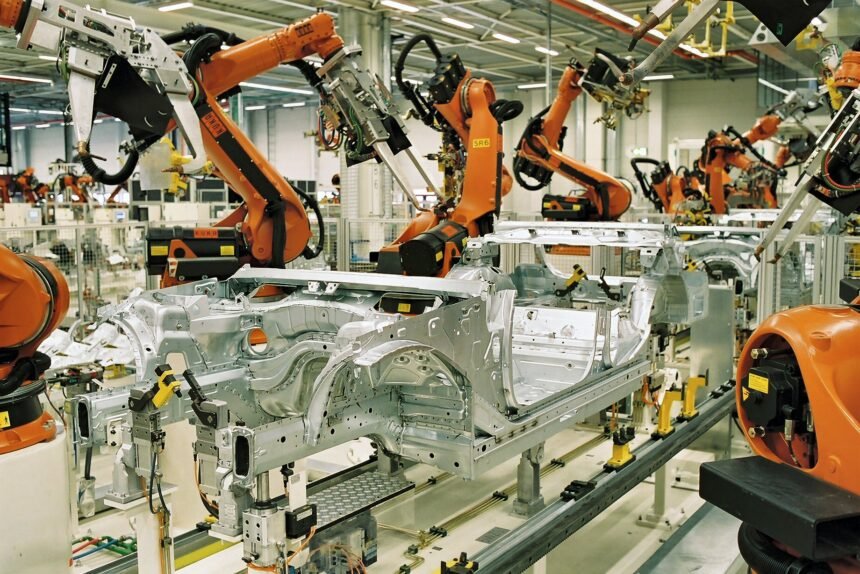
Featured image: BMW Werk Leipzig, via Wikimedia Commons (CC BY-SA 2.0 de)