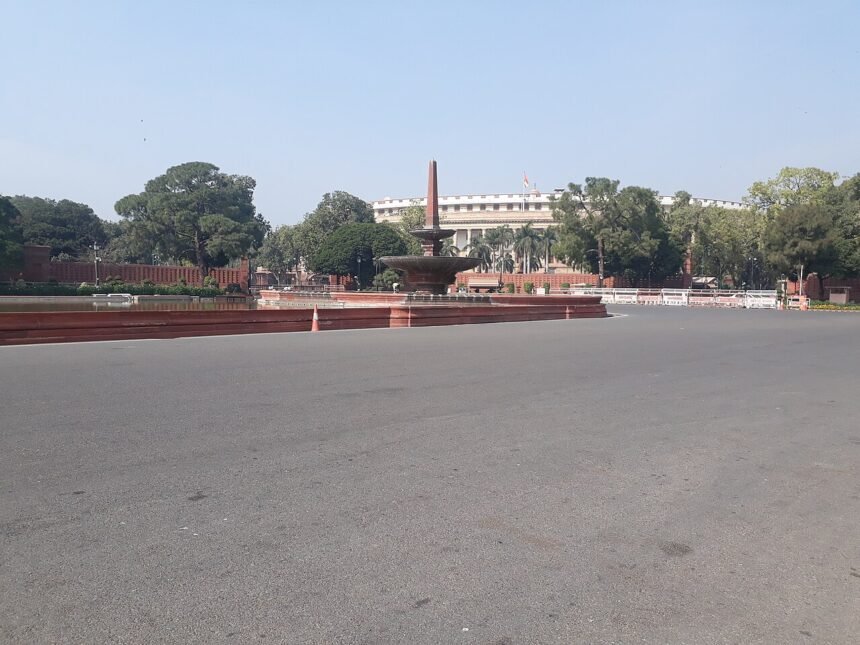
The Lok Sabha, or House of the People, is the lower house of India’s Parliament. Its members are chosen directly by voters in general elections, and the party or alliance that can command a majority in the house forms the government.
Photo credit: Pinakpani, CC BY-SA 4.0, via Wikimedia Commons.
Seats and majority
The Lok Sabha has 543 elected members, each representing one constituency. A party or alliance needs the support of at least 272 members, which is more than half, to form a government. The Prime Minister is usually the leader of that party or alliance.
How members are elected
India uses the “first past the post” system. In every constituency the candidate who gets the most votes wins, even if that is not more than half of the votes cast. All citizens aged 18 or above who are registered can vote.
Who runs the election
General elections are conducted by the Election Commission of India, a constitutional body. Votes are cast on electronic voting machines (EVMs), which are matched with a voter-verifiable paper audit trail (VVPAT) slip. During an election the Model Code of Conduct governs how parties and governments behave.
Term of the house
A Lok Sabha normally lasts five years from its first sitting unless it is dissolved earlier. The Speaker, who is elected by the members, presides over its sittings.
Lok Sabha and Rajya Sabha
Parliament also has an upper house, the Rajya Sabha, with a maximum of 245 members. Most of its members are elected by state legislatures, and some are nominated by the President. Money Bills can only be introduced in the Lok Sabha.
Sources: Constitution of India; Election Commission of India; Lok Sabha Secretariat. Written by The Popular Story desk.