Prime Minister Narendra Modi landed in Manila on Monday, 16 November, for a two-day visit built around two meetings: the 23rd ASEAN-India Summit and the 21st East Asia Summit. Both take place today, Tuesday, 17 November, with the Philippines hosting as this year’s chair of the Association of Southeast Asian Nations (ASEAN).
The trip is short, but the guest list around it is long. Australian Prime Minister Anthony Albanese and Japanese Prime Minister Sanae Takaichi had already reached Manila by Monday, and US President Donald Trump was scheduled to arrive on Tuesday. A meeting of Quad leaders, which brings together India, the US, Japan and Australia, is planned on the sidelines, according to a PTI report from Manila.
Why this visit matters
Modi is in Manila at the invitation of Philippine President Ferdinand R. Marcos Jr. The Prime Minister’s Office described ASEAN as a central pillar of India’s Act East Policy, the framework India has used for more than a decade to deepen trade, security and people-to-people ties with Southeast Asia.
The timing also carries some symbolism. India and ASEAN have named 2026 the ASEAN-India Year of Maritime Cooperation. Next year, 2027, the two sides will mark 35 years of dialogue relations and five years since they upgraded ties to a Comprehensive Strategic Partnership.
On arrival, Modi posted that he had “landed in Manila” a short while earlier. He was received at the airport by Philippine Information and Communications Technology Secretary Robert Joseph “Jay” Montes de Claro.
What the ASEAN-India Summit will review
The summit is the annual meeting between India’s leadership and the leaders of ASEAN’s member states. According to the PMO, leaders will review how the Comprehensive Strategic Partnership is being carried out, including the ASEAN-India Plan of Action for 2026 to 2030, and discuss where cooperation should go next.
The Ministry of External Affairs has said maritime cooperation will be a priority. That covers a fairly practical list:
- Better maritime domain awareness, meaning shared information on what is moving at sea
- Coordinated patrols
- Tackling piracy
- Curbing illegal, unreported and unregulated fishing
- Keeping good order in shared sea lanes
These are not abstract concerns. Much of India’s trade with East Asia passes through the South China Sea and the Malacca Strait, and several ASEAN members, the Philippines among them, have long-running maritime disputes in those waters. India links this work to its MAHASAGAR maritime vision, which it describes as a push for shared security and growth across regions.
Trade, connectivity, technology and people-to-people ties are also on the broader agenda, according to the MEA. No specific trade announcements had been flagged in advance.
The East Asia Summit
The East Asia Summit is a wider forum. It brings ASEAN members together with partners including India, China, Japan, South Korea, Australia, New Zealand, Russia and the United States. Leaders use it to discuss regional and global problems rather than to sign deals.
Modi has called the summit “an important platform for dialogue” on regional and global challenges. With tensions in West Asia, the conflict involving Iran, and questions over shipping routes all in the news this month, there is no shortage of topics for the leaders in the room.
ASEAN’s theme for this year under the Philippine chair is “Navigating the Future”.
A crowded week in Manila
Manila has been busy and, at times, tense. Hundreds of protesters clashed with police on the weekend as they marched towards the summit venue, according to reports, ahead of Trump’s expected visit. Chinese Premier Li Qiang also arrived in Manila for the China-ASEAN Summit, and UN Secretary-General Antonio Guterres attended the ASEAN-UN Summit, where he spoke on the return of Rohingya refugees.
For India, the planned Quad meeting may draw as much attention as the formal summits. The grouping has focused on maritime security, critical technologies and disaster response in the Indo-Pacific. Officials had not shared an agenda for the Manila meeting at the time of writing.
What to watch for
Three things are likely to shape how this visit is judged back home:
- Joint statements: Whether the ASEAN-India Summit produces concrete steps on maritime cooperation, rather than broad language.
- The Quad meeting: Whether it goes ahead with all four leaders and what it commits to.
- Bilateral meetings: Modi typically holds side meetings with several leaders at these summits. None had been officially listed before the visit.
We will update readers as official outcomes are released.
Reporting based on the Prime Minister’s Office, PTI via Business Standard, Democracy Now! and Anadolu Agency.
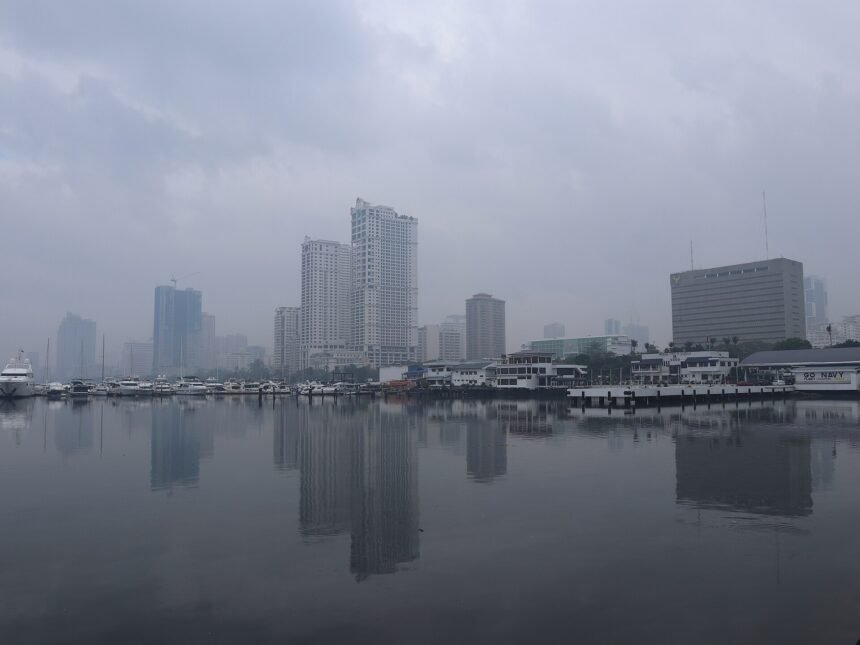
Featured image: Patrickroque01, via Wikimedia Commons (CC BY-SA 4.0)