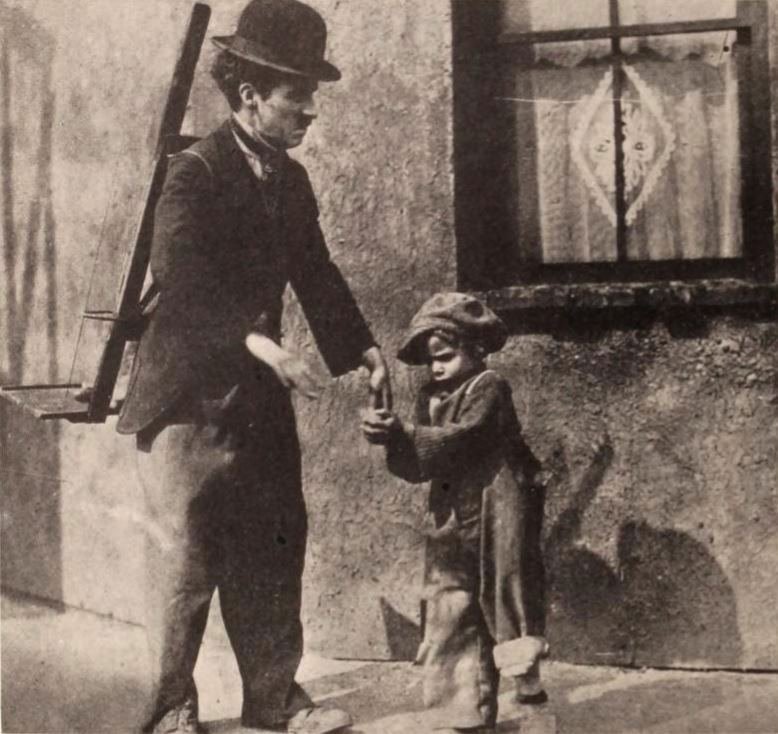
Charlie Chaplin’s Tramp and Jackie Coogan’s child make a persuasive family in The Kid because we get to see them work together. They share a room, improvise routines and find ways to get through the day. Their relationship is apparent in the quick exchange of a look or the way one prepares for a move the other is about to make. Those small details matter when the story puts them in danger of being separated.
The official Chaplin film page dates the picture to 1921 and credits Coogan, Chaplin and Edna Purviance among its cast. The archived original cut gives viewers a way to follow the changing relationship in the scenes themselves. The premise begins with the Tramp finding a baby. By the time the picture jumps forward, the two have acquired the shorthand of people who know each other’s habits.
Comedy gives us evidence of trust
The window repair scheme offers a useful example. The child creates work for the adult, and the adult has to arrive at the right moment to profit from it. The audience understands both jobs. A passerby generally understands only one. That difference gives a short sequence several possible turns. A bystander might notice the child, recognise the connection between the pair or interrupt their timing. The two performers have to remain alert to one another while appearing to go about separate business.
Watch where Coogan directs his eyes. The glance can register a new person nearby or show that he is checking whether Chaplin is ready. Chaplin gives the child time to complete the movement that sets up his reply. They play with different sizes and rhythms, yet the camera often allows the viewer to see enough of both positions to understand their shared plan. The comedy lets us watch trust being practised before the story makes trust its emotional concern.
How a room becomes a home
The accommodation is modest, but its layout becomes familiar. Viewers see where the people sit, how they use what they have, and what work a single object can do. Objects are often involved in a gag because the Tramp has limited resources and must keep adapting things for new purposes. Once we have watched those routines, the space contains traces of the life the pair have made. The danger of separation becomes easier to picture because we know what would be interrupted the next morning.
The film also gives Purviance’s character a story of her own. Her presence makes the central relationship part of a wider set of decisions about the child’s care. It can be revealing to watch for moments when one character knows something the others do not. An action that looks ordinary to the people in a room can have consequences the audience sees much sooner, especially when the child’s identity is involved.
What changes when the pace quickens
The more urgent scenes use physical movement the viewer has learned to read through comedy. A chase can tell us who is trying to get through an opening and how far away someone else is. The stakes make familiar motions feel different. A glance that earlier helped set up a joke can now show a child trying to find the one person he expects to see.
It is worth watching the first part of the film closely even if you already know the later scenes. The tiny negotiations in the room and on the street give the larger movements their force. For more on film and festival programmes, see The Popular Story’s Entertainment coverage.
Try following Coogan in a scene where Chaplin is occupied elsewhere in the frame. His response has its own timing. The pair’s partnership is visible even in the intervals when only one of them is supposed to draw a laugh.
Featured image: First National Pictures / Exhibitors Herald, via Wikimedia Commons. Image source. Reuse terms.