Nitesh Tiwari’s Ramayana: Rise of a Legend (Part 1) opened the Films from BRICS showcase at the International Film Festival of India in Panaji on 22 November. The screening took place on the third day of the 57th IFFI and launched a programme of 21 films. The selection brings historical drama, contemporary fiction and documentaries into the same festival strand. For viewers in Goa this week, it offers a chance to see how filmmakers from different countries approach questions of family, displacement and political memory.
What happened at the Panaji opening
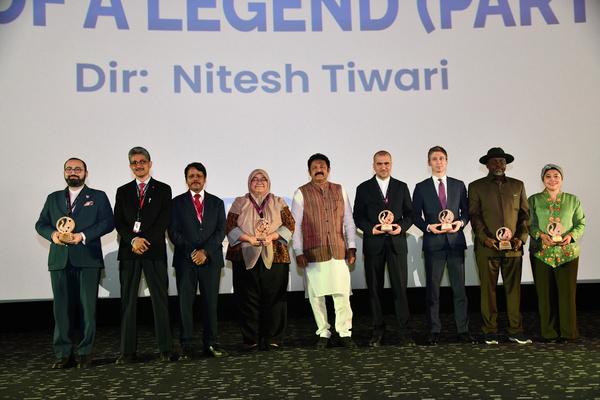
Festival director Ashutosh Gowariker honoured Tiwari at the event, according to the Press Information Bureau’s account of the opening. Representatives from Nigeria, Indonesia, Russia and Iran were also honoured. Among those named by PIB were Nigeria’s ambassador Saidu Dahiru Muhammed, Indonesian embassy representative Erny Wahyuni, Russia’s acting consul general in Mumbai Aleksandr Fursov and Iran’s deputy chief of mission Mostafa Goharifar.
The event marked the opening of this particular festival programme. The choice of an Indian epic gave the audience a familiar point of entry in Goa. Across the rest of the slate, the scale changes considerably. Some films follow a family working out what happened to a missing relative, while others tell their stories through a single journey or a community’s relationship with the land.
Three routes through the 21-film programme
Viewers interested in how cinema handles political history could start with Indonesia’s The Sea Speaks His Name. The official programme announcement describes the disappearance of a student activist during Indonesia’s 1998 protest movement and the family left searching for him. South Africa’s The Trek goes back to the nineteenth-century Kalahari, where a journey through the desert brings the violence of the colonial frontier into the story. In both cases, the programme descriptions give viewers a starting point for watching whose experiences are used to tell a larger history.
Several selections build their stories around relatives travelling or making decisions together. In Saudi Arabia’s Hijra, a girl and her grandmother confront family secrets during a journey involving a missing sister. The Condor Daughter, a Bolivia–Peru production, follows a young woman in an Andean community as she considers what it would mean to become a performer while carrying on a musical tradition she inherited. The two premises invite different questions about what younger generations owe to the people who raised them.
There is also a documentary route through the programme. The Uganda–UK production Dreaming of Serenada approaches flooding and environmental change through a father and daughter. Faya Dayi, listed as an Ethiopia–US production, centres communities connected to khat and the livelihoods that surround it. Both offer an opportunity to pay attention to how a filmmaker shows the pressures shaping daily life through people’s routines and relationships.
Where to check screening details
The festival runs in Goa through 28 November. Check the official IFFI website for the current timetable, venues and admission details before making plans. A film’s inclusion in the programme tells you it was selected for the festival. The timetable is the place to check whether there is another screening you can attend.
Read more from Top Stories and Entertainment.
Featured image: Vighneshshirgurkar, via Wikimedia Commons (CC BY-SA 4.0)