Anupam Kher recalled playing a 65-year-old man when he was 28. Amala Akkineni spoke about what students learn from working in crews. Cinematographer Manoj Paramahamsa described how little time a professional set leaves a beginner for trial and error. Each was answering a version of the same question at the International Film Festival of India in Goa on 22 November 2026. Which parts of making a film can be taught, and which have to come from experience?
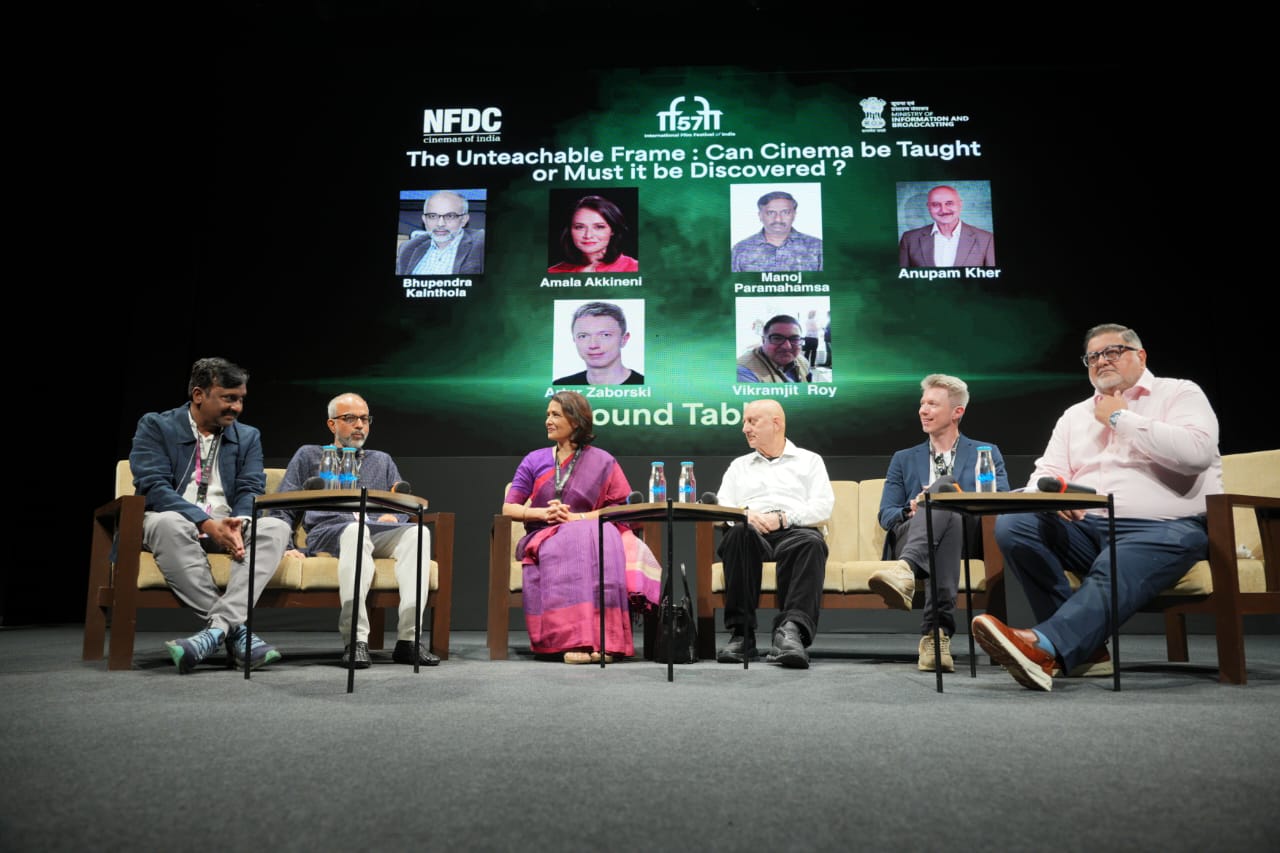
The Press Information Bureau’s account of the panel identifies Vikramjit Roy as the moderator. Other participants included Bhupendra Kainthola, a former director of the Film and Television Institute of India, and Artur Daborski of the Warsaw Film School. The official photo album places the roundtable at Kala Academy in Panaji.
Rehearsal gives a beginner room to try again
Kher credited his National School of Drama training with preparing him for his role in Saaransh. An actor taking on a character much older than himself has choices to make about movement, speech and how the character responds to another person in the room. A rehearsal gives him time to try one choice, see what happens and try another. That matters because a gesture that feels right in isolation may look out of place once the scene is played with a partner.
For a student comparing courses, that suggests a question worth asking. How much of the class involves performing, watching the result and doing the work again after feedback? A description that lists subjects tells you what a school intends to cover. A sample exercise can show how a student would spend a Tuesday afternoon and what they would be expected to bring back the following week.
Film sets depend on people sharing decisions
Akkineni discussed how schools give students an opportunity to learn the responsibilities of different departments. She also urged educators to encourage more women to pursue film training. A short scene makes the collaboration easy to see. Suppose an actor delivers the line you want, then walks in a different direction from the one used in the previous take. The camera operator, sound recordist and editor may each have a reason to care. The crew can decide together whether to repeat the take or use the difference.
Paramahamsa’s point about the time available on professional sets gives that exercise a purpose. A classroom crew can stop to discuss a problem and return the next day. Once people and equipment are booked for a professional shoot, a delay can change the rest of the schedule. It helps if a student has already had to explain a technical problem in terms that colleagues from another department understand.
What technology changes in the classroom
The panel also discussed artificial intelligence. PIB reported that Paramahamsa pointed to uses such as preliminary storyboards and repetitive production tasks. Kher returned to the contribution actors make to a performance. For a prospective student, those remarks lead to a practical question about how tools are taught. If a class uses software to propose a storyboard, who decides which shots belong in the scene, and how do students explain the decisions they made?
That question applies to a sketch done on paper, too. A storyboard can make a scene look convincing on the page. The exercise becomes more revealing once someone has to place a camera, record a voice and discover what the plan left out. Readers following the festival can find venue and programme details in The Popular Story’s IFFI Goa guide.
The panel took place during the festival’s run from 20 to 28 November. Its examples offer students a way to judge a course by asking what they will make, who they will work with and how often they will get to revise their work.
Read more from Top Stories and Entertainment.
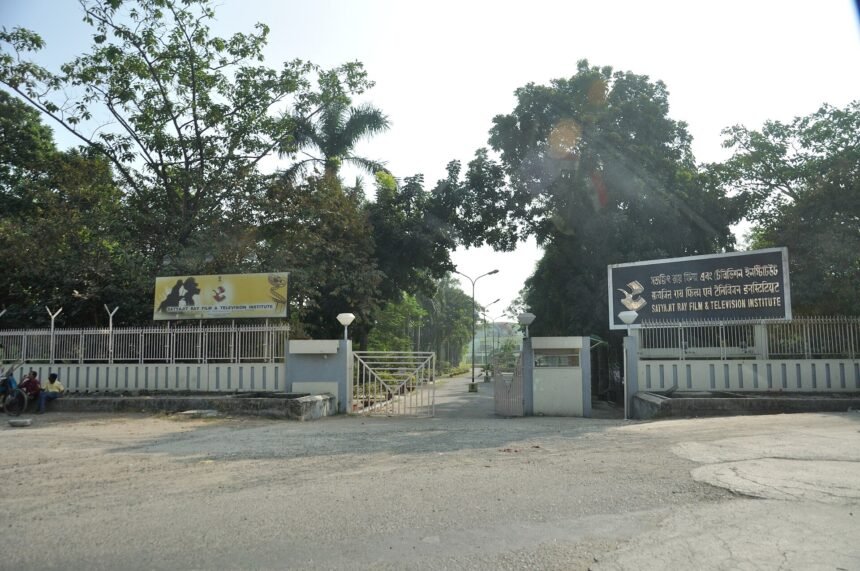
Featured image: Biswarup Ganguly, via Wikimedia Commons (CC BY 3.0)