Kalabhairav Jayanti 2026 falls on Tuesday, December 1. The day marks the appearance of Lord Kalabhairav, the fierce form of Shiva who is worshipped as the guardian of time and of sacred places. In north India it is observed on the Ashtami of Krishna Paksha in Margashirsha, which is why many calendars also call it Kalashtami of Margashirsha or Bhairava Ashtami.
Kalabhairav Jayanti 2026 date and tithi timings
For New Delhi, the Ashtami tithi timings are:
- Kalabhairav Jayanti: Tuesday, December 1, 2026
- Ashtami tithi begins: 12:11 AM on December 1, 2026
- Ashtami tithi ends: 11:13 PM on December 1, 2026
Because the tithi covers almost the entire day of December 1, there is little room for confusion this year. Tithi timings change with location, so people outside Delhi should check a panchang set to their own city before fixing a puja time.
Why the month name differs between calendars
Here is a detail that confuses many families. In the Purnimanta calendar followed across most of north India, the month runs from full moon to full moon, so this Ashtami falls in Margashirsha. In the Amanta calendar used in Maharashtra, Gujarat, Karnataka and much of the south, the month runs from new moon to new moon, and the same Ashtami sits in Kartika. The date is the same. Only the month label changes.
The story behind the day
The Shiva Rahasya and several Puranas tell of a dispute about which deity was supreme. When Brahma spoke with arrogance, Shiva manifested as Bhairava, who severed one of Brahma’s five heads. Carrying the burden of that act, Bhairava wandered until he reached Kashi, where he was freed of it. That is why Kalabhairav is called the Kotwal, or protector, of Varanasi, and why pilgrims traditionally visit his temple there before or after visiting Kashi Vishwanath.
According to tradition, Bhairava appeared at midday, so many devotees prefer the madhyahna period for the main puja.
How the day is usually observed
Customs vary by family and region, but these are the common elements:
- Early bath and sankalp. Devotees take a bath before sunrise and resolve to keep the fast, either nirjala or with fruit and milk.
- Puja of Kalabhairav and Shiva. A lamp of mustard oil is lit, and flowers, black sesame, incense and sweets are offered. Many also offer to Shiva and Parvati on the same day.
- Recitation. The Kalabhairava Ashtakam, written by Adi Shankaracharya, is the most widely chanted hymn. Some recite Bhairav Chalisa or Shiva mantras.
- Night vigil. Kalabhairav is linked with the night, so some devotees stay awake, singing bhajans and telling the story of his appearance.
- Feeding dogs. The dog is considered Bhairava’s vehicle. Feeding stray dogs with rotis, milk or curd is a common and kindly part of the day.
Temples where crowds gather
The Kaal Bhairav temple in Varanasi sees long queues, as does the Kal Bhairav temple in Ujjain, known for its unusual offering tradition. The Batuk Bhairav temple in Delhi and Bhairav temples in Nepal also hold special pujas. If you plan to visit, go early in the morning and expect security checks at the larger temples.
Kalashtami every month
Kalabhairav Jayanti is the most important of the year’s Kalashtamis, the monthly Krishna Paksha Ashtami dedicated to Bhairava. People who start a monthly Kalashtami fast often begin from this day.
December is busy with vrats. You can also read about Margashirsha Amavasya 2026 and plan the month ahead.
A note on fasting
If you have diabetes, low blood pressure, are pregnant or take regular medicines, speak to your doctor before keeping a strict or waterless fast. A fruit-and-milk fast is a gentler choice that most traditions accept.
Dates based on Drik Panchang tithi timings for New Delhi, India.
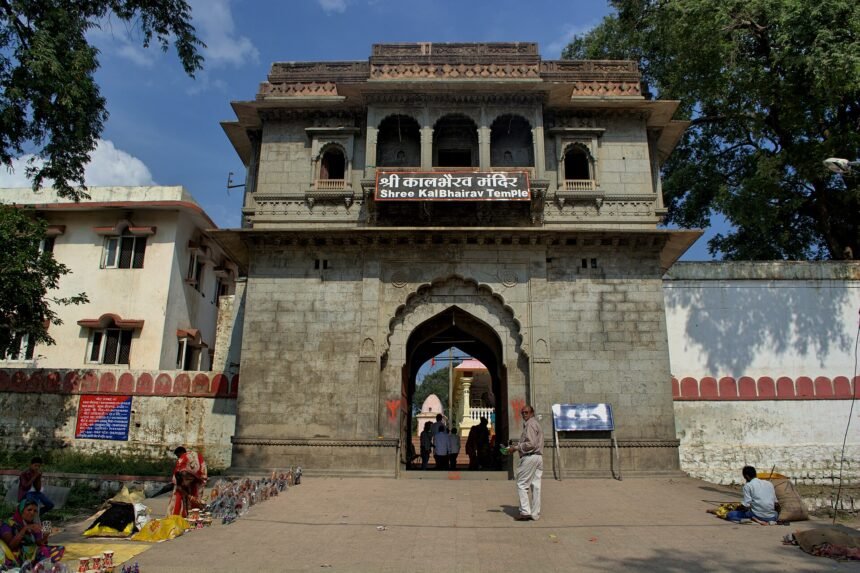
Featured image: Utcursch, via Wikimedia Commons (CC BY-SA 4.0)