
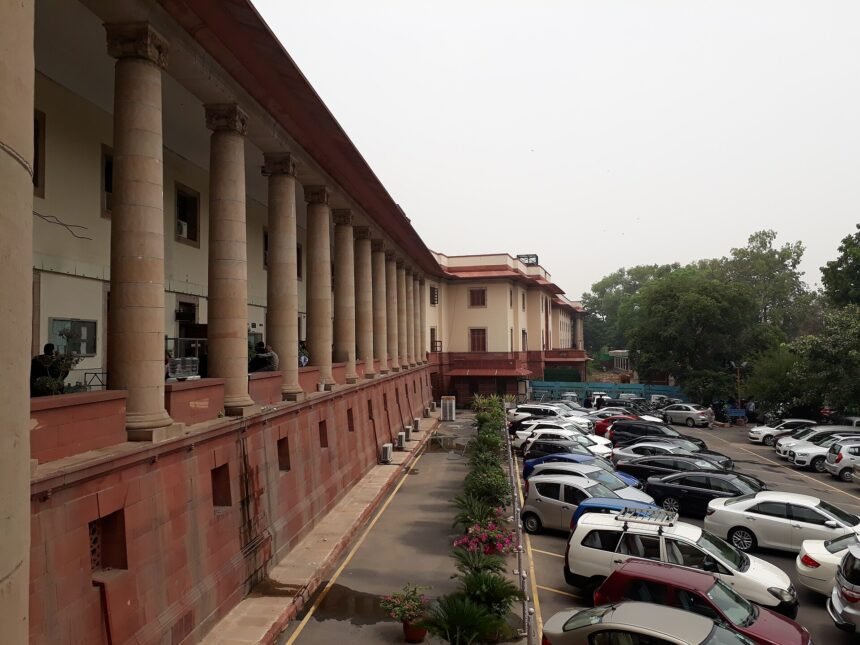
Owners of older cars in the capital have a new date to watch. On Monday, 23 November, the Supreme Court said it will consider a direction allowing only BS-VI vehicles in Delhi, as part of its long-running hearing on air pollution in the National Capital Region. For now, the court has kept the current position unchanged for at least a month.
The bench of Chief Justice Surya Kant, Justice Joymalya Bagchi and Justice V Mohana also floated a broader idea: a five-year plan to stop heavy commercial vehicles from entering Delhi at all.
What the Supreme Court said on BS-VI vehicles in Delhi
Justice Bagchi was direct about where the bench is leaning. “We are clear we will allow only BS6 vehicles in Delhi, if not NCR,” he said, according to a report by Bar & Bench.
That is a statement of intent, not an order. No direction was passed on Monday. The court asked Punjab, Haryana and Uttar Pradesh to file status reports, and told the Municipal Corporation of Delhi to file affidavits on the steps it has taken.
During the hearing, counsel told the court that pollution under control (PUC) testing had stopped for BS-IV vehicles. That point matters, because a vehicle that cannot get a valid PUC certificate is in trouble on the road even before any formal ban.
The truck plan
The second idea is bigger. The bench suggested that over five years, heavy commercial vehicles could be kept out of Delhi. Goods would be unloaded at warehouses on the city’s borders and carried into the city by smaller battery-powered vehicles.
This would change how a city of more than two crore people gets its daily supplies, from vegetables to building material. It would need new logistics hubs, charging infrastructure and a large fleet of small electric goods carriers. The court did not pass any order on this either, but it signals the direction of the debate.
Where Delhi’s vehicle rules stand today
Some restrictions are already in place. Since 1 November, Delhi has barred non-BS-VI vehicles registered outside the city. The Commission for Air Quality Management (CAQM) has also set NCR states a target of cutting pollution by 15 to 20 per cent in 2027.
On the day of the hearing, Delhi’s air quality index was 236, in the “poor” band, and Stage II of the Graded Response Action Plan (GRAP) was in force. That is an improvement on the “very poor” readings earlier in November, and Chief Justice Surya Kant noted the role of weather in that. “Give some credit to nature,” he remarked.
What it means for you
If you drive in Delhi, here is the practical picture:
- BS-VI vehicles: nothing changes. Cars sold new from April 2020 onwards are generally BS-VI compliant.
- BS-IV and older vehicles registered in Delhi: no new ban yet. But the court’s remarks suggest tighter limits are likely. Keep your PUC certificate valid and check your registration certificate for the emission norm.
- Vehicles registered outside Delhi: non-BS-VI vehicles are already barred from entering since 1 November.
- Businesses using trucks: the five-year plan is only an idea for now, but transporters and traders should follow the next hearings closely.
Anyone thinking of buying a used BS-IV car in NCR should factor in this uncertainty. Resale values for such vehicles could come under more pressure if the court moves ahead.
What happens next
The court will take up the matter again after the states and the MCD file their reports. The one-month window gives vehicle owners some breathing room. It also gives governments time to answer an awkward question: how a ban on older vehicles would work for the lakhs of people who cannot afford to replace them quickly.
For more on how GRAP stages work and what they restrict, see our coverage of Delhi’s pollution rules.
Reporting based on Bar & Bench and Republic World.
Featured image: Pinakpani, via Wikimedia Commons (CC BY-SA 4.0)




