Hampi is one of those places that is hard to enjoy in April, when the granite boulders bake in the sun. Come in December or January, though, and the mornings are cool, the river is full enough for coracle rides, and you can walk between temples for hours. This Hampi travel guide covers what to see, how to plan your days and how to get there this winter.
Why Hampi is worth the trip
Hampi was the heart of Vijayanagara, the capital of one of south India’s greatest empires, until its fall in 1565. Its ruins spread across a strange landscape of piled boulders, banana plantations and the Tungabhadra river. The Group of Monuments at Hampi is a UNESCO World Heritage Site, with hundreds of structures, from working temples to royal stables.
Best time to visit Hampi
October to February is the season. December and January are the most comfortable, with pleasant days and cool nights, though it is still sunny enough to need a hat. The Christmas and New Year weeks are the busiest, so book rooms early if your dates fall then.
Hampi travel guide: what to see
Virupaksha Temple
The tall gopuram of this Shiva temple dominates Hampi Bazaar. It is still an active temple, so expect devotees and morning rituals. Look for the pinhole camera effect in one of the inner chambers, where light projects an inverted image of the gopuram onto a wall.
Vittala Temple and the Stone Chariot
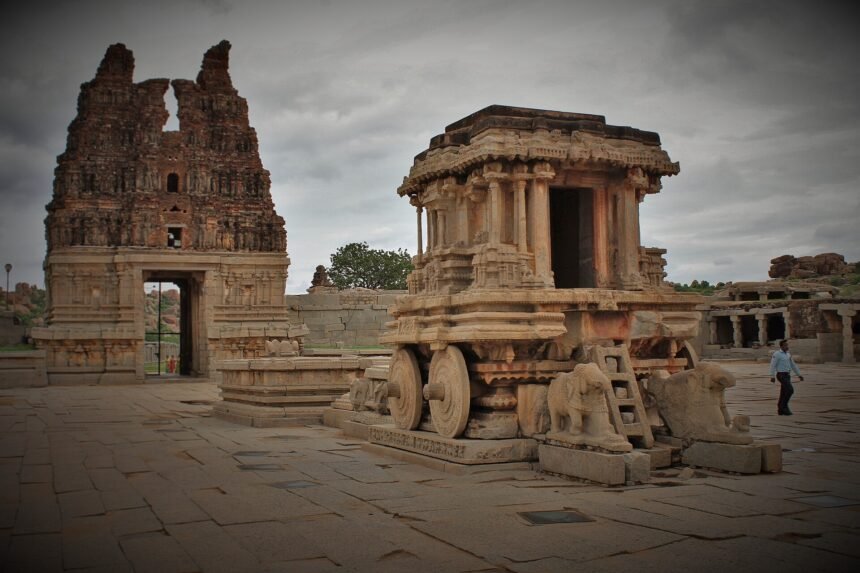
The most famous sight. The Stone Chariot, a shrine to Garuda carved as a temple car, stands in the courtyard, and the main hall is known for its pillars said to produce musical notes when tapped. Tapping is no longer allowed, to protect them. Vehicles stop some distance away, and battery-operated carts run to the temple. Go early to beat crowds and heat.
Royal Enclosure and Zenana area
The Lotus Mahal, with its Indo-Islamic arches, the Elephant Stables, the stepped tank and the Mahanavami Dibba platform give a sense of royal life. These are spread out, so hire a bicycle, scooter or auto.
Hemakuta and Matanga hills
Hemakuta hill, right next to the bazaar, is an easy climb for sunset among small early temples. Matanga hill is steeper but gives the best sunrise view over the entire site. Climb with others and carry a torch.
The river
Take a coracle, a round bamboo boat, from near Kodandarama temple for a slow look at riverside carvings. Ferries also cross to Virupapur Gaddi on the other side, known for cafes and paddy fields, when river conditions allow.
A sample three-day plan
- Day 1: Virupaksha Temple, Hampi Bazaar, Hemakuta hill for sunset.
- Day 2: Sunrise at Matanga, Vittala Temple in the morning, riverside walk and coracle ride in the afternoon.
- Day 3: Royal Enclosure, Lotus Mahal, Elephant Stables, Queen’s Bath, and the Archaeological Museum at Kamalapura.
Two days covers the highlights. Three or four let you slow down.
How to reach Hampi
- By train: Hosapete (Hospet) Junction, about 13 km away, is the nearest railway station, with trains from Bengaluru, Hyderabad and Goa.
- By air: the small Jindal Vijaynagar airport near Toranagallu has limited flights. Hubballi airport is about 165 km away. Many travellers fly to Bengaluru and take an overnight train.
- By road: Bengaluru is about 340 km. Overnight buses run to Hosapete.
From Hosapete, autos and buses go to Hampi Bazaar and Kamalapura.
Practical tips
- The Vittala Temple ticket, sold by the ASI, usually also covers the Lotus Mahal and Elephant Stables on the same day. Keep it with you.
- Wear comfortable shoes. Many temples need shoes removed, and rocks can be hot even in winter by afternoon.
- Carry water, sunscreen and a cap. Shade is limited.
- Dress modestly at temples.
- Do not climb on monuments or carvings. It is prohibited and damages the site.
Hampi pairs well with a long weekend. Our December 2026 long weekends planner shows the best dates, and if you are heading on to the coast, see our guide to Old Goa churches in December.
Reporting based on UNESCO World Heritage listing information and Karnataka Tourism. Check ASI ticket prices and timings before visiting.
Featured image: Ajayreddykalavalli, via Wikimedia Commons (CC BY-SA 4.0)