Delhi woke up to its coldest morning of the season on Wednesday, November 25. The minimum temperature at Safdarjung, the city’s base weather station, fell to 10°C, which is 1.3 degrees below normal and 1.2 degrees lower than Tuesday, PTI reported citing India Meteorological Department (IMD) data. The air did not get any cleaner with the chill. The city’s average AQI stayed in the “poor” range.
Delhi coldest morning: station-wise readings
Most stations recorded similar lows:
- Safdarjung: 10°C
- Lodhi Road: 10.1°C
- Ayanagar: 10.4°C
- Palam: 11°C
- Ridge: 11.7°C
No rain was recorded in the 24 hours to 8:30 am. The IMD forecast shallow fog or mist in the morning followed by clear skies, with maximum temperatures of 24-26°C and minimums of 9-11°C over the coming days.
Air quality: poor, with hotspots near very poor
Delhi’s average AQI was 228 at 7 am, slightly better than Tuesday’s 242, according to Central Pollution Control Board data cited by Business Standard and The Week. PTI reported 224 at about 9 am. On the AQI scale, 201-300 is “poor” and 301-400 is “very poor”.
The average hides a wide spread. Of 56 reporting stations, 36 were above 200 and five crossed 300:
- Anand Vihar: 336
- DTU: 332
- DU North Campus: 313
- Burari Crossing: 305
- IGNOU Maidan Garhi: 302
The cleanest readings were at Sri Aurobindo Marg (140), Lodhi Road (147) and Patparganj (148). In the wider NCR, Gurugram was at about 280, Ghaziabad 240 and Noida 215.
Why cold mornings and bad air go together
In winter, a layer of cold air settles close to the ground at night and early morning, with warmer air above it. This inversion acts like a lid, trapping smoke and dust near the surface. Calm winds make it worse, because there is nothing to blow the pollution away.
The sources have shifted this season. An AIRWISE-Delhi estimate of PM2.5 sources put vehicles at about 20.5%, while stubble burning contributed only around 2.3% and waste burning 1.9%. That means the problem is now mostly local traffic and city emissions rather than smoke from Punjab and Haryana farms.
Stage II of the Graded Response Action Plan (GRAP) remains in force. Earlier this month the city was under Stage III curbs when the AQI crossed 400 at several stations, as we reported in our November 14 update.
What to expect and what to do
The air quality early warning system expects “poor” air through November 27, then poor to “very poor” over the following six days. In short, no real relief is likely before the weekend, and things may get worse next week.
- If you exercise outdoors, later in the day is usually better than early morning, when pollution is trapped closest to the ground.
- An N95 mask helps near traffic hotspots such as Anand Vihar.
- Drive carefully in the early hours if fog cuts visibility.
- Keep windows closed during the worst morning hours and air rooms out in the afternoon.
Children, older people and anyone with asthma, heart or lung conditions are most at risk. If you have one of these conditions, talk to your doctor about how to manage the season. Our guide on protecting kids and the elderly from smog has more practical tips.
Reporting based on ThePrint (PTI), Business Standard and The Week. This is general information, not medical advice.
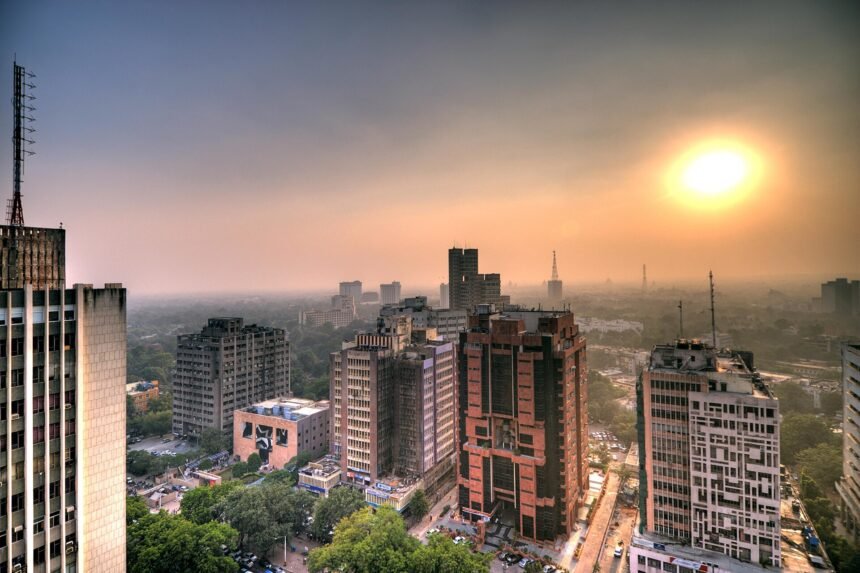
Featured image: wili hybrid, via Wikimedia Commons (CC BY-SA 3.0)