Nvidia ended its fiscal 2026 in January with revenue of $215.9 billion, up 65% from the year before, according to the company’s results released on February 25, 2026. A few months earlier, in October 2025, it became the first company to cross a $5 trillion market value. The story behind those numbers began at a roadside diner in San Jose.
The early years
Jensen Huang was born in 1963 in Tainan, Taiwan. As a child he moved to Thailand and then, around age nine, to the United States. He studied electrical engineering at Oregon State University and later earned a master’s degree from Stanford. At 15, he worked as a busboy at a Denny’s in San Jose. Before Nvidia, he worked on chip design at AMD and then at LSI Logic, where he held engineering, marketing and management roles.
The idea
In 1993, Huang met Chris Malachowsky and Curtis Priem at that same Denny’s. They wanted to use 3D graphics to change gaming and media. Huang was 30, married and a father of two. He later admitted, “Frankly, I had no idea how to do it, nor did they.”
The hard part
Nvidia’s first chip, the NV1, came out in 1995 and won a deal with Sega. But it did not perform well, and the misstep nearly bankrupted the company. Huang negotiated a way out of the Sega contract that gave Nvidia enough money to build its next chip. The RIVA 128, launched in 1997, sold well and kept the company alive.
How it grew
Nvidia went public in 1999, the same year it released the GeForce 256. CUDA followed in 2007, letting developers use graphics chips for general computing. That turned out to matter a lot, though the payoff took years. When neural networks took off in the 2010s, Nvidia’s chips became the standard hardware for training AI.
Where it stands now
In the last quarter of fiscal 2026, revenue hit $68.1 billion, with $62.3 billion from data centres. That was up 73% from a year earlier. “Computing demand is growing exponentially,” Huang said in the results release. The company is still based in Santa Clara, California, a short drive from the diner where it started.
Lessons for founders
Survive the first mistake. The NV1 almost ended Nvidia. A hard negotiation bought it a second chance.
Build tools others can use. CUDA turned a graphics chip into a platform.
Stay with it. Huang has run Nvidia since 1993, through slow years and booms.
Reporting based on NVIDIA, CNBC via NBC Connecticut, Quartr and Semafor.
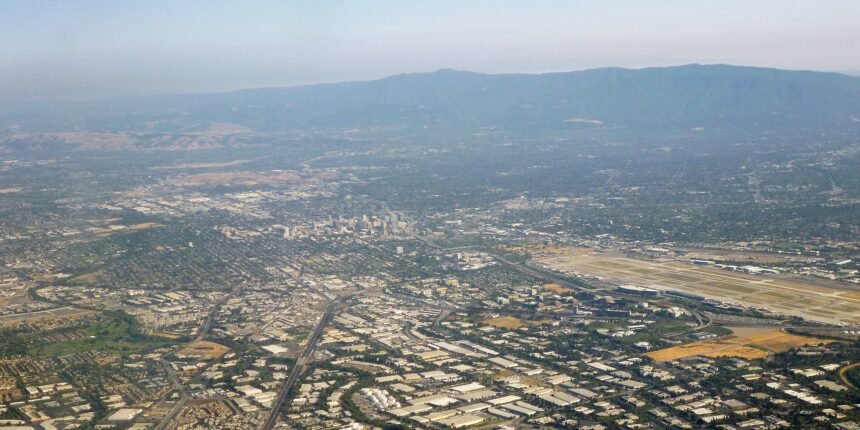
Featured image: Coolcaesar, via Wikimedia Commons (CC BY-SA 3.0)