
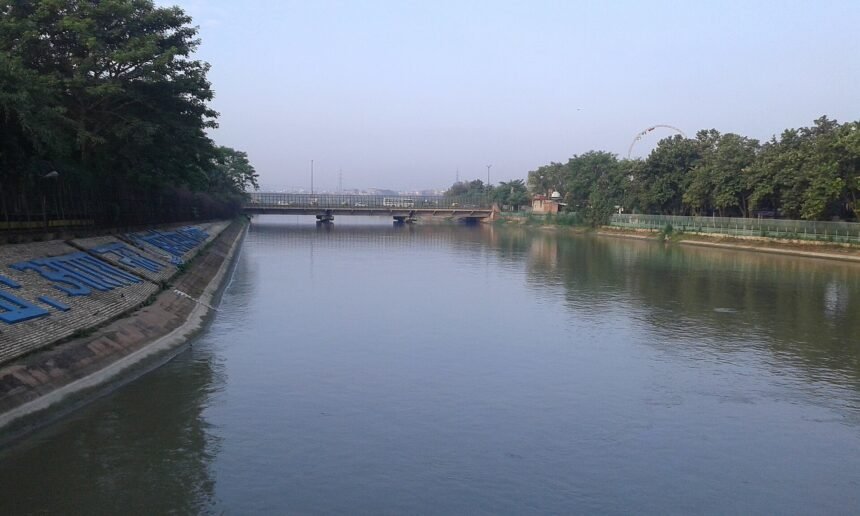
Every winter, the stretch of the Yamuna below Okhla Barrage turns white with toxic froth, and every winter the pictures from Kalindi Kunj start a political fight. A drain project now under way in south-east Delhi is meant to tackle one cause of that Yamuna pollution at the source. The 2.8-km Abul Fazal drain is being widened and desilted so it can carry more than 200 cusecs of treated water from the Okhla sewage treatment plant into the river, downstream of the barrage, Hindustan Times reported on November 26.
Key numbers
- Length of drain: 2.8 km
- Width: over 27 feet, which officials say will make it one of Delhi’s widest, comparable to the Najafgarh drain
- Flow once complete: more than 200 cusecs of treated water
- Delhi’s contribution: about Rs 14 crore
- Who is building it: the Uttar Pradesh irrigation department, with funding from the National Mission for Clean Ganga (NMCG)
- Source plant: Okhla STP, 564 million litres a day, described as Asia’s largest single-stage treatment plant
Why a Delhi drain is being built by UP
The stretch of river just below Okhla Barrage falls under Uttar Pradesh’s jurisdiction, and so does the irrigation network around it. That is why the work is a joint effort: UP’s irrigation department is doing the remodelling, NMCG is funding it, and the Delhi government has put in money for the redesign.
Today, wastewater from more than a dozen colonies, including Shaheen Bagh, Zakir Nagar, Noor Nagar, Okhla Vihar, Jamia Nagar, Jasola Village and Abul Fazal Enclave, is a big part of the problem. Under the plan, that sewage will be sent to the Okhla STP for treatment first. The cleaned water will then flow through the rebuilt drain and enter the Yamuna below the barrage.
When the Okhla plant was declared fully operational in April 2025, its treated water was being released into the Old Agra Canal, The Tribune reported then, with work already planned to divert it through the Abul Fazal drain. This project is that diversion taking physical shape.
How it is supposed to cut Yamuna pollution and foam
Officials explain the froth this way. Heavily polluted, untreated wastewater enters the Okhla stretch. When water falls over the barrage, the turbulence whips detergents and other pollutants into foam. The problem peaks around Kalindi Kunj between October and December, overlapping with Chhath Puja, when devotees stand in the river.
Replacing raw sewage with treated water should help in two ways. Less untreated waste reaches the river, and the extra clean flow adds to the river’s environmental flow, which dilutes what pollution remains. In the dry months, the Yamuna in Delhi often carries very little fresh water of its own, so a steady 200 cusecs is a meaningful addition for this stretch.
What it does not fix
The drain addresses one corner of a much larger problem. The Najafgarh and Shahdara drains, which carry far bigger volumes, remain the largest sources of sewage in the Delhi stretch. The Delhi government has separately begun defoaming work on the Yamuna and cleared Rs 91 lakh for a study of the froth, HT has reported. No completion date for the Abul Fazal drain was given in the report, so it is unclear whether it will be ready before next year’s Chhath.
What it means for residents
People in Jamia Nagar, Shaheen Bagh and nearby colonies may see digging and desilting along the drain over the coming months. For everyone else, the measure to watch is simple: whether the foam at Kalindi Kunj is thinner next October. That will be the first real public test of whether treated water is reaching the river.
Reporting based on Hindustan Times and The Tribune.
Featured image: Sidheeq, via Wikimedia Commons (CC BY-SA 4.0).




