
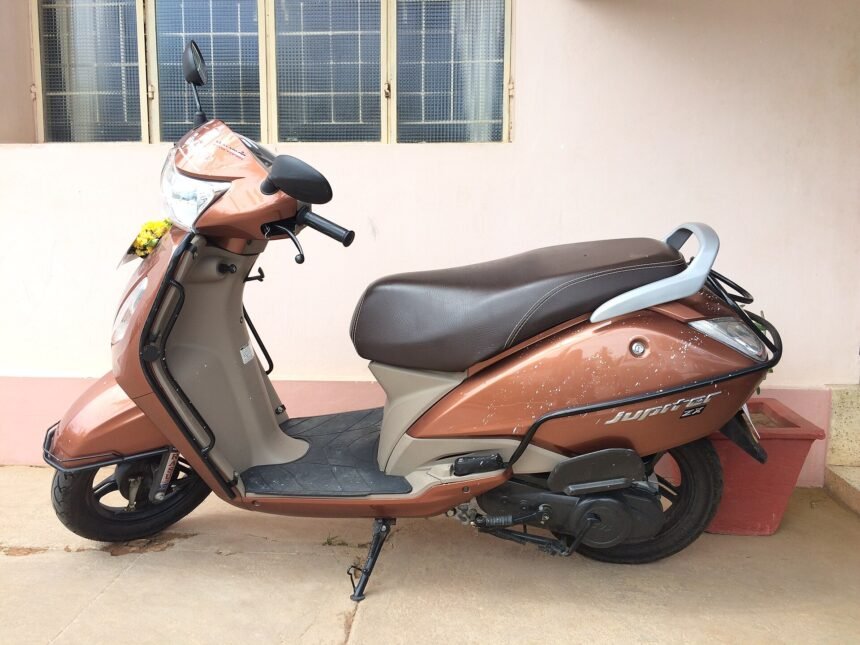
The TVS Jupiter has crossed a number very few Indian two-wheelers ever reach. TVS Motor says the scooter has hit one crore cumulative production units, with the milestone unit rolling out of its Hosur plant in Tamil Nadu on November 24, according to Top Gear India. The TVS Jupiter 1 crore production mark comes 13 years after launch, and TVS says that makes it India’s fastest scooter brand to get there.
How the numbers built up
The Jupiter launched in 2013 and sold five lakh units in its first year. Getting to the first 50 lakh took nine years. The second 50 lakh took just four. That speed-up says a lot about how the scooter market moved in its favour after the pandemic, when family buyers who wanted an easy, comfortable runabout often chose a 110cc scooter over a commuter motorcycle.
The Jupiter is now India’s second-largest scooter brand, and about one in three TVS two-wheelers sold in India is a Jupiter, Rushlane reported.
The current Jupiter range
The Jupiter 125 arrived in 2021, and a new-generation Jupiter 110 followed in 2024. Prices quoted by Rushlane (ex-showroom, Delhi):
| Jupiter 110 | Jupiter 125 | |
|---|---|---|
| Price | Rs 74,700 to Rs 90,525 | Rs 83,000 to Rs 91,235 |
| Engine | 113.3cc | 124.8cc |
| Power | 5.9kW (8.02PS) | up to 6.3kW |
| Torque | up to 9.8Nm | 11.1Nm |
Both get a CVT automatic, a 5.1-litre fuel tank and 163mm of ground clearance.
Why it sells
The Jupiter has never been the flashiest scooter. Its pitch has been practical: a comfortable seat, decent storage, a metal body and a reputation for being easy to live with. TVS has kept updating it rather than letting it age, and the 2024 Jupiter 110 refresh in particular kept it competitive against newer rivals.
The overlap between the 110 and 125 price bands is worth noting. The top Jupiter 110 costs more than the base 125. If you want more power for highway runs or carrying a pillion, the base 125 may be better value than a fully loaded 110.
Who it competes with
In the 110cc segment, the Jupiter’s main rival is the Honda Activa, the long-time market leader. In 125cc it faces the Suzuki Access 125 and Honda’s own 125cc scooters. TVS also sells the sportier Ntorq 125 for younger buyers, which keeps the Jupiter focused on families and daily commuters. That split has helped TVS cover more of the scooter market without its own models eating into each other too much.
What it means for buyers
A big production number does not make a scooter better, but it does mean spare parts are cheap and easy to find, nearly every mechanic knows it, and resale demand is strong. Those are real advantages over a newer, lesser-known model.
The bigger question for TVS is what comes next. Electric scooters are gaining share in cities, and TVS already sells the iQube. How long petrol scooters like the Jupiter keep growing will depend on fuel prices, EV subsidies and charging access in smaller towns.
If you are riding through winter, our cold-weather vehicle care checklist has tips that apply to scooters too.
Reporting based on Rushlane, Top Gear India and Team-BHP.
Featured image: SnapMeUp, via Wikimedia Commons (CC BY 4.0)




